
The Unapologetic American Aristocrat
Lessons from a Founding Father...

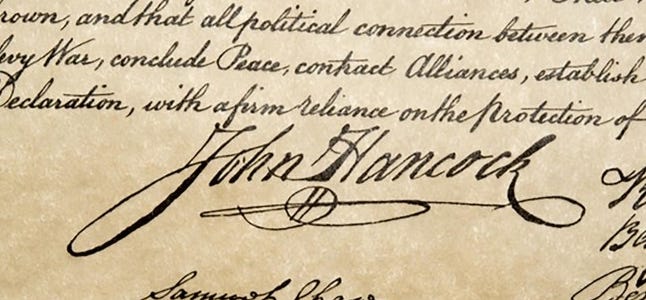
John Hancock is a man everyone has heard of, yet few know much about. He is most famous for being the first man to sign the Declaration of Independence, but beyond that, little more about his life is ever discussed.
Up until two weeks ago, I knew hardly anything about Hancock. But then I read Johann Kurtz’s new book Leaving a Legacy, in which nearly an entire chapter is dedicated to the man. “In the arc of [Hancock’s] life,” Kurtz writes, “we find the secrets to greatness and legacy.” It is a statement with which I now wholeheartedly agree.
Today, I want to share four main lessons from the life of John Hancock, and how they can help you lead your family to greatness. For it is with good reason that, upon his death, Boston gave him the largest funeral march America had ever seen, and even his political adversaries wrote eulogies in his honor:
I could melt into tears when I hear his name… If benevolence, charity, generosity were ever personified in North America, they were in John Hancock. What shall I say of his education? His literary acquisitions?... His military, civil, and political services? His sufferings and sacrifices?
-John Adams
Now, let’s explore the life of John Hancock, the unapologetic American aristocrat…
But first — we’re going to Italy!
This coming May, we’re hosting two exciting retreats to Bergamo and Venice. To learn more and apply to join us, click the button below:
Now, back to the article…
The Making of an Heir
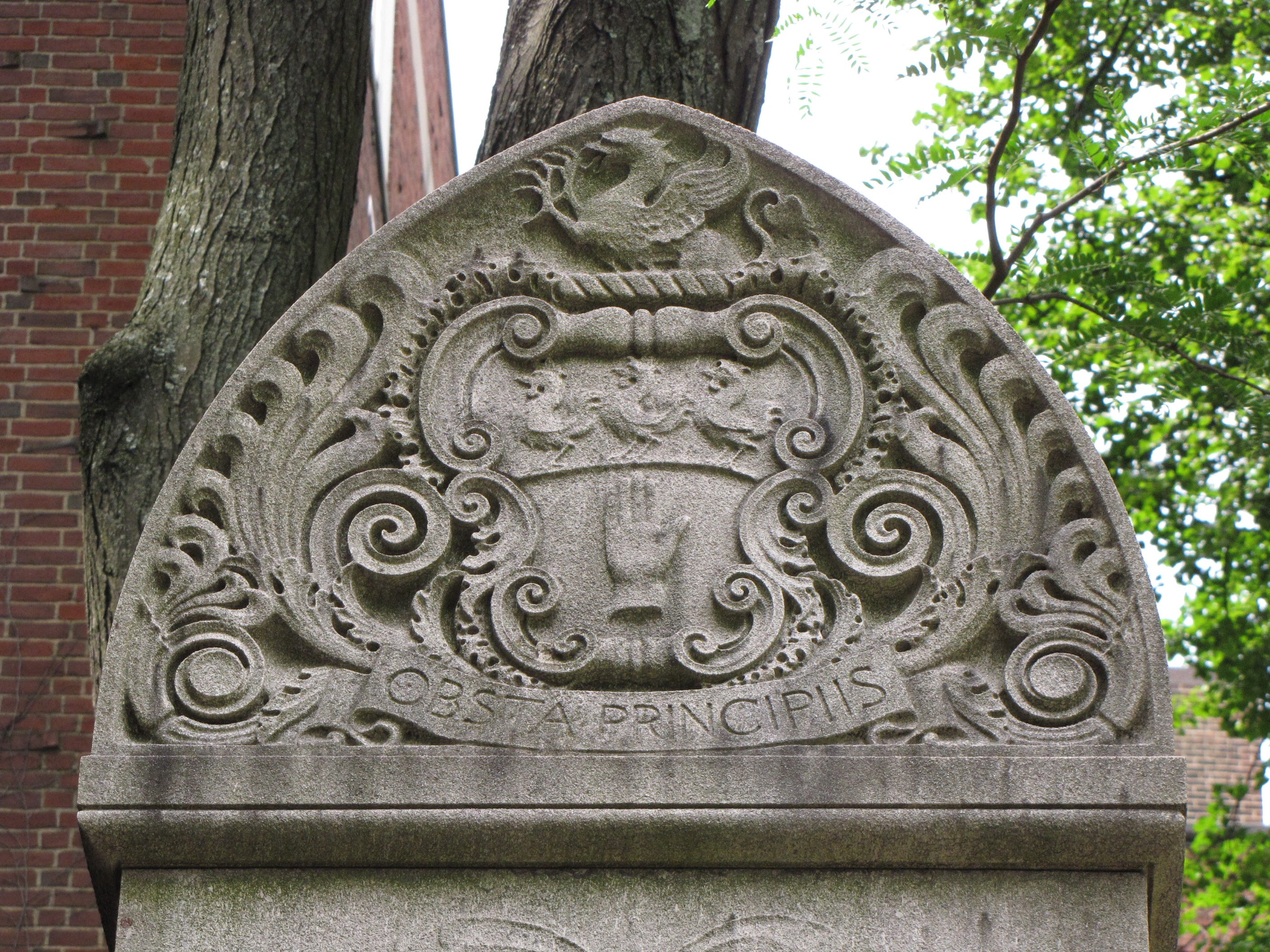
He became an example to all the young men of the town. Wholly devoted to business, he was as regular and punctual at his store as the sun in his course.
-John Adams
The story of John Hancock begins with not one, but two tragedies: an uncle who couldn’t have children, and a nephew who lost his father at a young age. So it was that when the elderly Thomas Hancock heard of his brother’s death, he traveled in person to John’s mother to ask her permission to raise John with him in Boston. She gave her consent, and in doing so gave her brother-in-law a son, and her son a father.
Thomas provided his new heir with the education of a prince, ensuring he learned everything from Greek and Latin to physics, oratory, and mathematics. John, for his part, repaid his uncle with discipline, applying himself to his studies and taking seriously the role of heir to his uncle’s estate. Of course, this is not to say he always did so perfectly: during one infamous “drinking frolic” at Harvard, he was demoted four places in the school hierarchy for getting a man drunk “to such a degree as greatly indanger’d his life.”
Yet despite this, John was still fully initiated into the family business, with his uncle formally presenting him to his business associates and giving him access to the ledgers. The elder Hancock even allowed him to sail to England to meet his business associates, notwithstanding the threats of piracy or the possibility that John could make a fool of himself in a distant land.
But it is precisely here that a powerful lesson becomes evident. In raising John, Thomas always considered his alternatives: what would happen, for example, if he didn’t extend to John a degree of trust? The trip to England was full of risk, but, as Kurtz puts it, “the alternative was to forever coddle and mistrust [John], and this was unacceptable.”
In other words, there was going to be risk involved either way: potential shipwreck and piracy in the short-term, or a loss of self-confidence and independence in the long-term. The elder Hancock was wise enough to know which one of these was worse, and thus “parented” accordingly.
As it turned out, it was precisely by extending trust to his adoptive heir that he enabled John to become a man for the history books…
Loyalty & Power
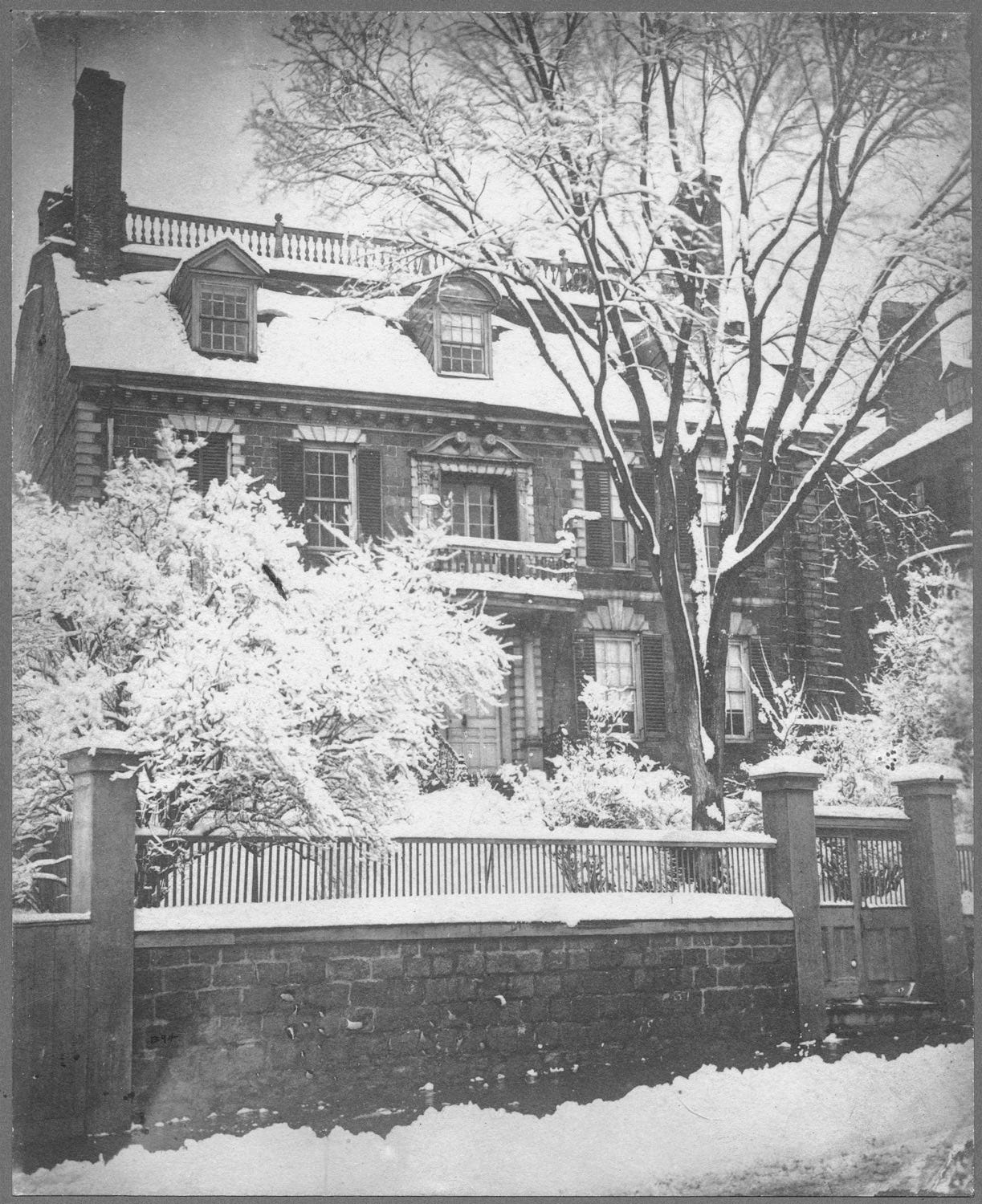
He changed the course of his uncle’s business, and built, and employed in trade, a great number of ships, and in this way, and by building at the same time several houses, he found work for a great number of tradesmen, made himself popular, was chosen select man, representative, moderator of town meetings…
-Thomas Hutchinson, Governor of Massachusetts Bay
When Thomas Hancock died, John inherited the entirety of the House of Hancock’s assets. He immediately got to work expanding the business, considering it his duty to provide for the people of Boston. Kurtz records the transition as follows:
John rose to his new station with determination and gravity—and it was well that he did. As John Adams recorded in his memoirs: “No alteration appeared in Mr. Hancock. The same steady, regular, punctual, industrious, indefatigable man of business…no less than a thousand families were every day in the dependent on Mr. Hancock for their daily bread.”
Such was Hancock’s care for those who relied on him that he was asked to be the godfather to several children in the community. When revolutionary mobs swept through Boston, they hit all the wealthy houses in the neighborhood except for Hancock’s. The admiration of the people of Boston for their de facto prince was genuine because Hancock’s charity towards them was genuine. Yet this does not mean, of course, that it was entirely selfless.
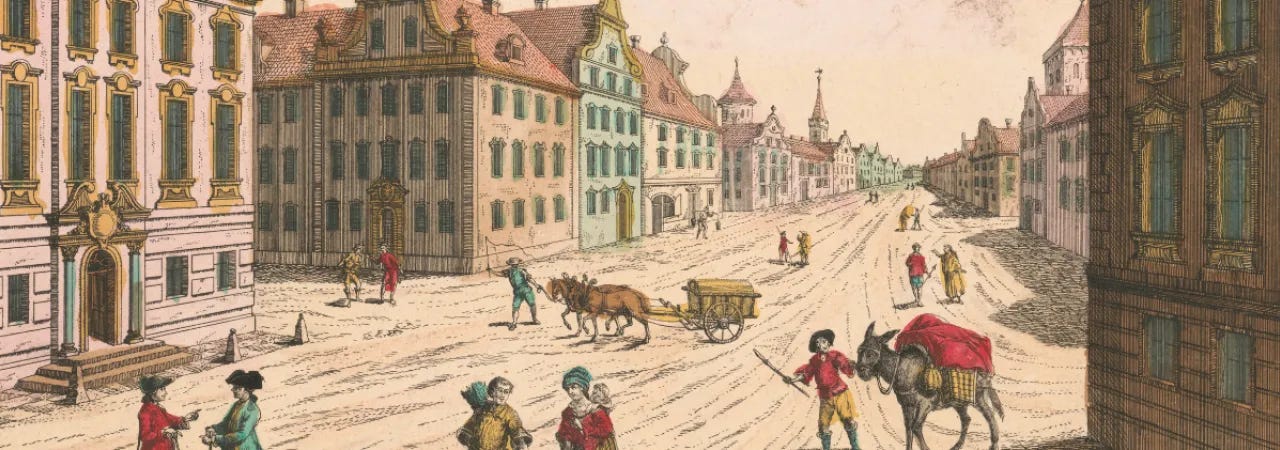
In working to expand his empire, Hancock inevitably came across hard-working and industrious men in his employ who desired to start companies of their own. Yet instead of stamping them out in order to secure his own monopoly, he offered to partner with him: he would provide capital, connections, and other support in exchange for equity in the new business.
Such arrangements reveal a second lesson from Hancock’s life, namely that not all charity need be selfless. Indeed, Hancock’s investments in these fledgling companies yielded better fruit than perhaps any donation would have done: he gave ambitious employees a meaningful stake in a business they owned, and avoided a turf war by ensuring both parties profited from the new venture. The result was more business for Boston, and more people better off.
But what, then, about Hancock made him so “unapologetic” an aristocrat? And why did the people of Boston love him for it, rather than resent them?
It all comes down to how Hancock presented himself publicly, and by doing the exact opposite of what most billionaires do today…
