
How a Student Becomes a Master
How Antonio Canova overcame adversity to elevate Western sculpture, while honouring its roots...

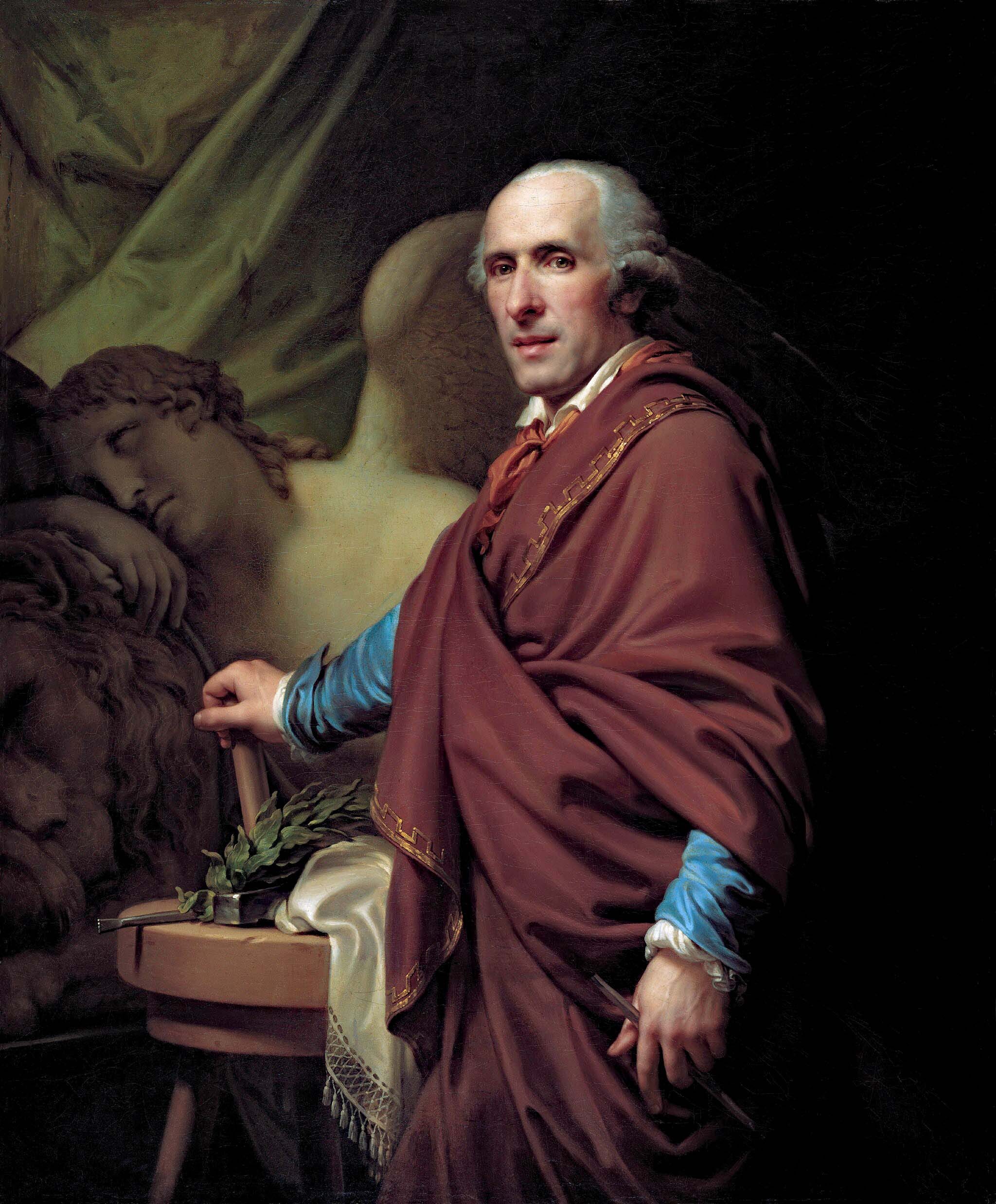
The annals of history are defined by the great men who steered its course. Their stories are, by definition, inspiring and worthy of remembrance in their own right.
The danger of merely knowing of them instead of studying them, however, lies in assuming that their example cannot be replicated. That they are there to be superficially celebrated rather than learned from.
In reality of course, such men rarely achieved greatness without first treading an arduous road to prepare for it. More often than not, the road to greatness is paved, ironically, by humility. By the willingness to listen to and learn from others, and take criticism constructively.
One man who was defined by precisely such a road was the man who rescued sculpture from stagnation, and near single-handedly launched the Neoclassical era from the cradle to the dominant aesthetic of the Western world — Antonio Canova.
Yet Canova could count upon no exalted lineage nor any exceptional advantage in his pursuit of greatness. He did it the old-fashioned way, by watching, learning and improving.
Here is what the last great artist that Venice produced can teach you about becoming a master in your field…
But first — we’re going to Italy!
This coming May, we’re hosting two exciting retreats to Bergamo and Venice. To learn more and apply to join us, click the button below:
Now, back to the article…
Finding Your Passion
On the 1st November 1757, Antonio Canova was born into a country defined by decadent decline. Four generations had passed since the Republic of Venice had last known glory worthy of celebration. Doge Francesco Morosini’s spectacular defeat of the Ottomans, and the conquest of the Morea, was a distant memory now, and those gains had since been squandered.
Geopolitically, Venice was a shadow of her former self, whose once great dockyards were silent, and whose ancient families more often lost their fortunes in the city’s casinos than made new ones in commerce. Born in the small town of Possagno on the Venetian Terra Firma, Antonio himself was little different. The Canova family, after all, was of honourable descent, but impoverished by years of reckless investments. Worse, Antonio was just three when he lost his father. With his mother remarrying not long after, the boy was treated as an afterthought, all but abandoned upon the doorstep of his grandfather Pasino, a local stonemason who specialised in altars.
Denied an ordinary or comfortable youth, Antonio was just a child when he was sent to work in a marble quarry. Over the years of this labour, however, he began to experiment with stone, carving modest figures. One of these he gifted to the son of a Venetian senator, Giovanni Falier, in whose rustic villa Antonio’s grandfather happened to be working as a gardener at the time.
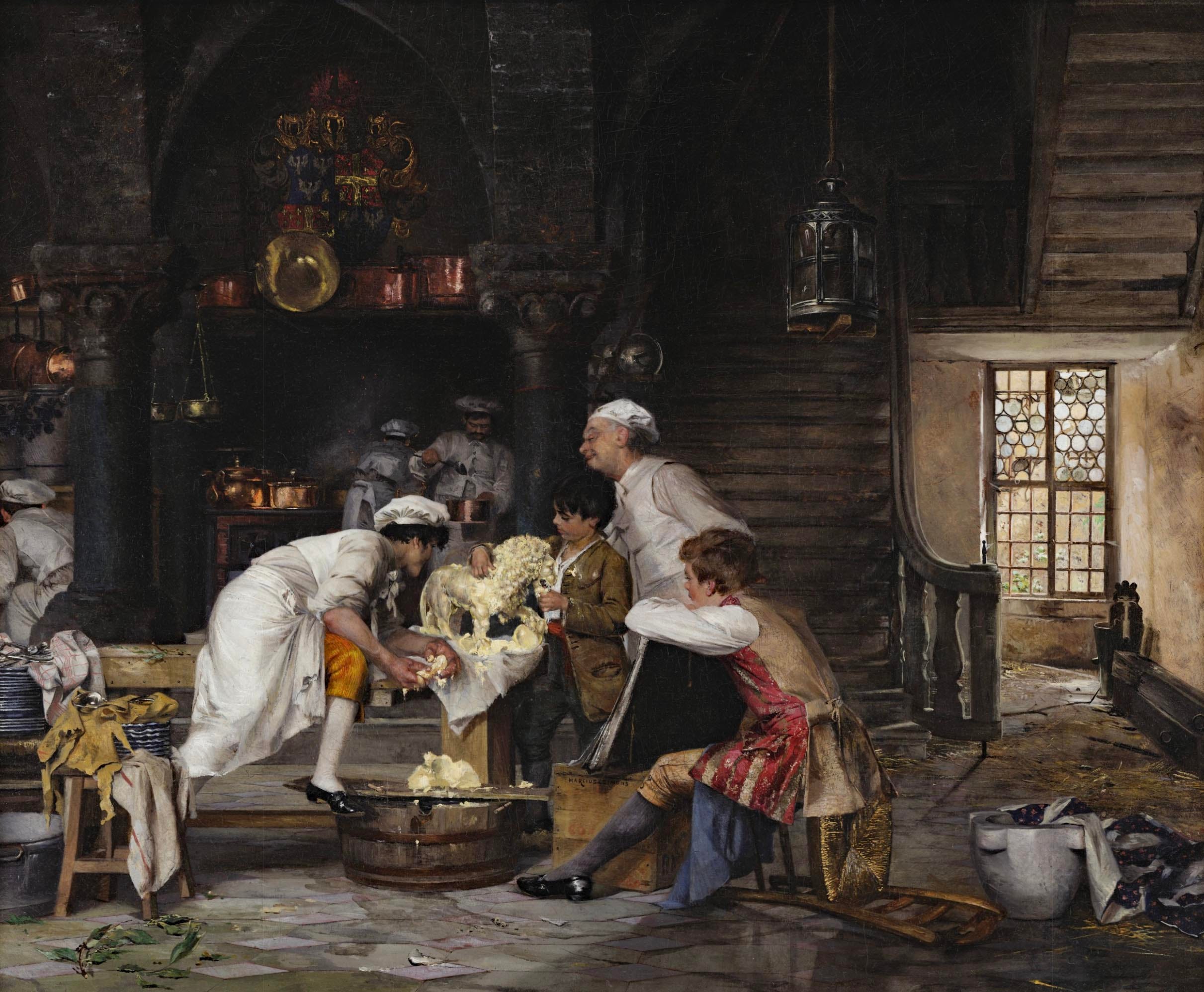
Welcomed into the villa, it was here that the barely ten year old Antonio Canova revealed his genius and his passion, when to the astonishment of the household he modelled a patriotic Lion of Saint Mark out of butter for Falier senior’s banquet table (an iconic moment immortalised by the above painting).
The senator, amazed, arranged for Antonio to be apprenticed to the sculptor Giuseppe Bernardi in Pagnano, and then Venice proper. But while his talent was clear, it was still rough, unhoned and undirected.
But sculpting was not to be a mere trade to Antonio Canova. Indeed while the hours spent in Bernardi’s workshop formed his training, it was those beyond which formed his true education.
Following his arrival in Venice in 1768, the still minor Canova would find no shortage of inspiration. One of his favoured sanctuaries was the residence of Filippo Farsetti, the city’s foremost patron of the arts, on the Grand Canal. More particularly, however, it was Farsetti’s collection of plaster casts of ancient statues that captivated him. For hours, Antonio would ponder them, sketching them and dreaming. Sensing his calling, in his evenings he attended the Academy of Fine Arts to better learn how to draw the nude human form — the bread and butter of classical sculpture.
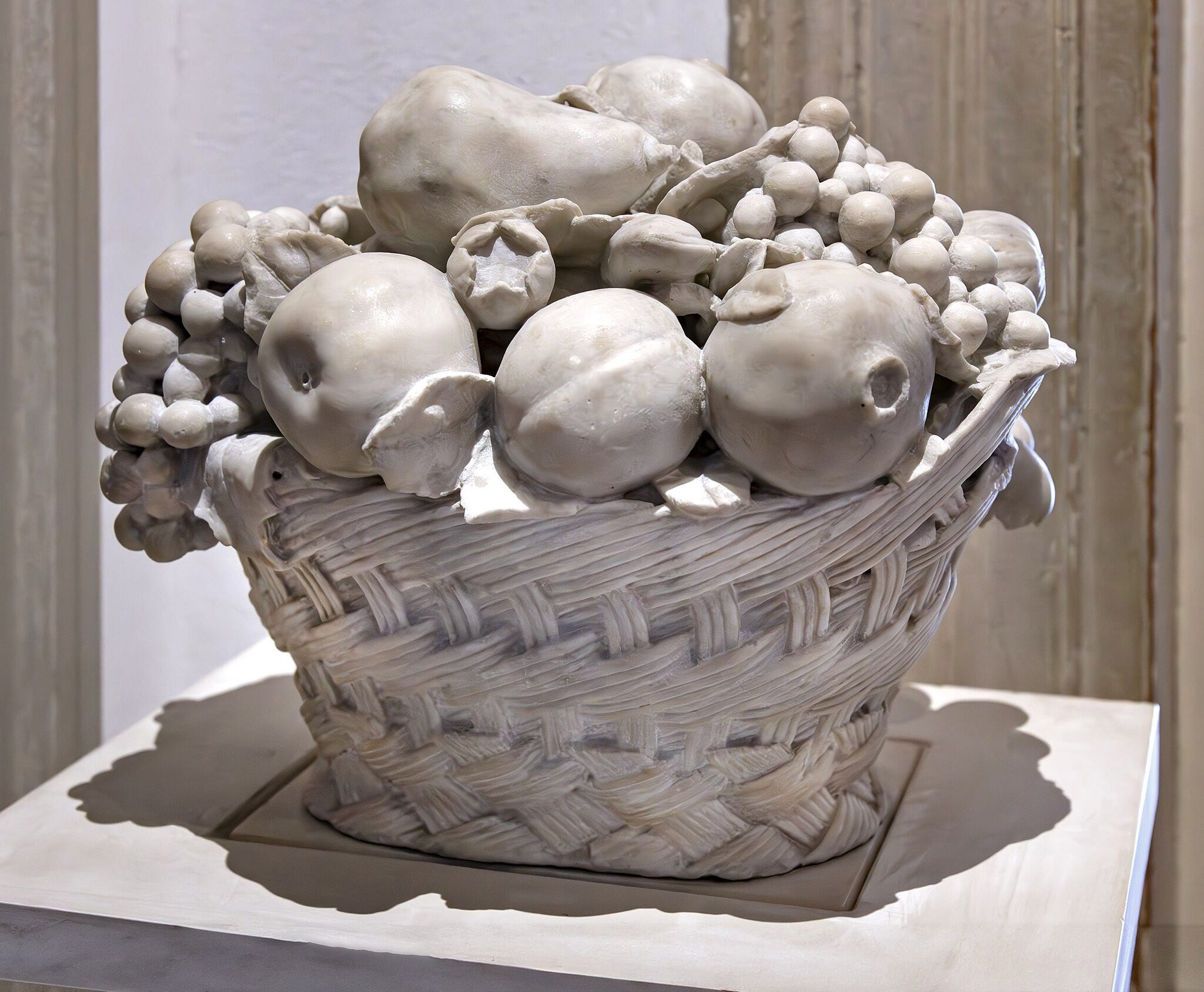
This life of ‘double education’ enabled Canova to rapidly outstrip his peers, particularly when Bernardi’s death in 1773 suddenly cast him into the deep end. Farsetti himself however, evidently impressed by the boy who had taken such an interest in his household ornaments, gave him his first independent opportunity in Venice. It was a modest start, but the two Baskets of Fruit Canova carved for him in 1774 (one of which is pictured above) form an impressive debut for a teenager.
After all, one cannot be a master of anything until one has mastered the basics. From there, one can turn to mastering the classics…
Studying the Greats
Canova did not rest upon his laurels. In 1775, after winning the second prize at the Venetian Academy, for a terracotta copy he had made of one of Farsetti’s plaster casts, he seized the chance to prove the worth of his evening classes.
Senator Giovanni Falier, who doubtless still fondly remembered the butter lion that the boy had crafted for his table, commissioned Canova to carve his first full size Baroque sculptures. Working on them for the best part of three years, the Orpheus and Eurydice he produced in 1777 delighted Falier, though the appreciation Canova was winning amongst the Venetian aristocracy ensured that the pieces were almost immediately superseded.
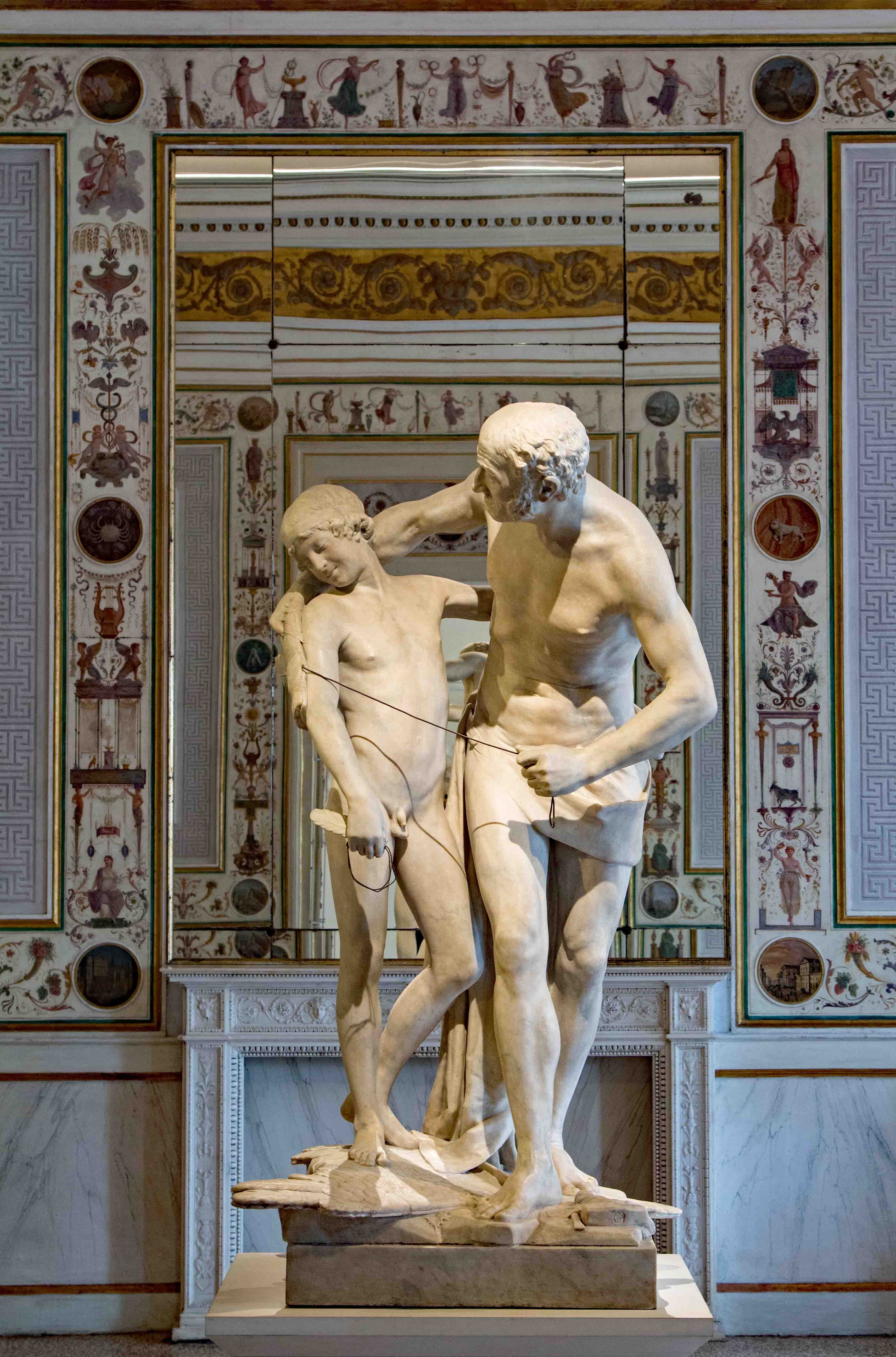
Now able to work more quickly and more confidently, on the occasion of the 1779 Feast of the Ascension, the twenty two year old Canova unveiled his first true masterpiece — Daedalus and Icarus. With two figures in the same sculpture this time, a father and son, emotion expertly carved into their faces, it was a Baroque painting in marble form. With his ability to translate sketches into stone, and his command of a chisel trained by Berardi and those long months at the quarry, it was the perfect symbol of all Canova had worked for.
The man who commissioned Daedalus and Icarus, the delighted Procurator Pietro Pisani, paid Canova 100 gold zecchini for it. The sculptor, however, decided to invest the money in his own education. No longer content with working from mere copies, Canova resolved to cut out the middle man and study at the source, and for that he would have to travel to Rome.
By the late 18th century, a Grand Tour of Italy was the essential education of an aspiring gentleman. As a Venetian, Canova had a head start in such an education, not least due to the diligent curiosity he had pursued in Venice herself. But upon arriving in Rome, the awe Canova felt was no less than that felt by the plethora of aristocratic British, French and German tourists who were discovering the Eternal City.
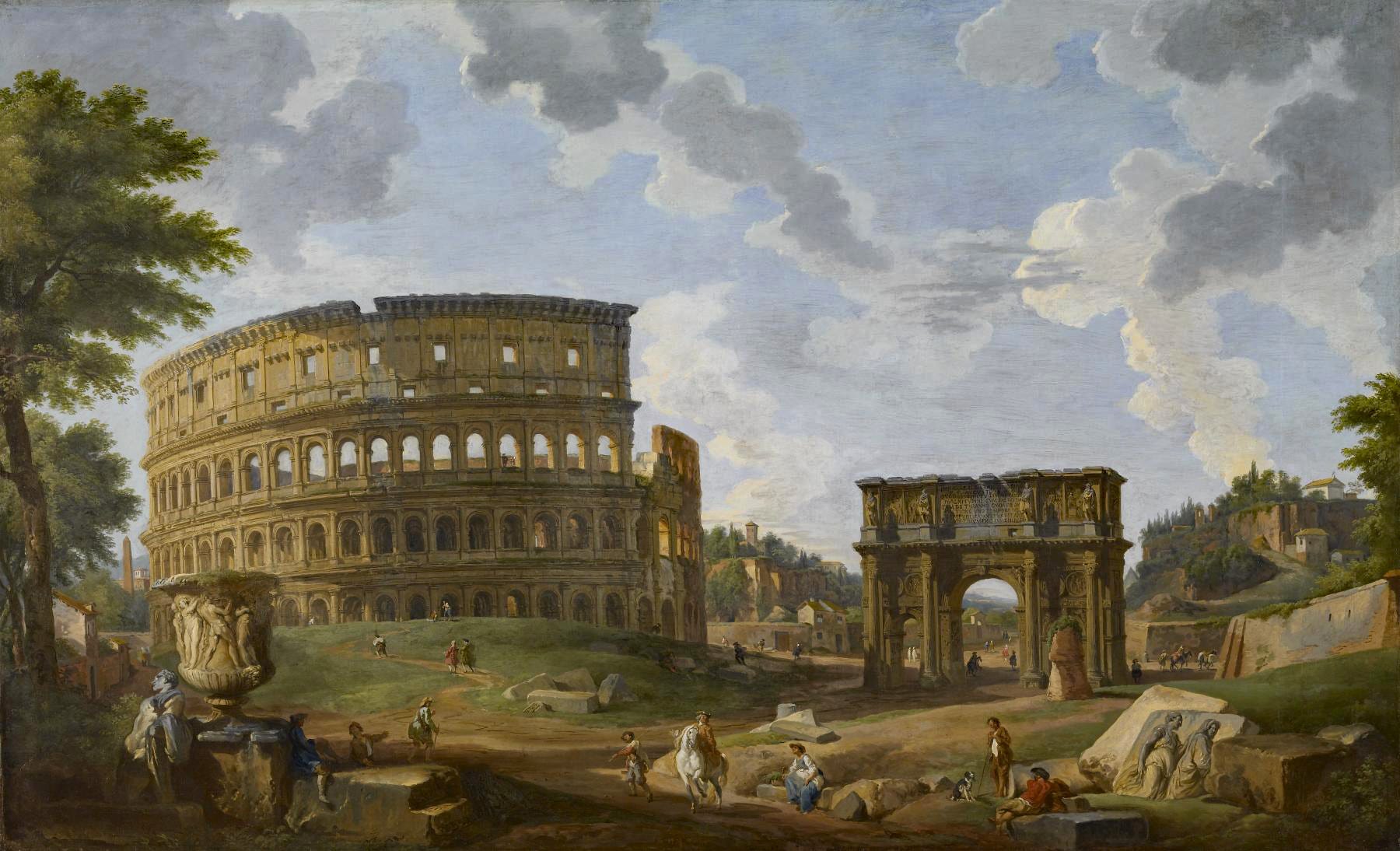
His achievements back home would enable him to experience it in that much more glamour, for he was hosted by the Venetian Ambassador himself, Senator Girolamo Zulian, who all too happily granted lodgings in Palazzo Venezia to the man who was the talk of cultured Venice.
By every account, including that of his own diaries, it was a moment of profound discovery for Canova. In Venice, he was on the verge of becoming a large fish in a small lake. In Rome, he was but a minnow in a vast ocean. In Rome, seat of the old empire, and stage of the Papacy itself, standards were exceptionally high. How could they not be, in a city whose ruins provided a continual benchmark for what quality could be?
True to his nature, for Canova there were scarcely enough hours in a day to discover Rome and record her in his sketchbooks. From the Capitoline to the Vatican, he would find all the inspiration he would ever need. At the same time, Zulian ensured that his appreciation would remain rooted in meaning by assigning his own secretary to instruct Canova in languages, the Greek and Roman classics and the intricacies of ancient mythology.
But a man who aspires to greatness cannot waste away the years purely in study. Sooner or later he must raise his head above the battlements and take a risk.
So in 1781, when the Ambassador commissioned a sculpture from Canova, it was time to prove that his studies had been a good investment. Even more so when Zulian instructed the boy to choose his own subject for the statue.
What he delivered would astound Rome, and prove that true mastery does not seek to destroy what came before, but build upon it…
