
Do You Want to Change the World?
Pope Pius XII on productive resistance...

In our divided times, there is perhaps one thing which unites all of us. Arguably, not one of us lives in a country that is governed in the way we wish it were.
Last week, we considered the question of what is and what is not worth worrying about. As Epictetus concluded, it is a waste of time getting anxious about anything you have no control over. Amid his helpful solutions for facing everyday worries, however, there is something missing. If we cannot directly control the wider world and its trajectory, but we still care about it, is there really nothing we can do?
Fortunately, this gap was filled in splendid style on the 8th January 1947, when Pope Pius XII addressed the Roman nobility on how to respond productively to a new world order that was hostile to aristocracy and Christianity alike.
Today therefore, we explore what Pius XII can teach you about how to stop simply lashing out at the world, and start actually changing it…
At INVICTUS, our mission is to explore the practical wisdom you can learn from the greatest leaders, thinkers, and artists of the past, through their own words and deeds.
If this resonates with you then subscribe below to receive an in-depth article every week exploring how influential figures were able to achieve what they did, and how you can start following in their footsteps…
Do Not Desert
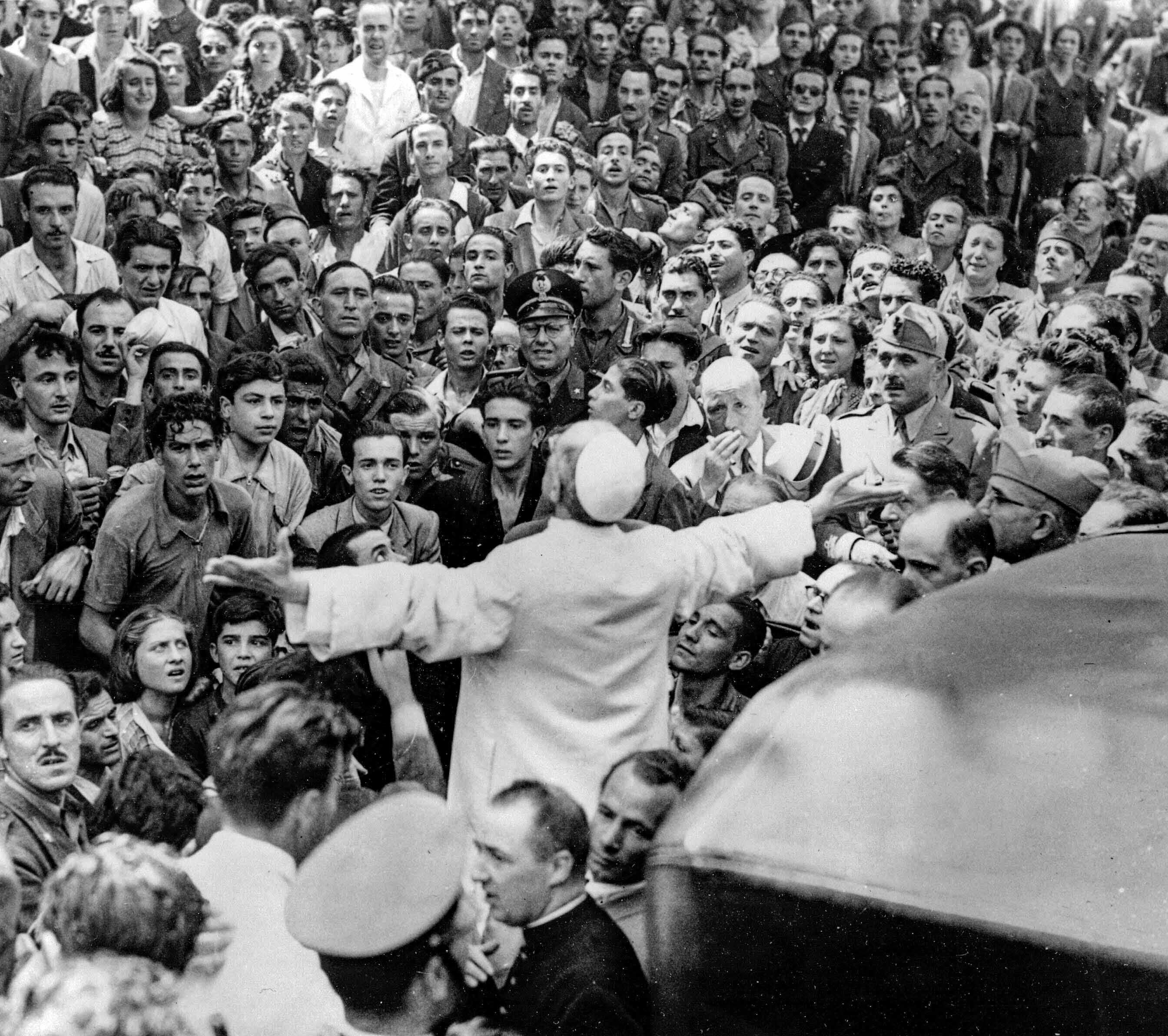
“Uncertainty remains the dominant feature of the present moment, not only in international relations, where we hope for peaceful settlements that are tolerable at the very least, but also in the internal ordering of individual nations. Here too, there is as yet no way to foresee with any certainty what will be the final outcome of the meeting or clash of the various tendencies and forces, and especially of the different and discordant doctrines in areas of religion, politics, and society.”
Pope Pius XII, Allocution to the Roman Nobility, 8th January 1947
Pius began his address by calmly reiterating the reality, and gravity, of the situation. He was, after all, addressing a people in the midst of an unprecedented national trauma.
Over three years had passed since Italy’s surrender in the Second World War, but the true scale of the consequences were only beginning to unfold. Just months earlier the Kingdom of Italy — still under foreign military occupation — had been abolished following an enormously divisive and geographically polarising referendum plagued by widespread evidence of rigging. At the time of the Pope’s address the resulting political regime in Rome was drafting the new constitution, guided by secular republican convictions that were fundamentally at odds with those held by much of the Italian population, as well as the Catholic Church itself.
Since the government had made clear their intention to erase the nobility — and thus centuries of tradition — from formal public life, the noblemen who listened to this address were highly representative of the many Italians who now felt themselves strangers in their own country. In the manner of an ancient Greek philosopher, however, Pius began by warning them what not to do:
“The first of these modes of conduct is unacceptable: that of the deserter, of him who was incorrectly called the “emigré à l’intérieur”; it is the abstention of the angry, resentful man who, out of spite or discouragement, makes no use of his qualities or energies, participates in none of his country’s and his epoch’s activities, but rather withdraws — like Achilles in his tent, near the swift-moving boats, far from the battles— while the destinies of the fatherland are at stake.”
Pope Pius XII, Allocution to the Roman Nobility, 8th January 1947
If one consumes nothing but ‘The News’, particularly when said ‘News’ is delivered through channels controlled by the malintentioned, then it is all too easy to fall into despair.
To do this, however, is to do precisely what they want you to do — to resign yourself to impotence in the face of apparent omnipotence, and take your own piece off the board. A man might do this out of wrath, or else of apathy. Neither are solutions, however while anger might be counterproductive as it misdirects energy, as Pius pointed out it is mildly preferable to indifference:
“Abstention is even less appropriate when it is the result of an indolent, passive indifference. Indeed, worse than ill humor, worse than spite and discouragement, would be nonchalance in the face of a ruin into which one’s own brothers, one’s own people, were about to fall. In vain would it attempt to hide behind the mask of neutrality; it is not at all neutral; it is, like it or not, complicit.”
Pope Pius XII, Allocution to the Roman Nobility, 8th January 1947
Righteous anger can motivate virtue, but wrathful anger does not, for the latter steadily saps motivation until the bearer is no more productive than the indifferent.
If the governing classes are turning towards evil, care but do not allow yourself to be provoked into rash responses which could discredit you and your convictions. Remain conscious and in control, and you have saved your cause from death. Next, you must stabilise the patient…
Bend, But Do Not Break
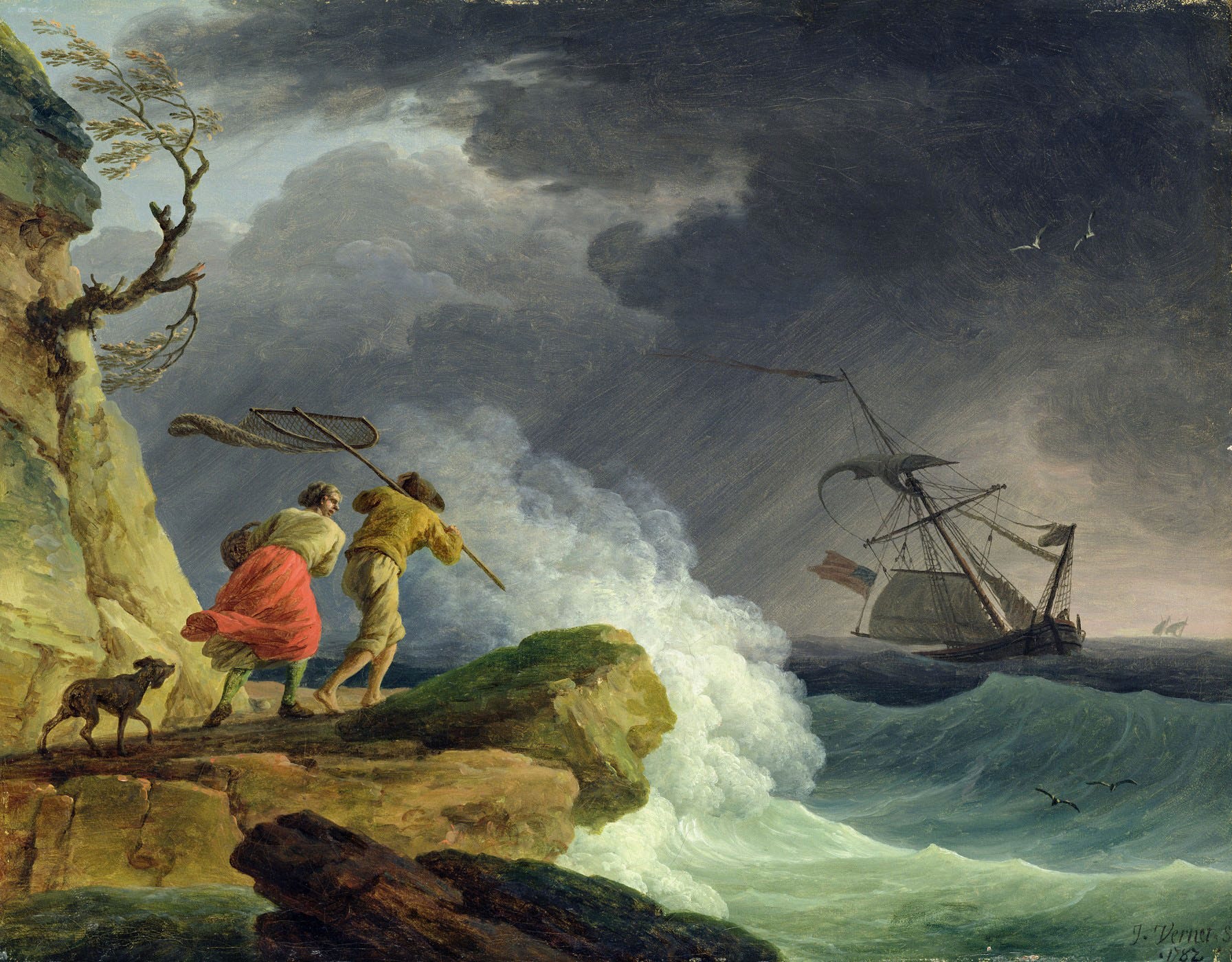
Each light snowflake falling softly on the mountain’s slope and adorning it with its whiteness plays its part, while letting itself be dragged along, in turning the little clump of snow that breaks away from the peak into the avalanche that brings disaster to the valley, crushing and burying peaceful homes. Only the solid mass, which is one with the rock of the foundation, can victoriously resist and stop the avalanche, or at least diminish its destructive course.”
Pope Pius XII, Allocution to the Roman Nobility, 8th January 1947
Key to avoiding desertion or abstention is indeed knowing the nature of the beast. The noble and courageous man indeed understands that the apparent omnipotence of an immoral order is just that — apparent. He does not succumb to its messaging that would have him believe that he is alone. Armed with this realisation, it is suddenly much easier to bear the provocations of that order with dignity.
To echo the Pope’s splendid metaphor, the destructive power of illegitimate orders is made an avalanche only by the steady fall of snowflakes that are individually fragile. Each man who succumbs to despair, deserting or abstaining from society, adds to the deluge. Yet the man who remains a rock resists the avalanche without even moving, let alone actively fighting back.
In order to change the world therefore, it is vital that your goal is not distracted or derailed by individual outrages of the foe. Bear them with dignity, neither fleeing the field nor retaliating in wrath. Every time you do, your cause gains converts, and its foundations shift from snow to stone. It is indeed precisely by this manner that Christianity itself first flourished — by the martyrs enduring even the most degrading of tortures and deaths as cruel sport for heathen spectators. With each martyrdom, a pillar of the pagan order was knocked out, and one was erected under the Church:
“In this same way the man who is just and firm in his desire for good, the man of whom Horace speaks in a famous ode, who does not let himself be moved in his unshakeable thought by the furor of the citizens who give criminal orders nor by the tyrant’s menacing scowl, but remains undaunted, even should the universe crumble over his head: ‘si fractus inlabatur orbis, impavidum ferient ruinae’”
Pope Pius XII, Allocution to the Roman Nobility, 8th January 1947
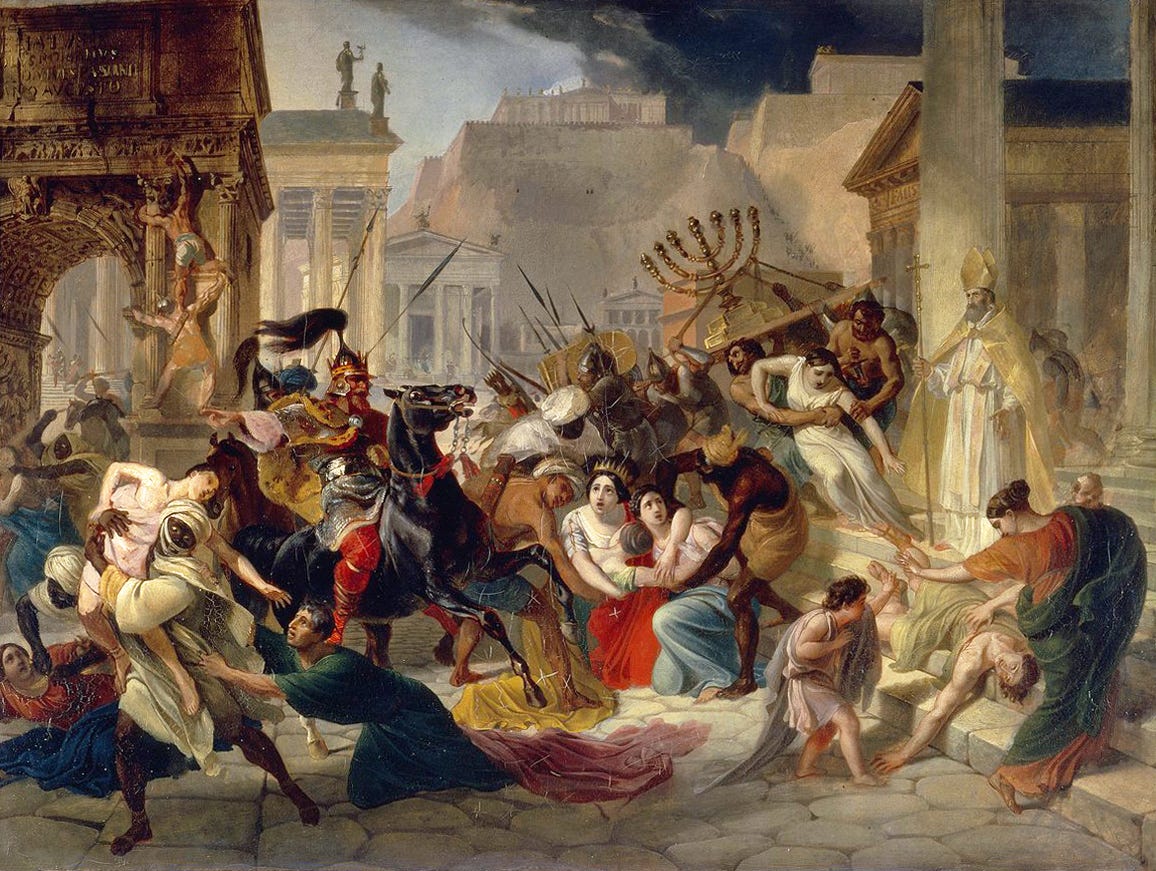
The Latin line of Horace that Pius quotes above can be translated as this — “Should the shattered world fall, its ruins will strike him unafraid” (Horace, Carmen Secularae, III, 3). No matter how much damage the vilest regime appears to inflict upon all that you hold dear, and no matter how biting the pain of witnessing it may be to your soul and sentiment, realise that there is nothing they can destroy which cannot be rebuilt after they fall. Furthermore, every outrage they perpetrate which is resisted with dignified nobility hastens that fall. Your duty, therefore, is to simply ensure that your cause outlasts them. Strategic patience is your primary virtue.
The beleaguered Italians of the 6th century AD after all, having witnessed the traumatic fall of Rome in the West and the violation of Italy by uncouth hordes, could so easily have surrendered to despair. Fortunately, enough did not that over the course of the centuries, Italy recovered her place as the fulcrum of civilisation once more. In some cases, the second wind was even greater than the first. Few who visit Florence today, after all, come to admire the ruins of Roman Florentia over the glories of the Tuscan Renaissance.
“And if he cannot contain its destructive force, he will be there again to rebuild the demolished edifice, to sow the devastated field. That is what your conduct should rightly be. It must consist — without having to renounce the freedom of your convictions and your opinions on human vicissitudes — in accepting the contingent order of things such as it is, and in directing its efficiency toward the good, not of a specific class, but of the entire community.”
Pope Pius XII, Allocution to the Roman Nobility, 8th January 1947
In a sense therefore, Pius is reiterating the core message of Epictetus — to not be drawn by what you cannot control. An odious regime will do odious things, and as long as they control the monopoly of force, fighting back in an impulsive manner invariably wastes resources, since any victory is likely to be fleeting unless you have the ground game to consolidate it.
Just stabilising the patient indeed does not guarantee his recovery. It merely affords the opportunity for it. Doing nothing could easily result in a relapse into emergency. So how do you stop merely surviving, and start mounting a winning counter-attack?
Fortunately, Pius XII tells us not what we want to hear, but what anyone who is serious about changing the world needs to hear…
Aim For the Root, Not the Crown
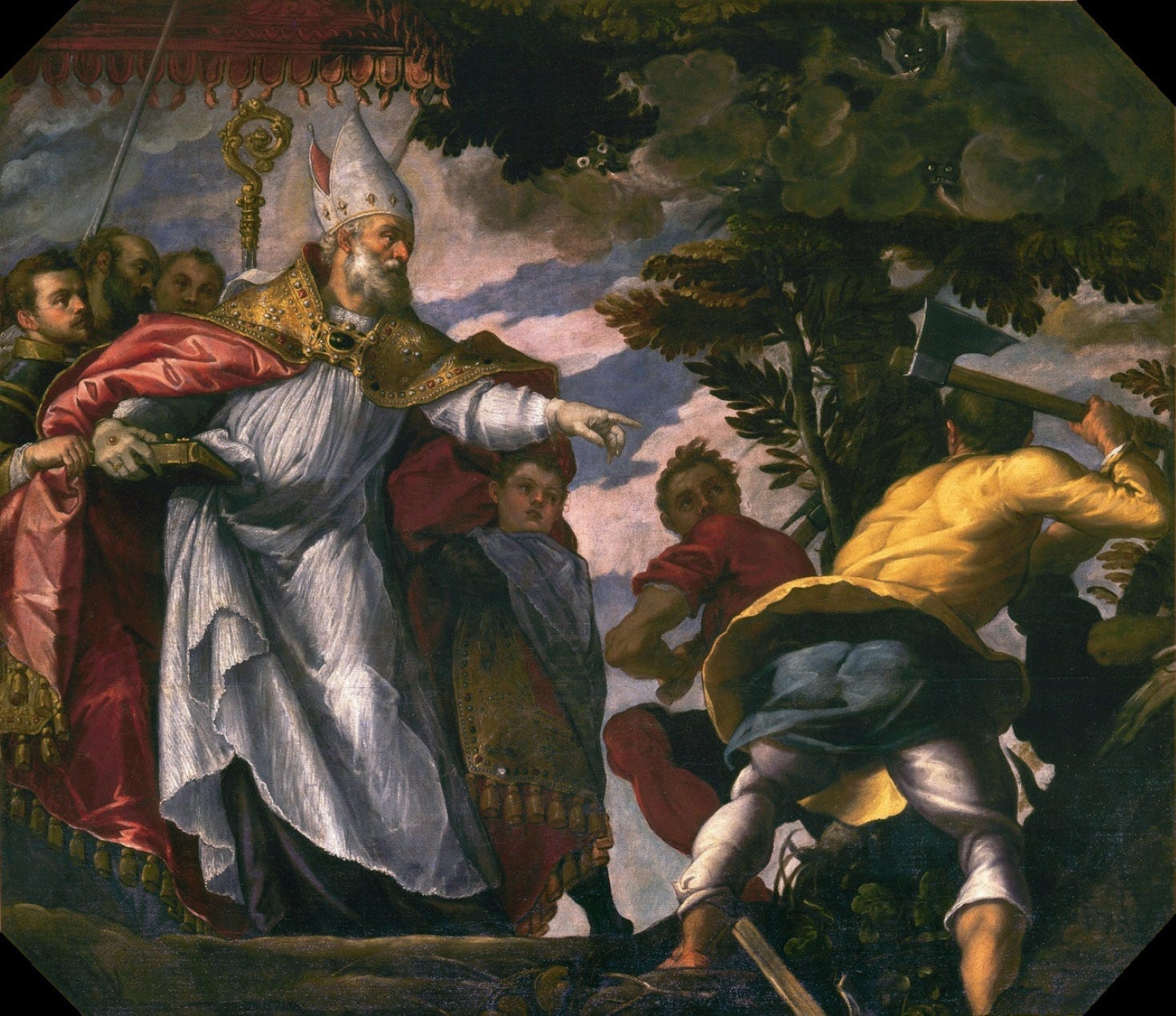
The Achilles’ Heel of almost any movement that wishes to change the world is an excessive focus on grand gestures and dramatic clashes. An obsession, if you will, with ‘getting over the line’ no matter the cost, guided by the dangerous notion of ‘We just need to get in power, then everything will be alright’.
This approach is vulnerable to two key weaknesses. On the one hand, it can easily result in a desensitisation to evil in one’s own ranks, chopping away the roots of the movement even while the foliage might appear to be blooming. The second is that it robs tomorrow to pay today. Once you take power, you have to hold it, and unless solid societal foundations have been erected to support your new order, it will take very little to topple it. As a result, mounting a coup d’état is enormously risky. You could just as easily lose it all, and end up in a worse situation than when you were marginalised, as your movement is now powerless and discredited.
If you are serious about reshaping your country or the world therefore, you must focus on the roots, and not the crown:
“It is quite possible that certain grave events that had been developing over the year just past had a sorrowful echo in the hearts of more than a few of us. Yet those who live in the richness of Christian thought do not let themselves be defeated nor discouraged by human occurrences, whatever they may be, and are always bravely turning their gaze to all that remains, which is indeed great and most worthy of their care. What remains is the country and the people”
Pope Pius XII, Allocution to the Roman Nobility, 8th January 1947
Win the people, and power will follow. Focus on winning power, and you will lose the people. If you were to seize power and pass a sweeping new body of laws, what good would that be if half the people in your own movement viewed them cynically, and much of the population saw no legitimacy in them? You would have become the very thing you professed to despise.
“Besides, what good are the best laws if they are to remain a dead letter? Their efficacy depends in large part on those who are supposed to apply them. In the hands of men who have not the spirit of the law within them, who perhaps in their hearts disagree with what it provides for, or who are not spiritually or morally capable of putting it into effect, even the most perfect work of legislation loses much of its value.”
Pope Pius XII, Allocution to the Roman Nobility, 8th January 1947
Just as you feel disgust at what that odious regime is doing to your country now, what will you do to prevent others feeling disgust at what you would do?
The secret of course is the secret to any well-written story…
Live the Change You Demand
If you want to win over converts, show, don’t tell. If you want to earn power that will be lasting and respected, you need to put in the legwork so that you are not only telling people your way is better, but showing it too.
Do you resent the secular order and its continued outrages against the Faith? Do not just complain about it, Pius advises, but live what it is you would defend. Live your Faith in the true sense. Be loyal to it and its teachings. It is no good being willing to take up the warrior’s sword unless you are also willing to take up the shepherd’s crook. You want to crusade, but do you want to heal the sick and protect the needy?
“Thus does the voice of your fatherland, prompted by the severe upheavals of recent years, call for the collaboration of all honest men and women in whose families and in whose persons reigns the best of the spiritual vigor, the moral categories, and the old and still living traditions of our country. That voice is exhorting them to make themselves available to the State with all the force of their most heartfelt convictions, and to work for the good of the people!”
Pope Pius XII, Allocution to the Roman Nobility, 8th January 1947
Are you appalled at the globalisation of power and the steady asset stripping of local communities? What do you do to support your local community? Do you know your own neighbours? Do you volunteer in your evenings or on the weekend? You criticise the likes of Amazon in public and denounce the death of the local shop, but in the quiet of the evening do you succumb to hypocrisy? Do you truly embody the ideals you would demand of the world?
This of course is not an easy matter to confront. We all of us face a daily struggle of balancing our integrity with practical reality. Pope Pius did not sugarcoat this, and said as such to the nobility:
“Your task is therefore far from being a negative one. It presupposes much study, much work, much self-abnegation, and above all, much love. Despite the rapid evolution of the times, it has not lost its value, it has not reached its end. What it also requires of you — something that ought to be the salient feature of traditional and family-oriented upbringing — is the noble sentiment and the will not to take advantage of your station — an often solemn, austere privilege nowadays — except to serve.”
Pope Pius XII, Allocution to the Roman Nobility, 8th January 1947
If you want to lead by ideals, you must first learn to serve those ideals. It is this of course which separates the ‘wheat from the chaff’. It exposes the charlatans and reveals those who are truly committed to changing the world out of selfless conviction over selfish ambition, and therefore those who are far harder for the political machine to take down.
We have each been assigned gifts and talents particular to us. One of us might be a shrewd businessman, another a brilliant painter. Some are born to lead, others to be quietly productive. Each of us has a role to play in guiding our fellow man to righteousness, as Pius would remind the Roman princes two years later:
“Divine Providence has assigned everyone in human society a specific function; it has therefore also divided and distributed its gifts. These gifts and talents are supposed to bear fruit, and you know that the Lord will ask each to account for how they were administered, and according the benefits gained he will judge and separate the good servants from the bad (cf. Matt. 25:14 ff.; Luke 16:2).”
Pope Pius XII, Allocution to the Roman Nobility, 15th January 1949
Instead of trying to fight a civilisational war all by yourself therefore, focus on the individual skirmishes within it that you are equipped to win.
After all, you want your order in power. But you want it to last, do you not? You want it to outlive you, and you want to die confident that it will remain strong on its own merits, such that any who attempted to overthrow it would make an enemy army of the population?
Then know that for any victory to be lasting, it must begin in the home before it may triumph in the streets…
Exceptional — thank you.
The odious regime?! That was the one just toppled and to which the pope and nobility had acquiesced. Shameful.