
The Secret Power of Partnerships
How the right one can change your life…

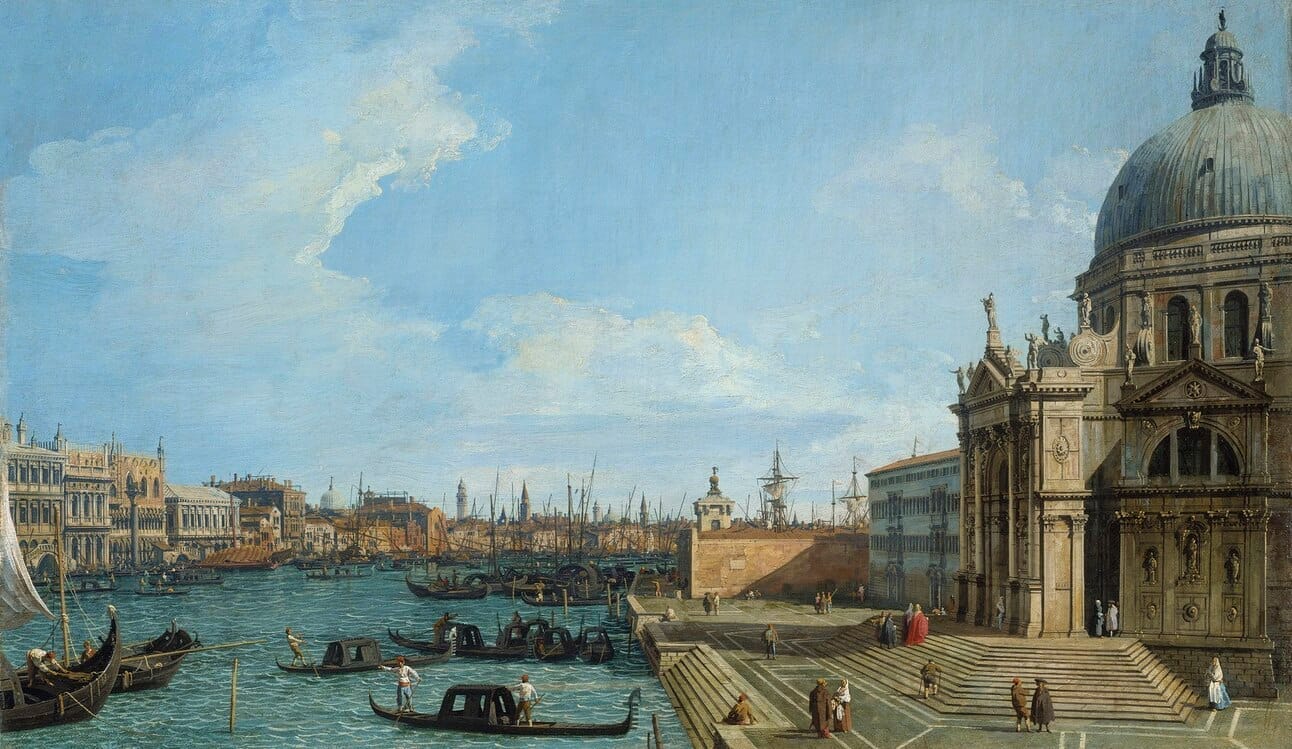
Almost any of the famous paintings you see of Venice today are made by one artist: Canaletto. One of the most successful painters of the 18th century, he was the undisputed master of this field, and even sold over 200 of his works to the British king.
But of course, it wasn’t always this way. At the start of his career, Canaletto was laughed at by Venice’s art establishment and derided by his peers for making “postcards”. So what changed, and how did he turn it all around?
The secret lies in Canaletto’s ability to form and keep strategic partnerships. By teaming up with the right people at the right time, he was able to go from overlooked “postcard” painter to one of the European aristocracy’s (and King George III’s) favorite artists.
Today, we look at how Canaletto leveraged his partnerships to become one of history’s most famous landscape painters, and how you follow his example to achieve success.
But first — we’re going to Italy!
This coming May, we’re hosting two exciting retreats to Bergamo and Venice. To learn more and apply to join us, click the button below:
Now, back to the article…
Mastery Meets Marketing
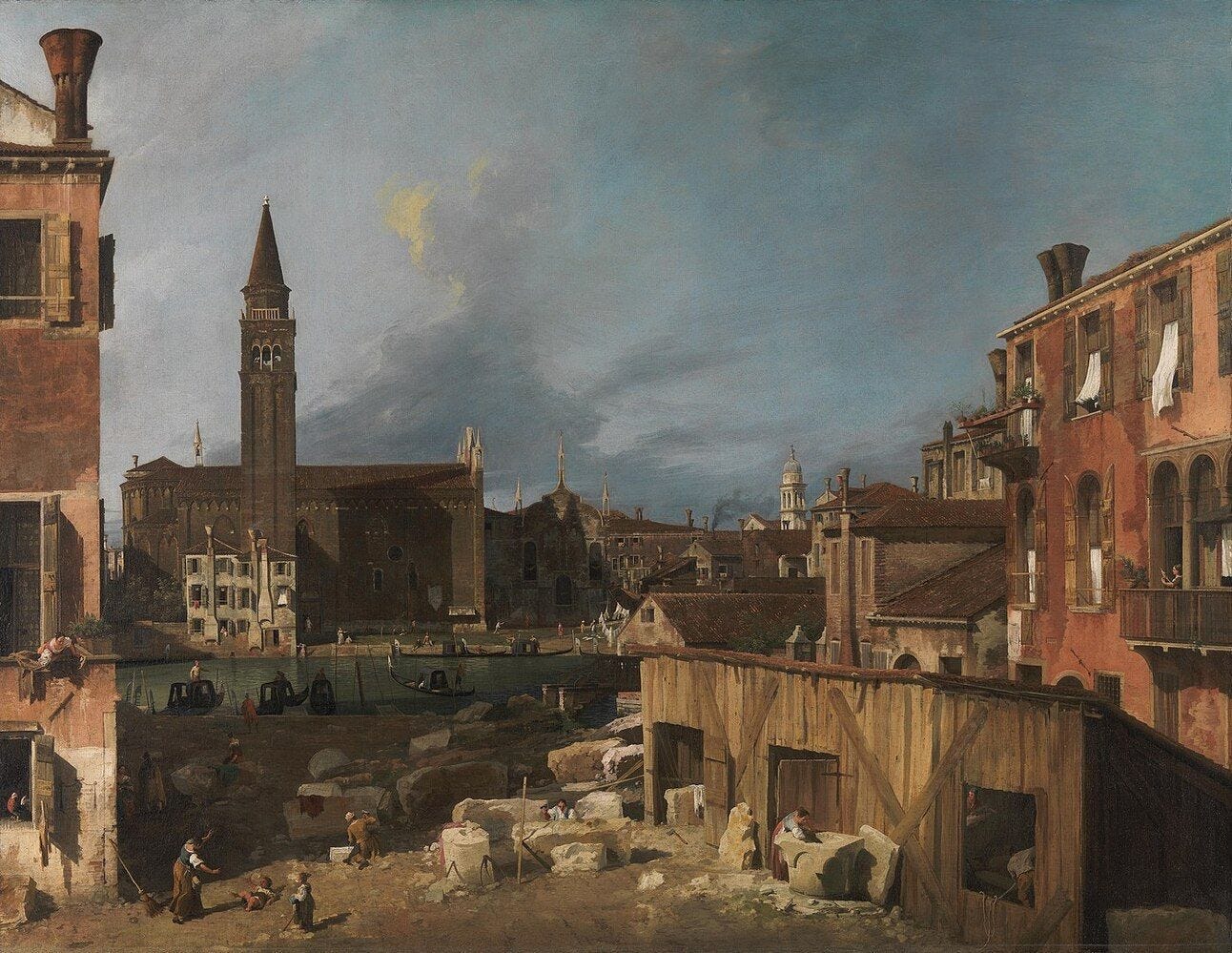
Before Canaletto was a painter, he was a set designer for the theatre. His experience there gave him an eye for detail, which was a strength he leveraged once he decided to get into painting. But unfortunately, some of the habits of Canaletto’s old profession stuck.
In his early work, such as the painting above, you can tell that Canaletto’s technical skills were well developed: everything is depicted properly, but something about the painting lacks energy. It doesn’t “pop”. Able to see the diamond in the rough, however, was an Irishman by the name of Owen Swiny, who approached Canaletto with two ideas that would transform his career.
Swiny’s first suggestion was that Canaletto stop seeking the approval of the Venetian art establishment, and instead paint for foreigners. Wealthy tourists who wanted to remember their time in Venice would be a perfect market, and one well-disposed to purchasing Canaletto’s landscapes of the city.
Swiny’s second suggestion followed up from the first: make the paintings brighter! No tourist, he said, wanted to remember dreary skies, but rather warm and sunny days. So it was that the signature blue skies of Canaletto’s paintings were born.
In retrospect, it’s easy to see these changes as obvious improvements. But for Canaletto, as with all who find themselves on the receiving end of feedback, it wasn’t so clear at the moment. It is to Canaletto’s credit, therefore, that he didn’t remain so stubbornly centered on his own artistic vision, but instead remained open to Swiny’s advice.
Because as we shall see, it was thanks to Swiny that Canaletto first burst onto the international stage…
Dealing with Distribution
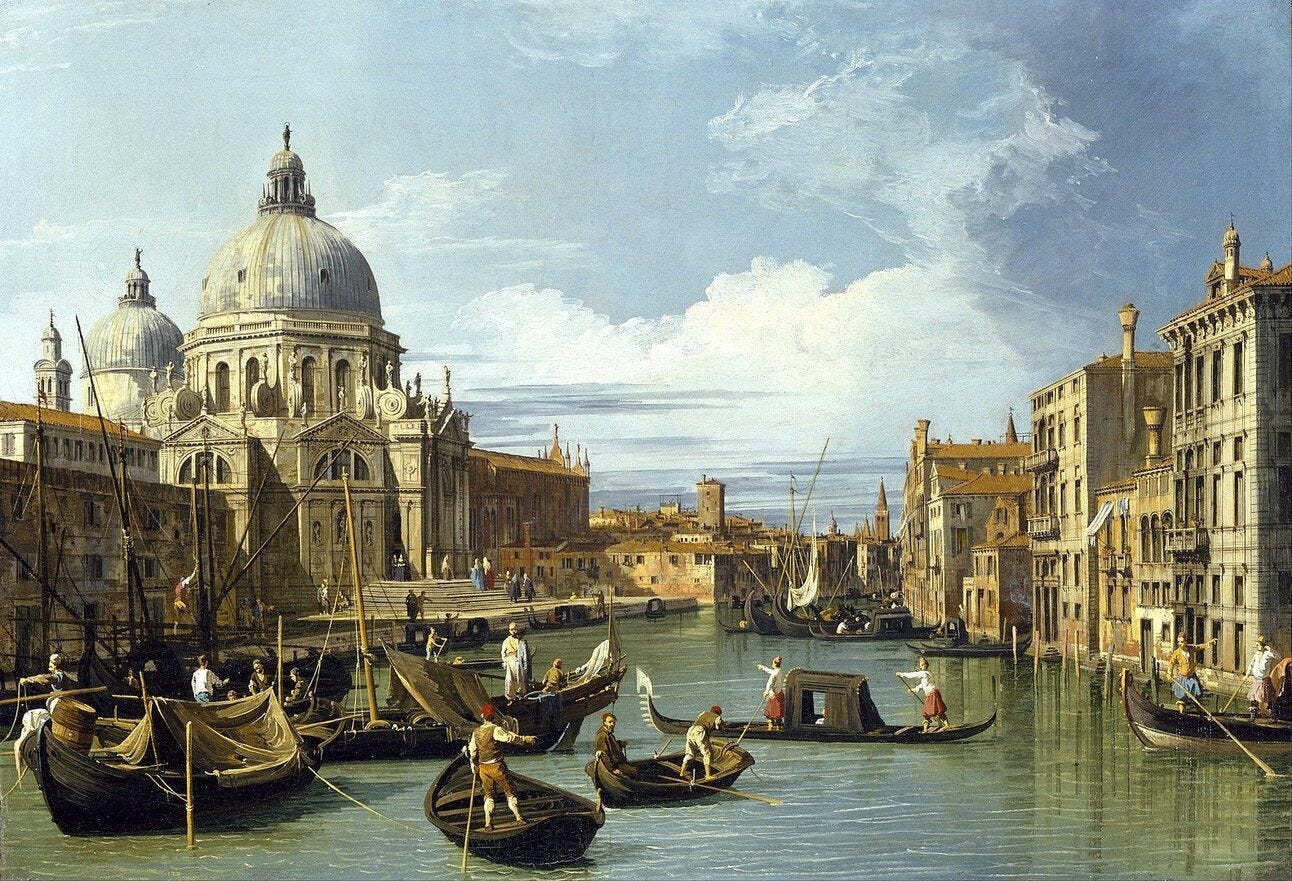
Once Canaletto began implementing Swiny’s advice, the Irishman began promoting his work. Since he spoke English, Swiny could introduce Canaletto’s work to British buyers, especially young aristocrats stopping in Venice on their Grand Tour. He continued to aid Canaletto creatively, giving him insight on how to improve the paintings for British customers.
The set-up worked perfectly, and Swiny was rewarded with a cut of all the earnings he sent Canaletto’s way. The artist’s reputation began to grow, winning the attention of increasingly prominent buyers. Chief among them was the British consul to Venice, Joseph Smith.
If Swiny was the talent-spotter, Smith became the systems builder, and soon struck up a partnership with Canaletto to take his work mainstream. Using his status as a diplomat to win trust with elite buyers, Smith then took over the administrative side of the business, controlling the pricing, access, and distribution of Canaletto’s work. As a result, demand for Canaletto paintings skyrocketed, and soon even King George III became an interested buyer.
On the surface, both Swiny’s and Smith’s contributions to Canaletto’s career seem pretty basic in retrospect. None of what they suggested or implemented was truly revolutionary, and Canaletto could have, at least in theory, done it all himself. And why shouldn’t he have?
One of the first rules of business, after all, is to never give away equity. This is for good reason, as there are plenty of downsides to giving away half of your business. Most people assume that it’s always better to keep everything under your control.
Except, history seems to prove quite the opposite. For most people, going it alone doesn’t actually work out for the better. It might seem counterintuitive, but there’s actually a powerful reason why this is — and if you can understand it, then you can learn to leverage it to your advantage, just as Canaletto did…
