
The Power of the Tongue
How one man shaped reality with his words...

Death and life are in the power of the tongue,
and those who love it will eat its fruits.
-Proverbs 18:21
If you live in Italy, it’s only a matter of time before you come across the name Gabriele D’Annunzio. An Italian poet, playwright, war-hero, and the “godfather of Fascism” (even though he never joined the Italian fascist party), D’Annunzio is considered by many to be the most eccentric man of the 20th century.
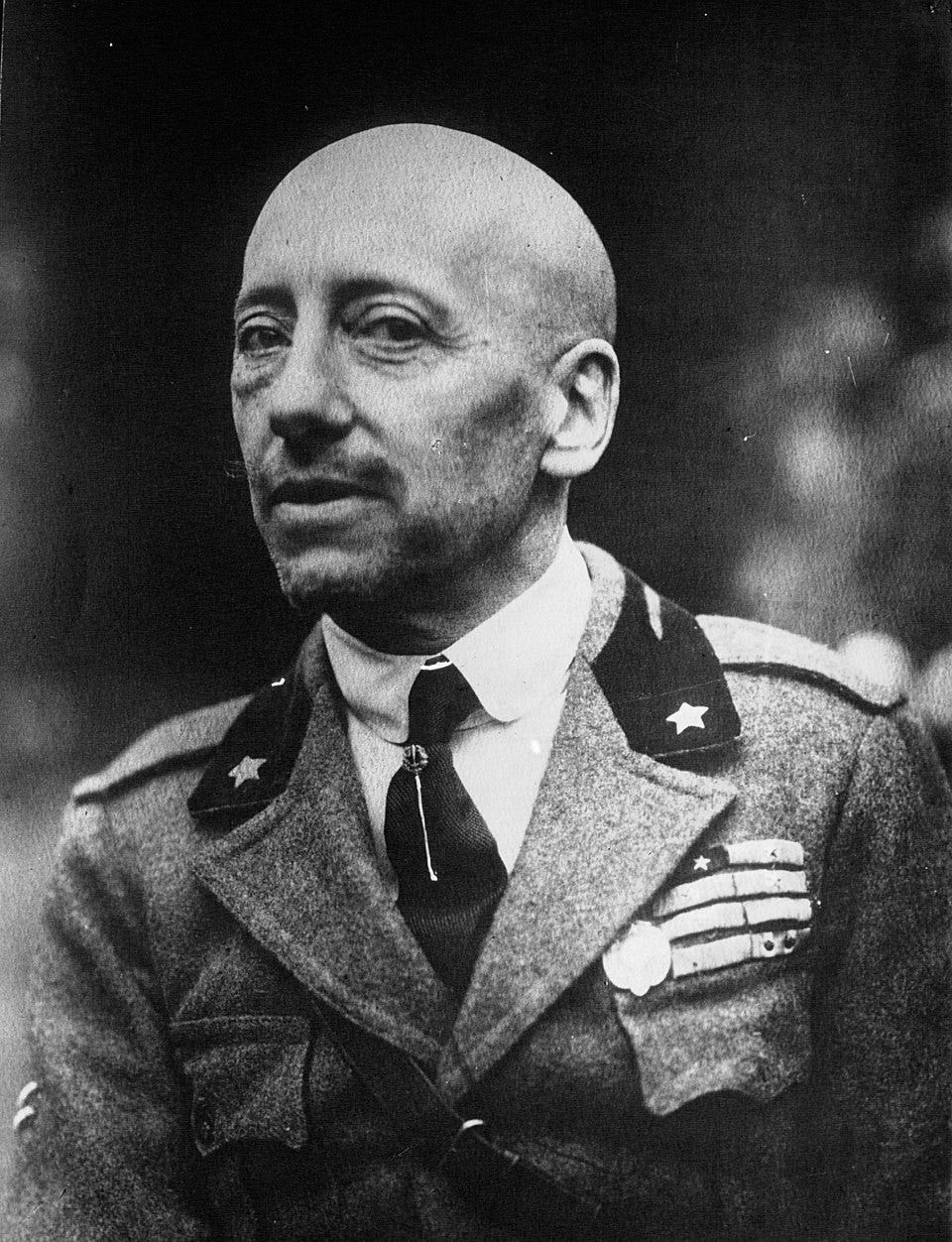
But D’Annunzio was not an attractive man. By all accounts he was scrawny and bald, and one French actress described him as “the only man I have ever seen with teeth of three colors: white, yellow, and black.” At first, this detail about his appearance might seem irrelevant, but it is in fact crucial for understanding the enormity of what he accomplished.
D’Annunzio’s mastery of language did not confine itself to the written word but rather flowed out of him, transforming his everyday existence. Account after account of the people who met him describes an initial shock upon seeing such a grotesque, gnomish figure, but in the moment D’Annunzio opens his mouth, the spell is cast. His speech seduces countless women into sleeping with him, politicians into doing his will, and followers into fighting to the death alongside him in war.
The point of today’s article is not, of course, how to learn the secrets of seduction. Rather, it’s to shine light on something we do everyday — speak — and explore just how far eloquence in speech can take you. We’ll look at firsthand accounts from those who encountered D’Annunzio, and what they reveal about the power of the spoken word to shape reality…
“Hypnotised by His Power”
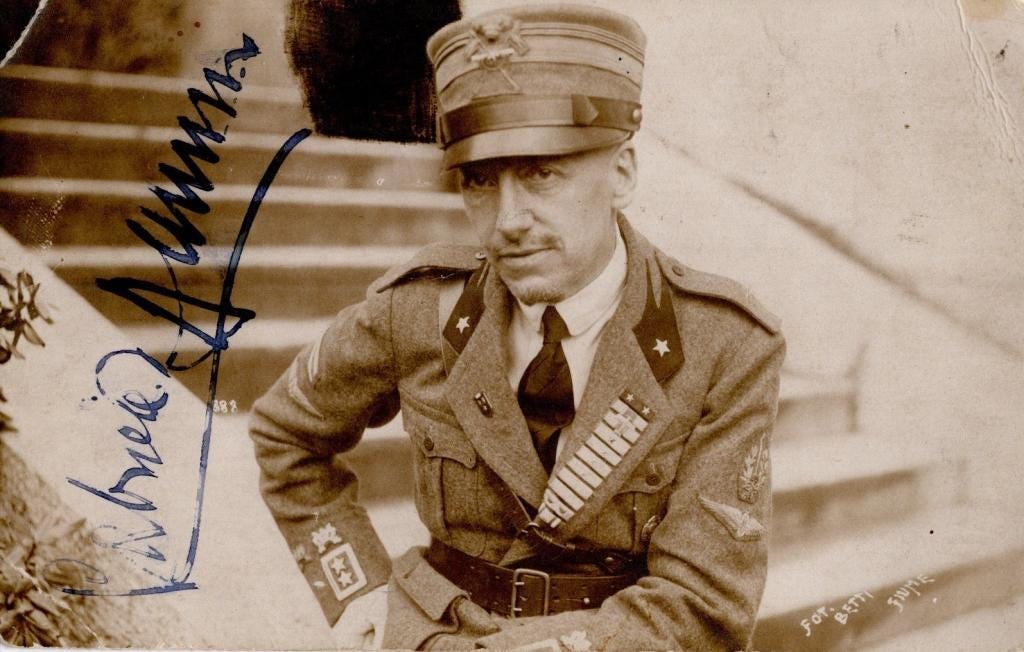
Let’s start by looking at one specific example of D’Annunzio’s rhetorical magic. At the end of World War I, while the victors met in Versailles to sketch out a new map of Europe, the poet toured Italy to denounce their betrayal of Italy. He claimed (correctly) that Italy had been betrayed by the Allies, that the territories the Italians had been promised in exchange for entering the war had been stolen from them.
During a trip to Venice, the Irish writer Walter Starkie got to hear D’Annunzio speak in St. Mark’s Square. He knew D’Annunzio for being the famed lover of the most famous actress in Europe, Eleonora Duse, but upon seeing him, he couldn’t believe his eyes: “is this the man that Duse loved?” He describes D’Annunzio as:
A dwarf of a man, goggle-eyed and thick-lipped — truly sinister in his grotesqueness, like a tragic gargoyle.
Yet as D’Annunzio takes to the platform and begins to speak, Starkie softens his tone:
“Little by little, however, I began to sink under the fascination of the voice, which penetrated into my consciousness…He played upon the emotions of the crowd as a supreme violinist does upon a Stradivarius.”
D’Annunzio’s mesmerizing speech wins the crowd over instantly. Starie writes that the tones of his voice “rose and fell in an unending stream, like the song of a minstrel, and they spread over the vast audience like olive oil on the surface of the sea.” By the end of his speech, “the eyes of thousands [are] fixed upon him as though hypnotised by his power.”
You might argue that perhaps this is easier to accomplish than it looks, for crowds can work themselves into hysteria and be easily won over. But, as we shall see in the next section, D’Annunzio’s magic worked on individuals as well.
“With Gentle Sweetness”
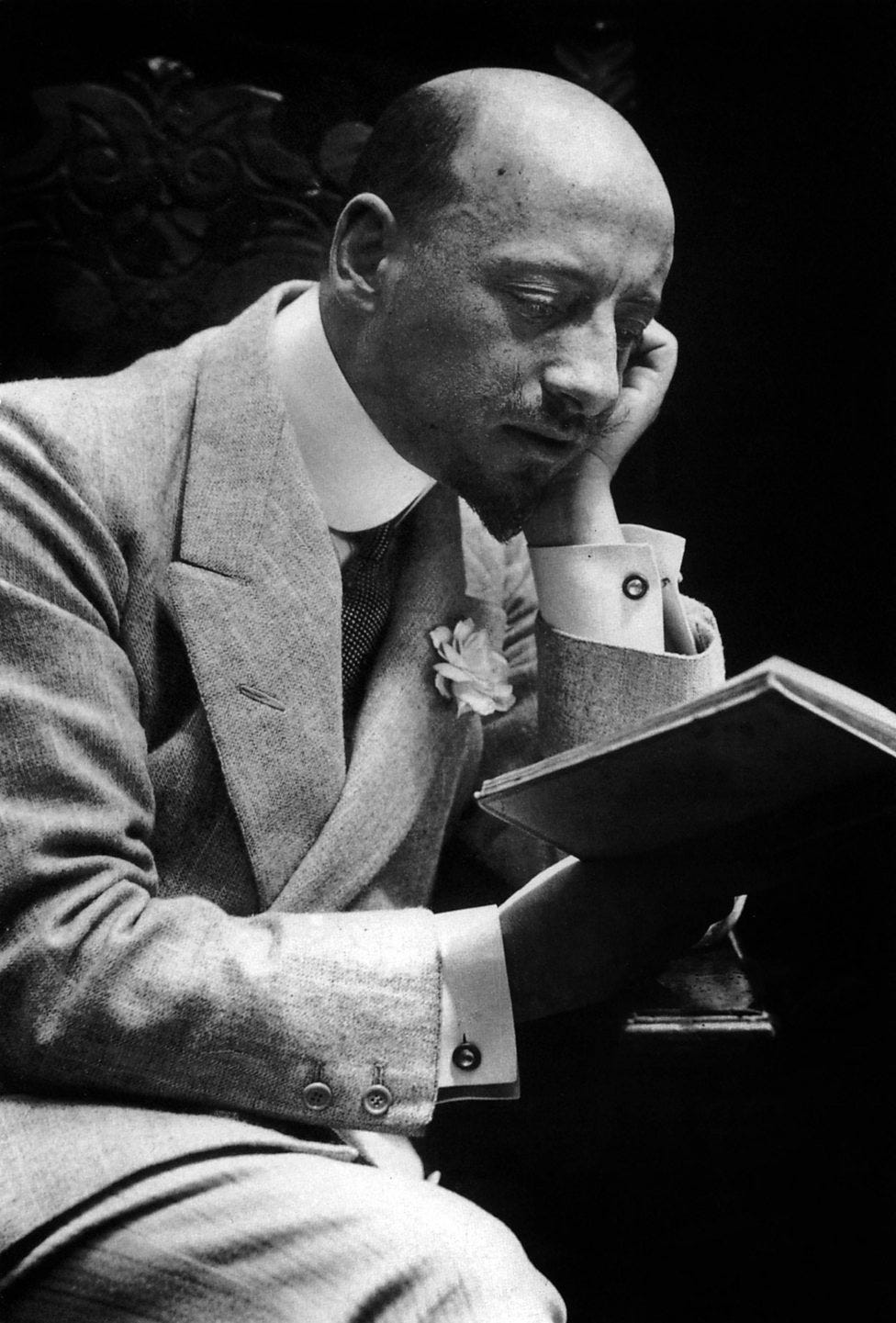
He was the rage. A woman who had not slept with him made herself ridiculed.
-American whiskey heiress Natalie Barney
In December 1895, D’Annunzio met the French author André Gide in Florence’s Caffé Gambrinus. Gide, upon hearing D’Annunzio’s analysis of the contemporary French literary scene, is impressed: “but you’ve read everything!” D’Annunzio’s reply is simply: “What can you expect? I am Latin.”
D’Annunzio continued:
“For nine or ten months of the year, non-stop, I work twelve hours a day…when I write, a sort of magnetical force takes hold of me, like an epileptic. I wrote [my second novel] in three and a half weeks in an Abruzzese convent. If anyone had disturbed me, I would have shot him.”
Brazen and braggadocious, yes. But what’s most remarkable is what Gide records next: “all these things he said without any boastfulness, with gentle sweetness.”
So how is it that D’Annunzio could be such a braggart without coming across as one? Some have suggested it was the tenor of his voice itself, with British scholar Harold Acton describing it as “intensely human, almost bi-sexual, since its virility alternated with feminine sweetness. His intonation seemed the fine flower of the Italian Renaissance”.
But perhaps the truth lies elsewhere. Maybe it is not what D’Annunzio said, nor the tone with which he said it, but how he made you feel while saying it. One of his personal aides, who was well aware of this phenomenon yet still fell victim to it, described it as such:
His face lights up in greeting you, and you succumb! You have to succumb! In reality, he doesn’t give a damn!
In the next two sections, we’ll explore exactly what about D’Annunzio’s tone, words, and physical presence allowed him to achieve this hypnotic effect, and what D’Annunzio himself believed about the power of the spoken word to shape reality…
