
The Goodness of King Wenceslas
The Good King left far more than the inspiration for a popular Christmas Carol...

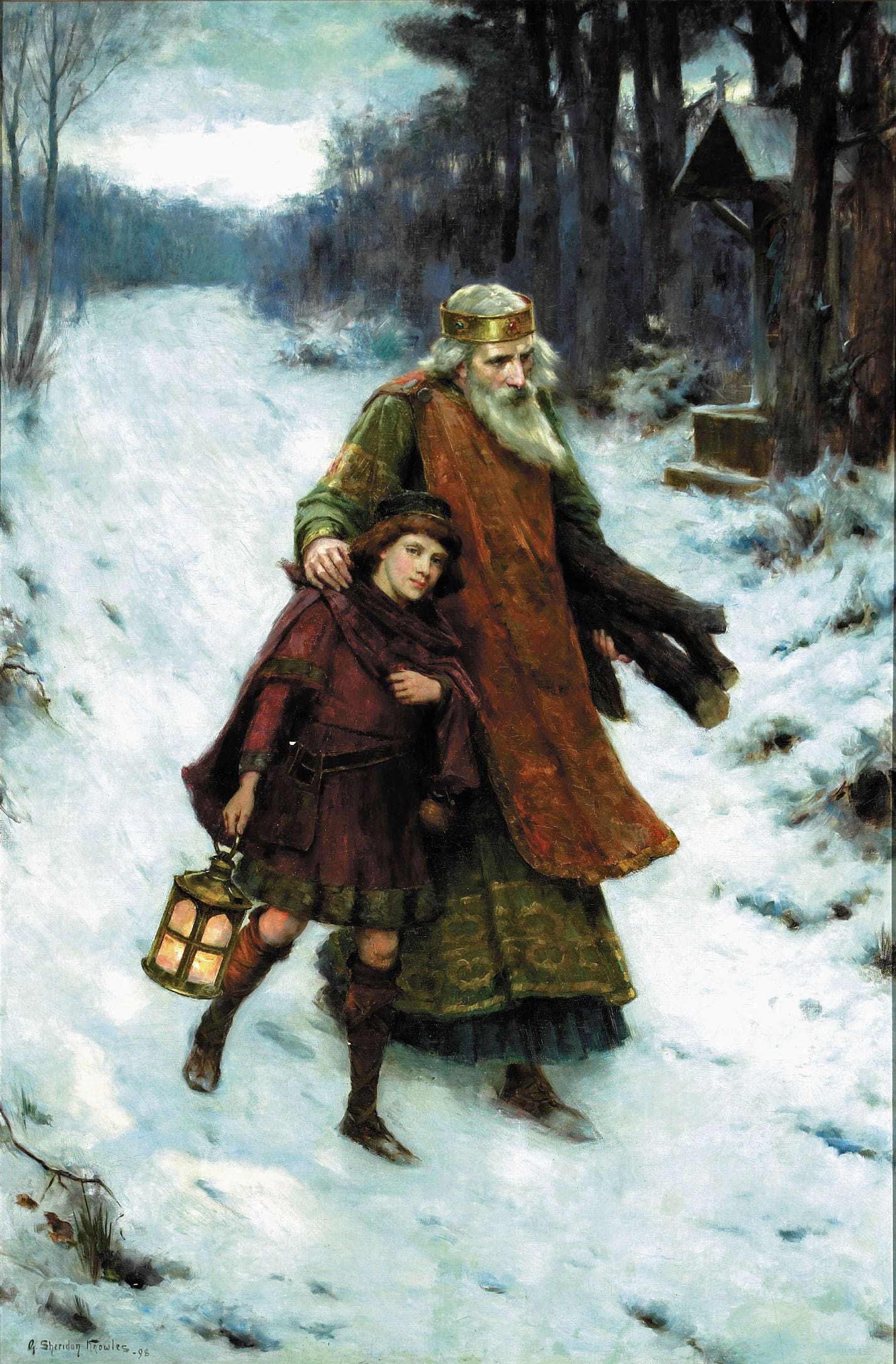
”Good King Wenceslas looked out, on the Feast of Stephen…”
So begins one of the most beloved of Christmas carols, sung every year from the Americas to Australasia.
Speaking as it does of a pious and gentle king, braving the fierce winter night to deliver alms to a poor man, it is among the most jovial and wholesome of hymns. In its most famous lines Wenceslas, seeing his lone companion struggle against the deep snow, resolves to face the brunt of the blizzard, urging the page to follow close behind. The boy, shielded from the icy wind, is able to place his feet in the king’s footprints and is inspired to keep going, completing this most beautiful story of Christian charity.
Given that Wenceslas is known to English-speaking audiences almost exclusively from the carol however, rather than from the annals of history, many might well assume him to be a fairytale invention. Yet Wenceslaus was a very real man of flesh and blood, whose virtue is arguably undersold by the carol that today honours him. Consider, for example, that in his lifetime he was not actually a king at all — he was a duke who, most unusually, was elevated to kingship after his death.
One of the most inspirational monarchs ever to reign in Europe, it is indeed due in no small part to him, his exemplary conduct and his tragic martyrdom, that the Slavic east would turn so completely from paganism and embrace Christianity so wholeheartedly.
No modest achievement for a man who never lived to see his thirtieth year.
Today, therefore, we explore the extraordinary life of the man behind the hymn, and just how far simple acts of kindness can go…
Editor’s note: we’ll be off between Christmas and Epiphany (Jan 6), so this is our last email of 2025. Thank you SO MUCH for making this an incredible year! It’s been an honor and a blessing to have nearly 17,000 of you join us in our first year on Substack.
From James and Evan both, we wish you and your families a very merry Christmas!
Faith in a Torn Society
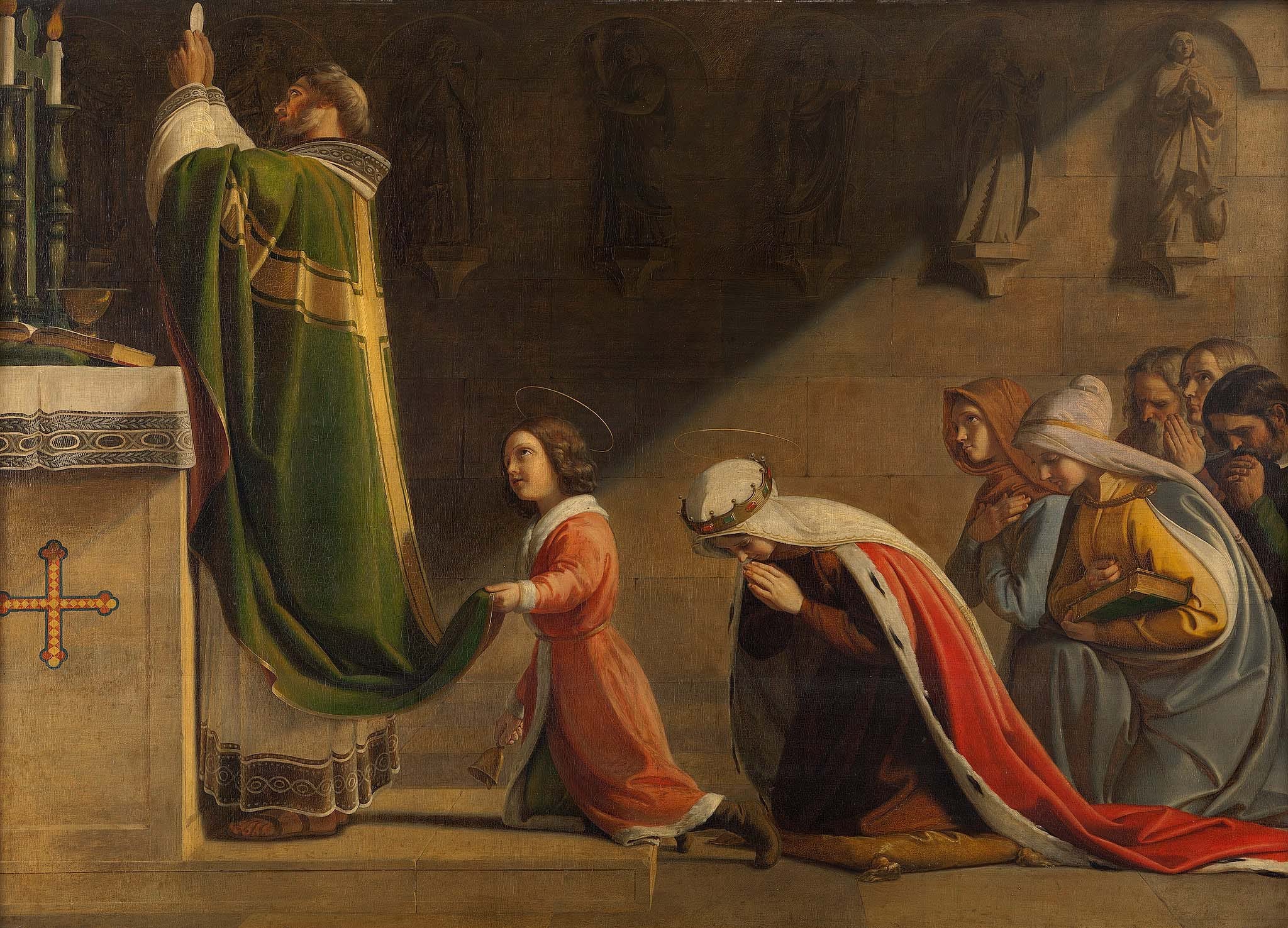
As a man born in the Bohemia of the 10th century, Wenceslas may be distant in time from us. Ironically, however, he may be closer in spirit than the years would suggest. Crucial to his later goodness, after all, was the deep strife that characterised the Czech lands around him.
To be a Christian in such lands at such a time was to live in danger, and to invite persecution as readily as admiration. Such severe societal rifts were epitomised by the reigning ducal family itself. Bohemia’s first Christian sovereigns were indeed Wenceslas’ own grandparents, Bořivoj I and and the now Saint Ludmila, whose baptisms almost cost them the monarchy.
Their later abdications in favour of their firstborn son, Spytihněv, himself a pious Christian, seemed to safeguard the conversion of the family. Unfortunately, however, his sudden premature death thrust the succession into more unsteady hands. For while Spytihněv’s younger brother Vratislav was likewise a devout Christian, he had been married to Drahomíra, a fierce pagan of boundless ambition. Of this union were born two brothers who mirrored the convictions of their parents. The eldest, Wenceslaus, was kindly, loyal and devoted to his studies. Boleslav, however, was heartless, cruel and easily led astray.
Any hope of a unified family front was then promptly dashed by the sudden death of Vratislav in AD 921. Wenceslaus, on account of his noble character and the reverence he displayed for his elders, was elected1 the new Duke “by the favourable assent of the people” (Gumpert of Mantua, Passion of St Wenceslas). Yet being as he was barely fourteen years old, a regency was required.
Responding to this calling, the aging Ludmila assumed the burden of educating her grandson, the last hope of Christian Bohemia. Yet Drahomíra, who despised her mother-in-law, took young Boleslav under her wing and malign influence. Yet Ludmila was preparing her own charge not only for this world, but the next. As the Holy Roman Emperor Charles IV, himself a Bohemian, would write centuries later in his own biography of Wenceslas:
“So the glorious matron and patron of the Bohemians St. Ludmila - their first pearl, the first flower plucked in Bohemia-imbued her grandson the blessed Wenceslas with the Christian faith and with holy writings and the words of the gospels. At length, the faithful comforter, the Holy Spirit, melted the heart of the boy and lit within him such a fire that the sparks of his learning blazed outwardly from him like lamps among the pious and the just, and the fruits of eternity flowered in his honeyed mouth, and his preaching illuminated the homeland of the Czechs. Virginity and chastity clothed his mind and body. Thirsting for martyrdom for the sake of Christ, he did not veil the truth of the Christian faith but preached it openly. He was ever given to prayer, vigil, almsgiving, and other pious works, and surpassed in humility all the children of his age”
Emperor Charles IV, Legend of St. Wenceslas, 2
In the corridors of power, the Christians had few allies, for the Czech nobility was still dominated by pagans. Among the people however, the way of the Cross was beginning to glow against the darkness. A last battle for the soul of Bohemia was about to begin, its lines drawn now around the futures of both brothers.
Wenceslas, however, would rise to the situation, and respond to its endless provocations, in the best way possible…
Reigning by Example
Though simply a teenager, Wenceslas displayed a wisdom far beyond his years, and a purity of spirit exceptional for such troubled times. So much so that it would infuriate his foes, for he offered to his people what they could not.
If the duty of a Christian is to be a saint, every day, then Wenceslas of Bohemia was among the most Christian men to have ever lived. All other duties of rule to the Duke were, after all, second to his calling to aid and uplift the unfortunate:
“He was merciful to orphans, was a father to those who wept and to widows, and a kindly consoler of the wounded. He sated the hungry, gave drink to the thirsty, and clothed the naked with his own garments. He visited the sick, buried the dead, and joyfully received strangers and wayfarers like his own relatives”
Anonymous, Crescente Fide, 2
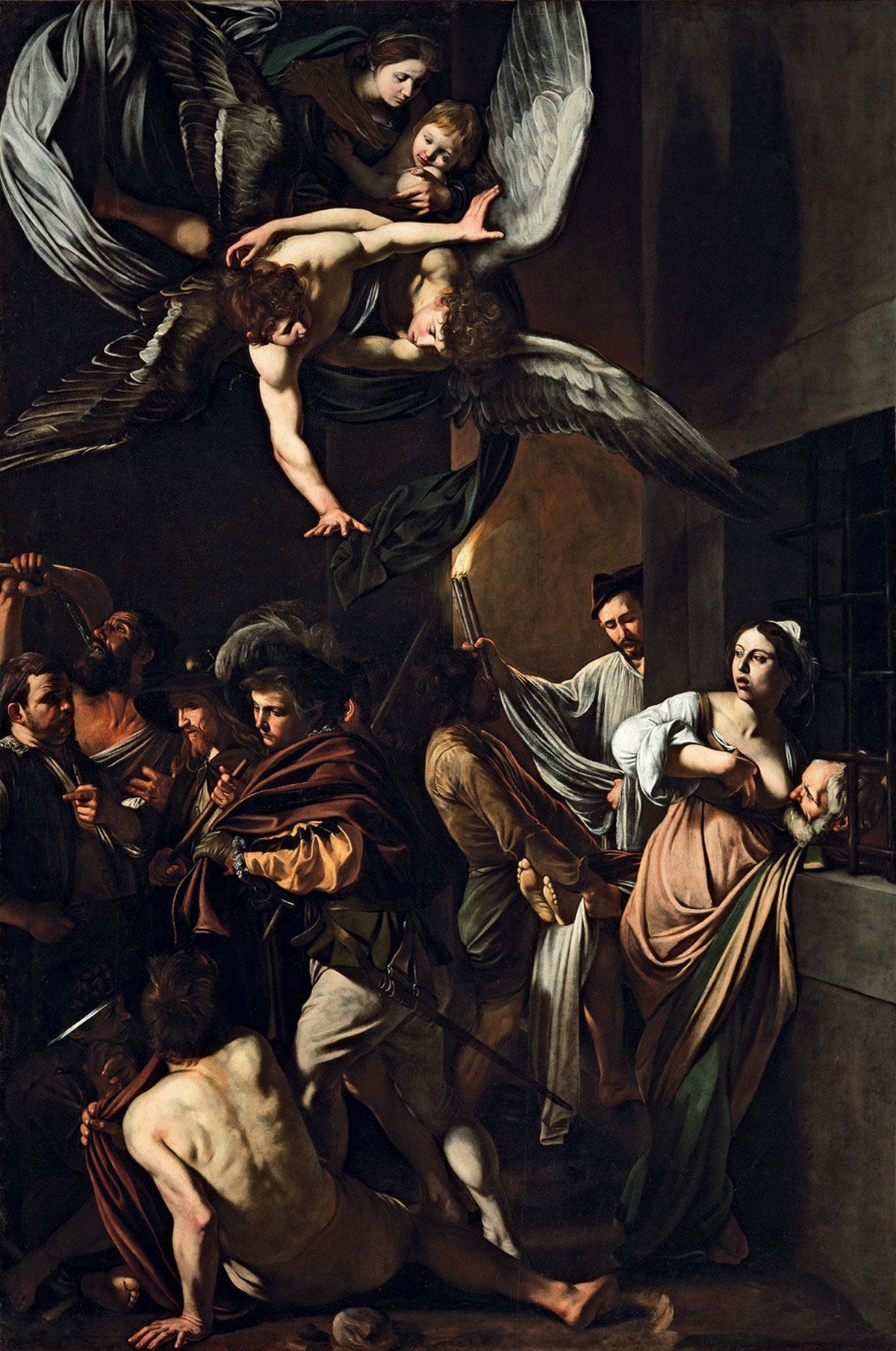
In short, Wenceslas diligently practised the Seven Works of Mercy, or the seven acts by which Christ specified a man can show virtue. These seven acts, as laid out in the Gospel of Matthew (23:34-46), are: to feed the hungry, to visit the incarcerated, to give drink to the thirsty, to clothe the naked, to care for the sick, to shelter the pilgrim and to bury the dead. Together they form a simple ‘manual’ of virtuous living most dramatically represented by Caravaggio’s painting, The Seven Works of Mercy, which we analysed in depth here.
Mercy indeed would be a common theme of the brief reign of Wenceslas, as would ‘rule by Scripture’. Multiple sources specify that the Duke’s first act was to have all the gallows in his realm pulled down, rejecting absolutely the notion of state violence towards its own people. When faced with presiding over criminal courts, as per the most ancient charge of monarchy, on occasions where it appeared that the judges were veering towards capital or corporal punishment, the Duke would remind them of another passage of Matthew — “Judge not, that ye be not judged” (Matthew 7:1).

Crucially, he did not go out of his way to provoke the pagan population through overt hostility. Pagan rituals were not banned — Wenceslas simply did not attend them. To the people of Bohemia, this commitment to conversion by example, rather than force, was increasingly irresistible. So much so that Drahomíra, now the figurehead of the pagan nobility at court, exclaimed with alarm:
“What should we do, when he who is to be prince has been ruined by priests and is like a monk?”
Drahomíra on Wenceslas, as reported by Anonymous, Crescente Fide, 3
What they indeed decided to do would be tragic for the young duke, but ultimately the beginning of the ruin of their cause. For in a most shocking crime, later that year Drahomíra’s agents strangled Ludmila to death at Tetín Castle, in the vain belief that this would weaken anyone’s cause but her own. The young Duke, however, was not intimidated, even when increasingly direct threats were made against him personally:
“But her first-born son St. Wenceslas held firm to the Christian religion and the teaching of his grandmother St. Ludmila. He gathered the scattered Christians and comforted them all with works of piety. He procured bread and wine for the sacrifice of the Mass with the labor of his own hands, and brought wood and other necessaries on his own shoulders by night to orphans, widows, and wards”
Emperor Charles IV, Legend of St. Wenceslas, 3
Wenceslas, therefore, was well aware that he was up against people who were prepared to kill not only him, but the very existence of his faith in the country. So how did the Duke response to this clearly existential threat?
By doing the exact opposite of what any ruler might be tempted to do, and embodying a sentiment which would be immortalised by one of Napoleon Bonaparte’s most famous maxims...
