
How to Thrive in Discomfort
Lessons from the life of Marco Polo

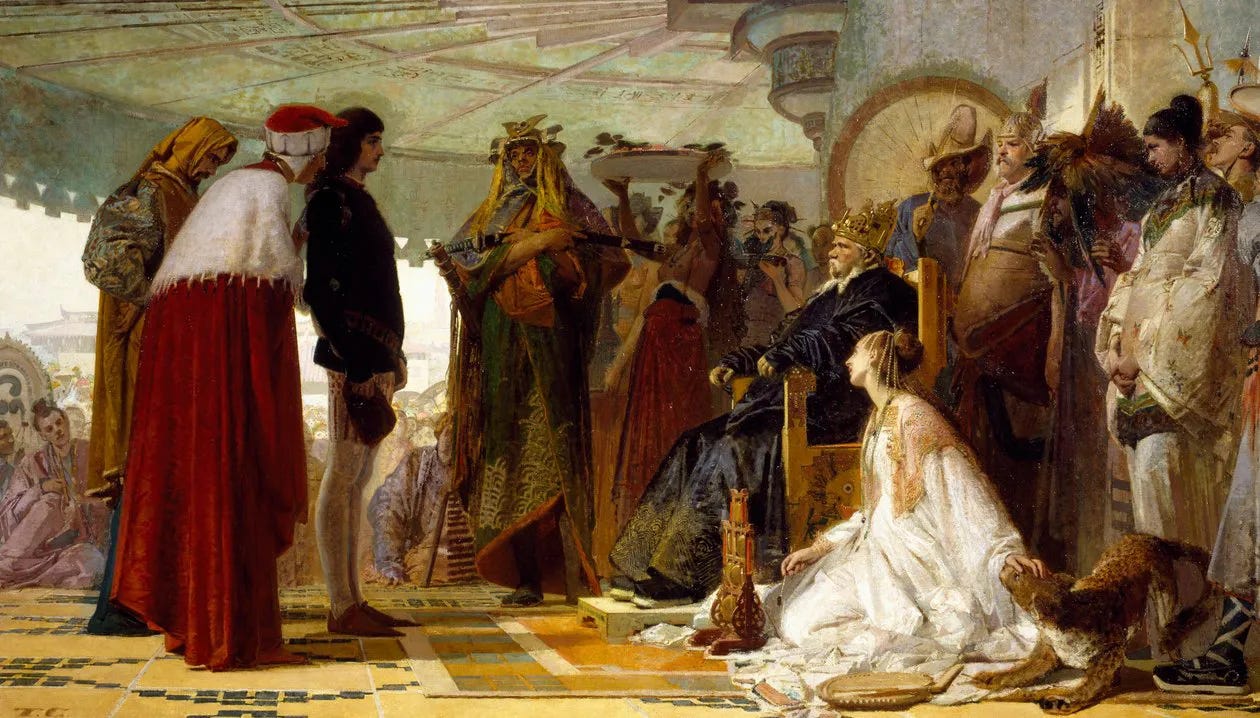
Life in Europe isn’t easy.
Yes, of course the food is great and the cities are beautiful. But for someone born and raised in the U.S., daily life in Europe can be full of difficulties: language, bureaucracy, and cultural differences often render what should be straightforward frighteningly complex.
Many times I’ve thought about what a move back to the US would entail for me and my family. On paper, at least, everything seems easier: we would be closer to family and friends, pay less in taxes, and be able to “just do things” in a way you can’t really do in Europe. And yet, despite all of this, something still keeps me in here.
Over the past years, I’ve tried to put my finger on what exactly this is. My personal affinity for beauty and history certainly play a factor, but there’s something deeper at work. Only recently have I been able to more accurately define what that is, and I’ve done so in part thanks to one of history’s more curious characters: none other than Venice’s own Marco Polo.
We previously covered the story of Marco Polo’s adventures in this article, but today I want to look at his life from a different angle. Our readers will surely be aware of the fact that we live in a world where cultural forces push more and more people into either conformity or alienation. Yet in the midst of this, I believe Polo’s story reveals the key to living “between worlds”, so to speak.
His example can show you, as it has shown me, not just how to live in this tension, but how to thrive in it, and how to position yourself so that your natural strengths are forced to mature. It is precisely this that we will explore today, as we learn from the life of Venice’s greatest explorer…
But first — we’re going to Italy!
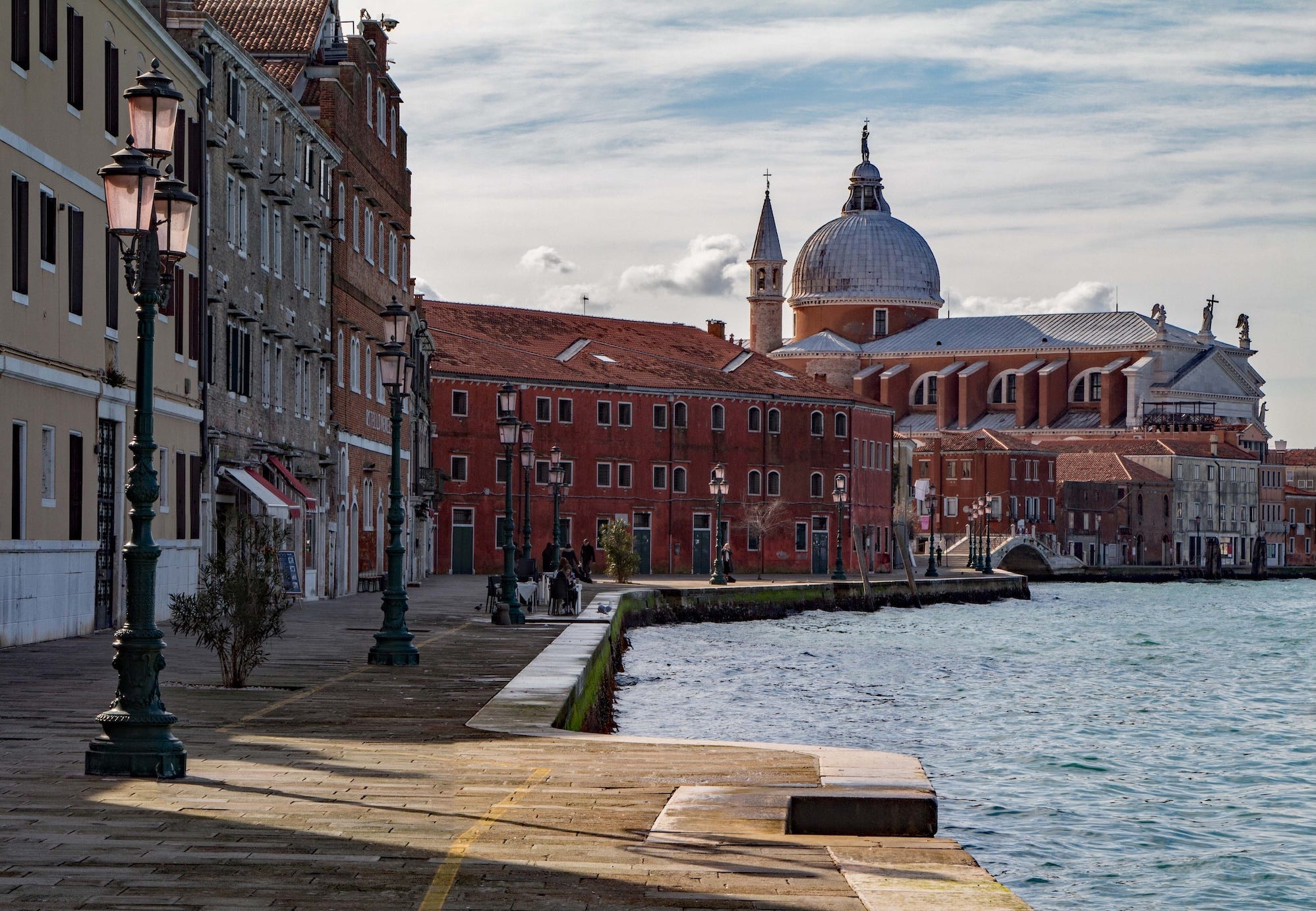
This coming May, we’re hosting two exciting retreats to Bergamo and Venice. To learn more and apply to join us, click the button below:
Now, back to the article…
1) Comfort Erodes Capability
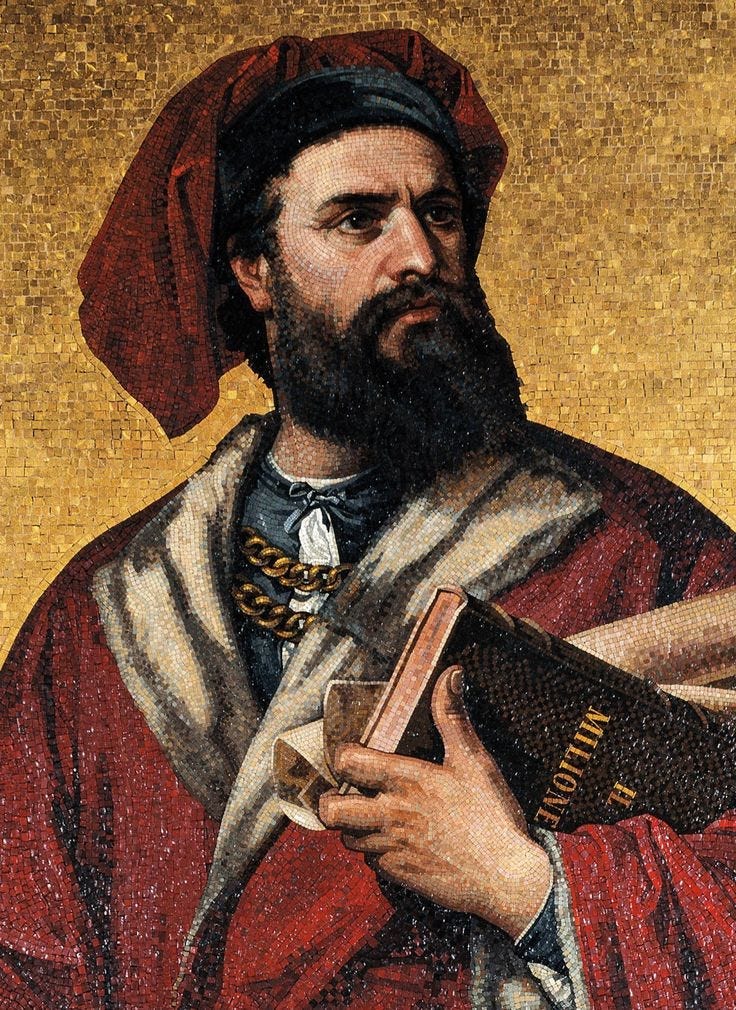
Each time I’ve seriously considered moving back to the U.S., one thing always gnaws at the back of my mind: what if it’s too easy?
To be clear, I don’t pretend to be someone who loves difficulty for the sake of difficulty. If the EU were to cut off access to Substack tomorrow (thus forcing me to get a “real” job), I’d be on the first flight back to America. But as it stands right now, for our family, a move to the U.S. would feel somewhat like a retreat, and one of the worst kind: a retreat back into comfort.
There is nothing wrong with comfort, of course, and a Spartan life can burn you out quickly. Yet there is no doubting that comfort removes urgency, as familiar systems breed complacency and skills plateau when nothing demands their refinement. Sometimes, getting thrown out into the wilderness is the best thing that can happen to you.
Such was the case with Marco Polo. As a young man, Venice offered him relative stability: family networks, predictable trade, and a quiet, respectable career. Again, none of this is bad in and of itself. Depending on your stage of life, it may well be the best thing you can secure for you and your family. But for the 15-year old Marco, nothing about his position in life required him to be excellent. It was only the re-appearance of his father and uncle (both of whom had been assumed dead) in Venice in 1269 that awoke him to the potential to something greater, and opened the door to adventure.
Perhaps Polo himself had already realized that when nothing is at stake, there’s nothing to sharpen you. Or, to put it another way, “no pressure, no diamonds”. As Polo’s life would reveal, his decision to accompany his uncle and father back to Asia would result in many diamonds, both metaphorical and literal.
2) Alienation Isn’t the Answer
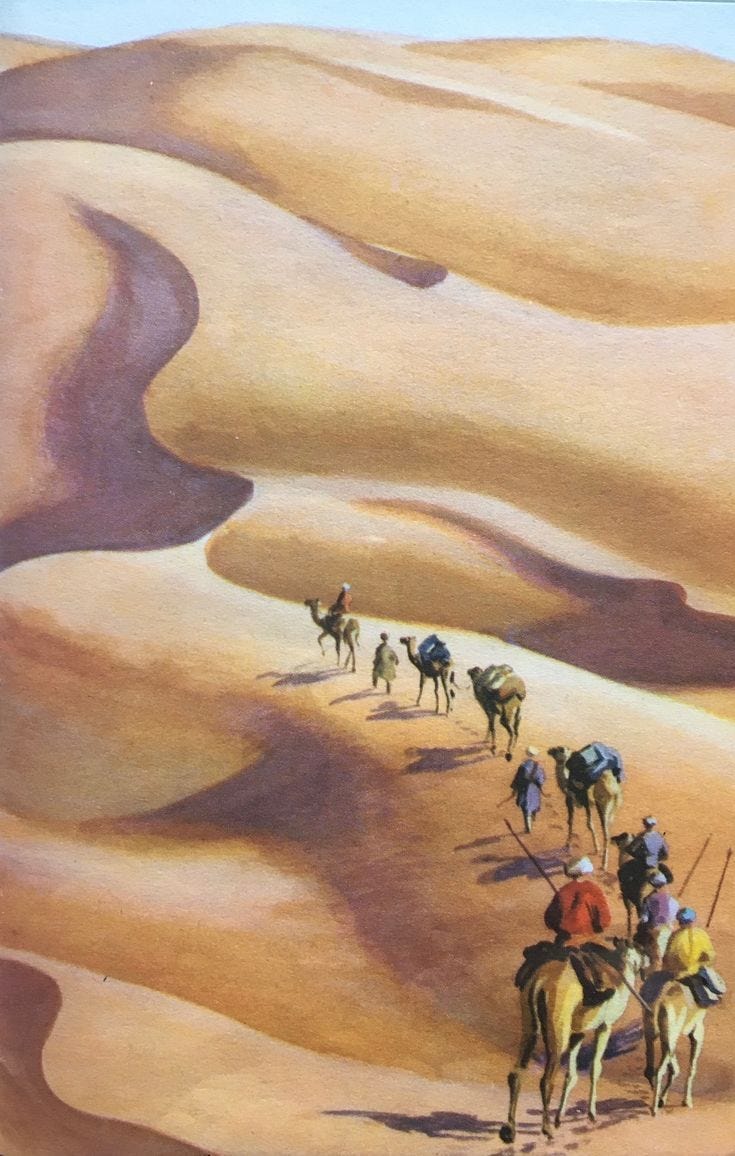
Yet just as comfort erodes capability, so too does total alienation result in despair, and ultimately in failure.
In my own life, this is something I’ve experienced first-hand. For as great as life in Italy can be, there are moments where you feel like a total outsider. Notwithstanding the fact that I speak Italian, am married to an Italian citizen, and have lived here for nearly four years, Italy has still been a tougher cultural nut to crack than I ever found Argentina, Spain, France, or the U.K. to be. I know all too well just how demoralizing it can be to pour your effort into something and feel like you have nothing to show for it.
All this to say, burning the boats and diving into a world that’s completely foreign to you isn’t the answer to escaping a world of comfort. Extreme alienation drains your energy into survival, social exclusion narrows your capacity for risk-taking, and, if you’re not careful, your identity can quickly collapse into reaction. This explains why Polo, for all the many adventures he went on, never went it alone.
Instead, what we see in Marco Polo’s life is that he attached himself to a functioning system. He didn’t wander about Asia like a “digital nomad” or a vagabond, but rather ingrained himself in the court of Kublai Khan. Doing so allowed him to secure both security and legitimacy, as well as enough freedom to operate. His countless travels across the continent were conducted in the name of the Khan, not solo expeditions of his own.
But crucially, Polo didn’t simply mold himself to fit into someone else’s pre-existing system. He neither rejected his Venetian heritage nor fully embraced that of the Mongols. Instead, he learned to live in the tension between the two worlds, and that is precisely what enabled him to stay at the top of his game for nearly a quarter of a century.
In order to do this, he first had to master two skills: that of using your differences as leverage, and of integrating into a system without losing your edge. In the rest of this article, I break down what enabled him to do that, and how you too can learn from his example in order to thrive wherever you find yourself…
