
Caesar's Fatal Mistake
How victory can defeat you...

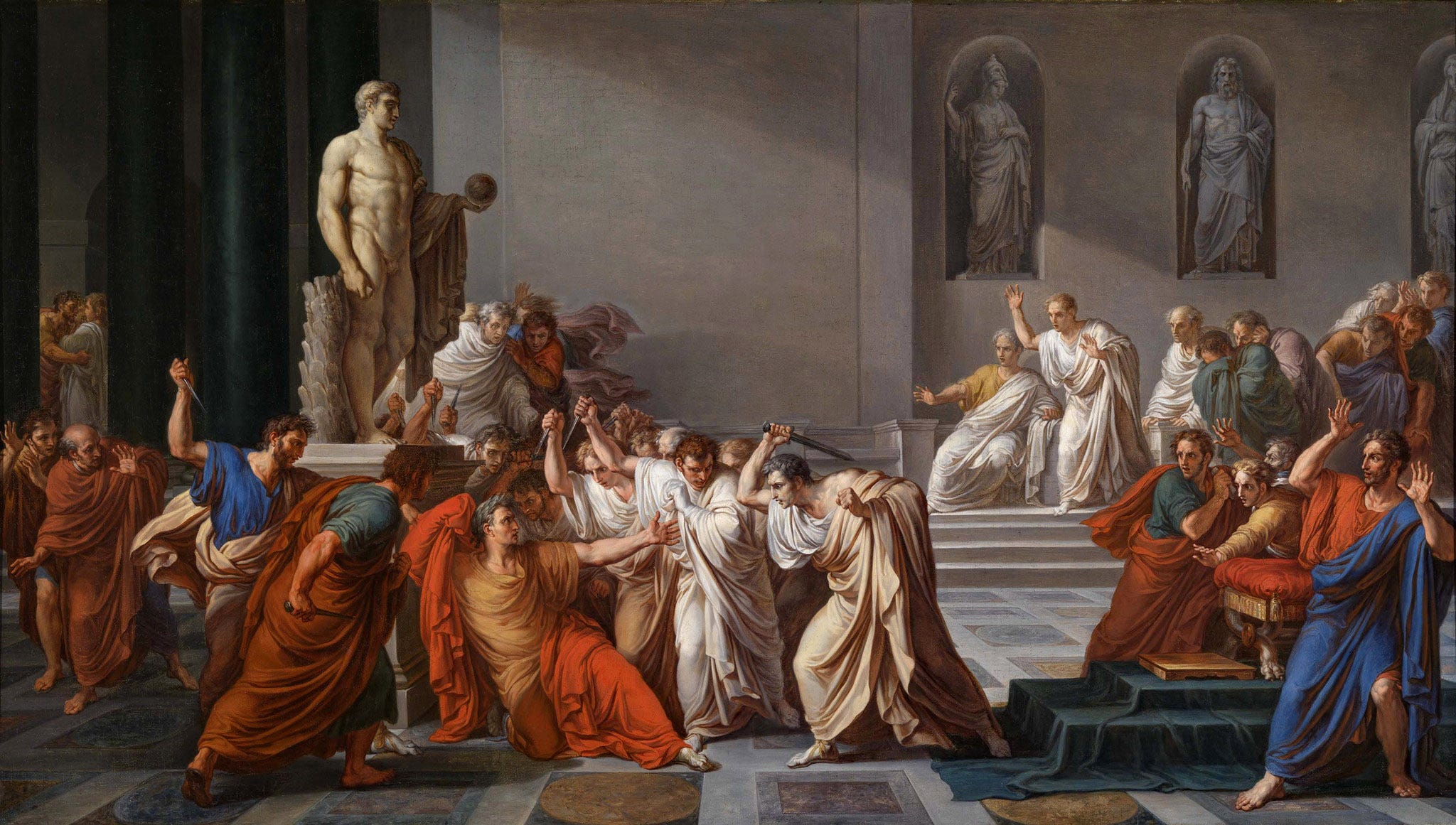
2,070 years ago last Sunday, on the 15th March 44 BC, the most famous political murder in history took place, killing the most famous Roman in history.
The ultimate ‘event’ in history, the assassination of Julius Caesar forms the dramatic turning point of the great epic of history — the fall of the Roman Republic and the rise of the Roman Empire. It is also a highly personal story, of how carelessness can ruin even the greatest of men.
Both Julius Caesar and his great nephew Augustus, after all, won spectacular victories. How both men responded to those victories, however, was the difference between losing an empire and founding one.
So to mark this extraordinary anniversary, let us explore a simple yet important question — what are the lessons of the Ides of March?
What did Julius Caesar get wrong, what did Augustus get right and what can we learn from their opposing examples?
Misusing a Victory
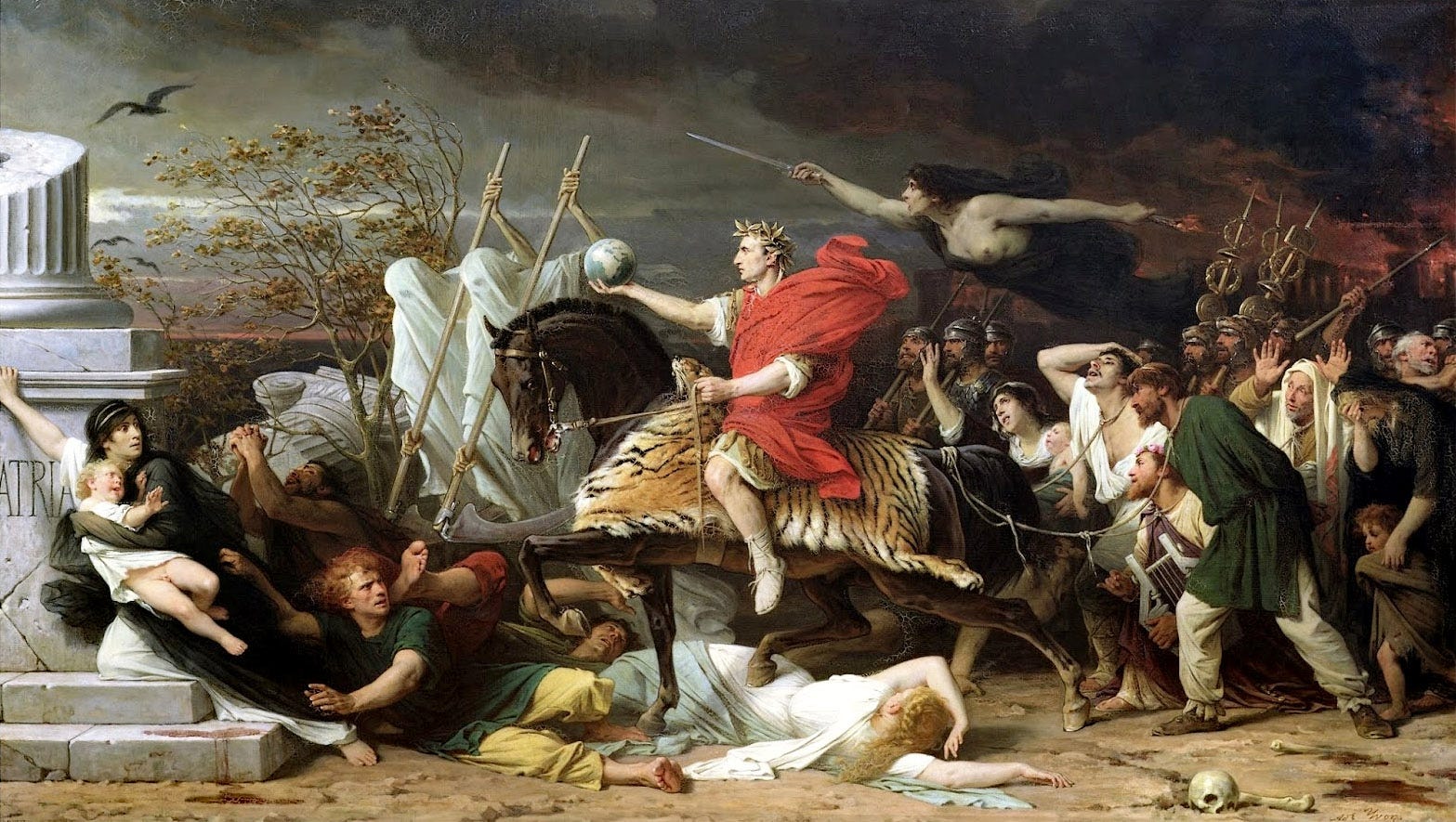
One of the great ironies that surrounds Julius Caesar is that his enemies were far more ruthless than he was.
Indeed a theme which appears again and again in accounts of Caesar is his readiness to forgive his enemies — his clemency. A temple to Clementia was indeed raised in his honour1, while Mark Antony whipped up the mob at Caesar’s funeral by declaring the fallen dictator’s titles to be “a testimonial of his clemency”2. In an often forgotten letter, written just weeks after crossing the Rubicon, Caesar himself even outlined that clemency was the cornerstone of his strategy:
“Let us see if by moderation we can win all hearts and secure a lasting victory, since by cruelty others have been unable to escape from hatred and to maintain their victory for any length of time except L. Sulla, whose example I do not intend to follow. This is a new way of conquering, to strengthen one's position by kindness and generosity”
Julius Caesar, Letter to Oppius and Cornelius, March 49 BC
Throughout the civil war which followed, Caesar pardoned so many of his foes that he even pardoned several individuals multiple times. After his opening victory of the war at Corfinium in February 49 BC, Caesar captured as many as fifty senators, all of whom he pardoned, including the commander Lucius Domitius Ahenobarbus. Many of these men did not share Caesar’s sense of martial honour, and immediately rejoined Pompey and the war, rendering the victory rather pointless. Ahenobarbus himself would fight against Caesar twice more, before falling in the decisive Battle of Pharsalus.
Perhaps the most damning indictment of his clemency, however, is the simple fact that Julius Caesar was assassinated by men he had pardoned. Both of the key ringleaders — Brutus and Cassius — had not only been pardoned by Caesar after Pharsalus, but would go on to enjoy his patronage. Immediately after the battle, Caesar granted Cassius a military command, and would later promise him the consulship. Just one year before his assassination, Caesar appointed Brutus to the prestigious role of praetor urbanus. As Napoleon Bonaparte himself remarked:
“It was not difficult for the plotters to succeed, as Caesar trusted them”
Napoleon Bonaparte, On the Wars of Julius Caesar, 16.III
Caesar’s naive belief that publicly pardoning his foes would entirely and immediately win them over reached such an absurd extreme that he dismissed any and all evidence to the contrary, even when it was brought to him by his actual friends:
“They came very near being detected for two reasons. One was the number of those who were privy to the plot, although Caesar would not receive any information about anything of the sort and punished very severely those who brought any news of the kind”
Cassius Dio, Roman History, XLIV.15
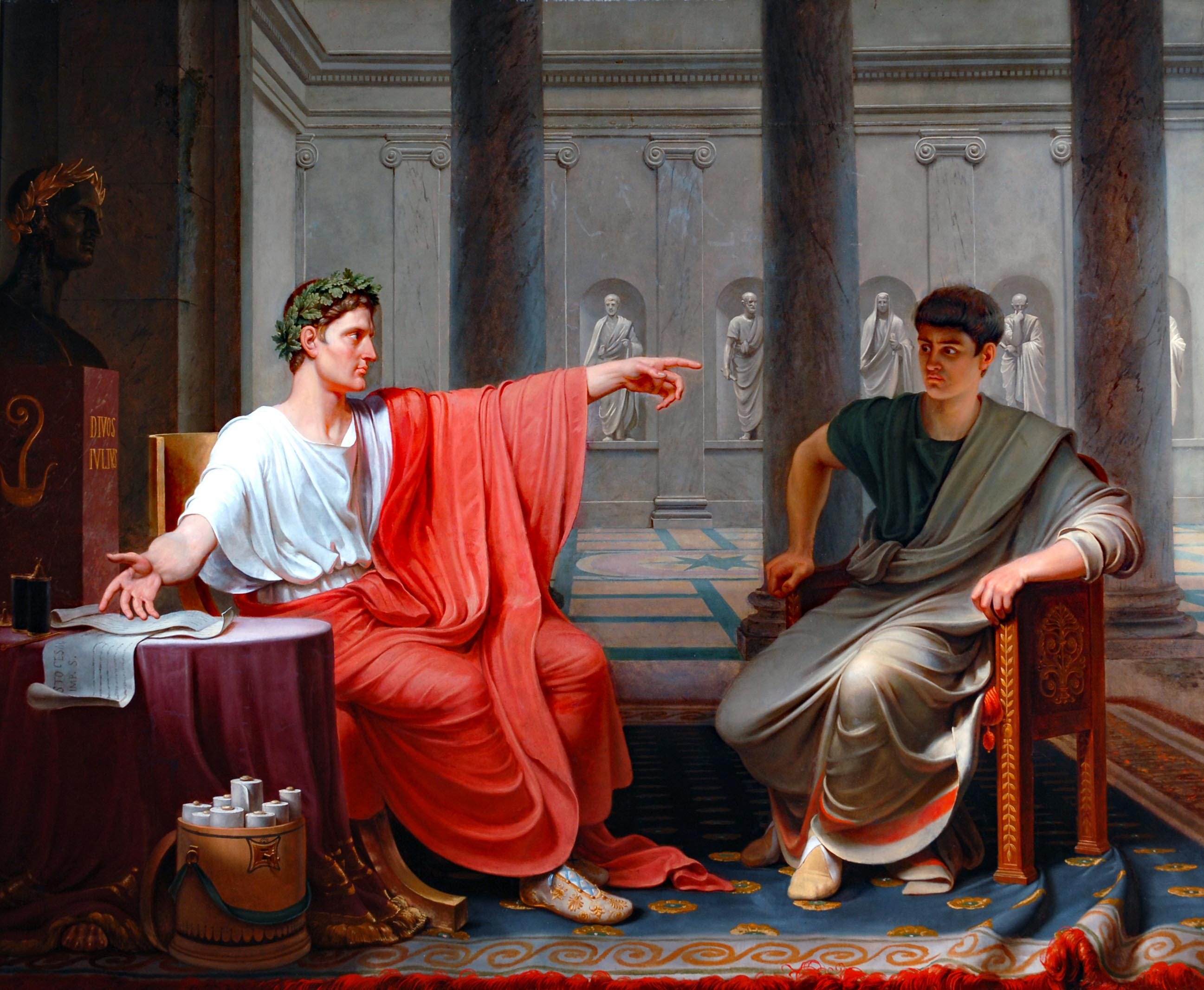
Herein lies the problem of clemency. Unless the forgiveness of the injured party is mirrored by sincere repentance on the part of the injurer, clemency can be counterproductive. In the case of Caesar, it was fatal.
A father may wish he could only ever share moments of peaceful bliss with his children. But children need discipline to thrive, and every time a boundary is crossed without rebuke, the authority of the father weakens, and the child tips further into imbalance.
It is telling that after the assassination, when Brutus found himself in command against Caesar’s avengers, and was tempted to follow Caesar’s precedent, Cicero warned him of the consequences:
“I strongly differ from you, Brutus, and I do not admit your clemency doctrine. A salutary sternness is superior to the empty show of clemency. But if we choose the role of clemency we shall never have any lack of civil wars.”
Cicero to Brutus, 17th April 43 BC
Julius Caesar was a military genius, of that there is no question. His critical flaw, however, was not realising that his enemies had mobilised for total war, and viewed the battlefield as merely one of many theatres to be contested with all resources at their disposal. He had entered into a war that was existential for the Roman elite, who had demonstrated repeatedly that it did not play fair. It was prepared to kill in order to preserve the oligarchic stranglehold over the Republic, and to kill openly, as the murders of Tiberius and Gaius Gracchus had shown.
Thus the idealistic clemency of Caesar was admired by many, but ridiculed by his foes, who lost their fear of consequence and grew emboldened in rebellion. If he had wished to maintain a moral upper hand, taking prisoners and treating them well would have sufficed, and demonstrative punishment did not have to mean execution. By continuously brandishing a blank cheque of forgiveness however, before the total war had been won, Caesar misused his victories, extended the war and handed his enemies fresh opportunity to win.
Worse, it would hand his enemies the opportunity to corrupt him…
Falling For Your Own Propaganda
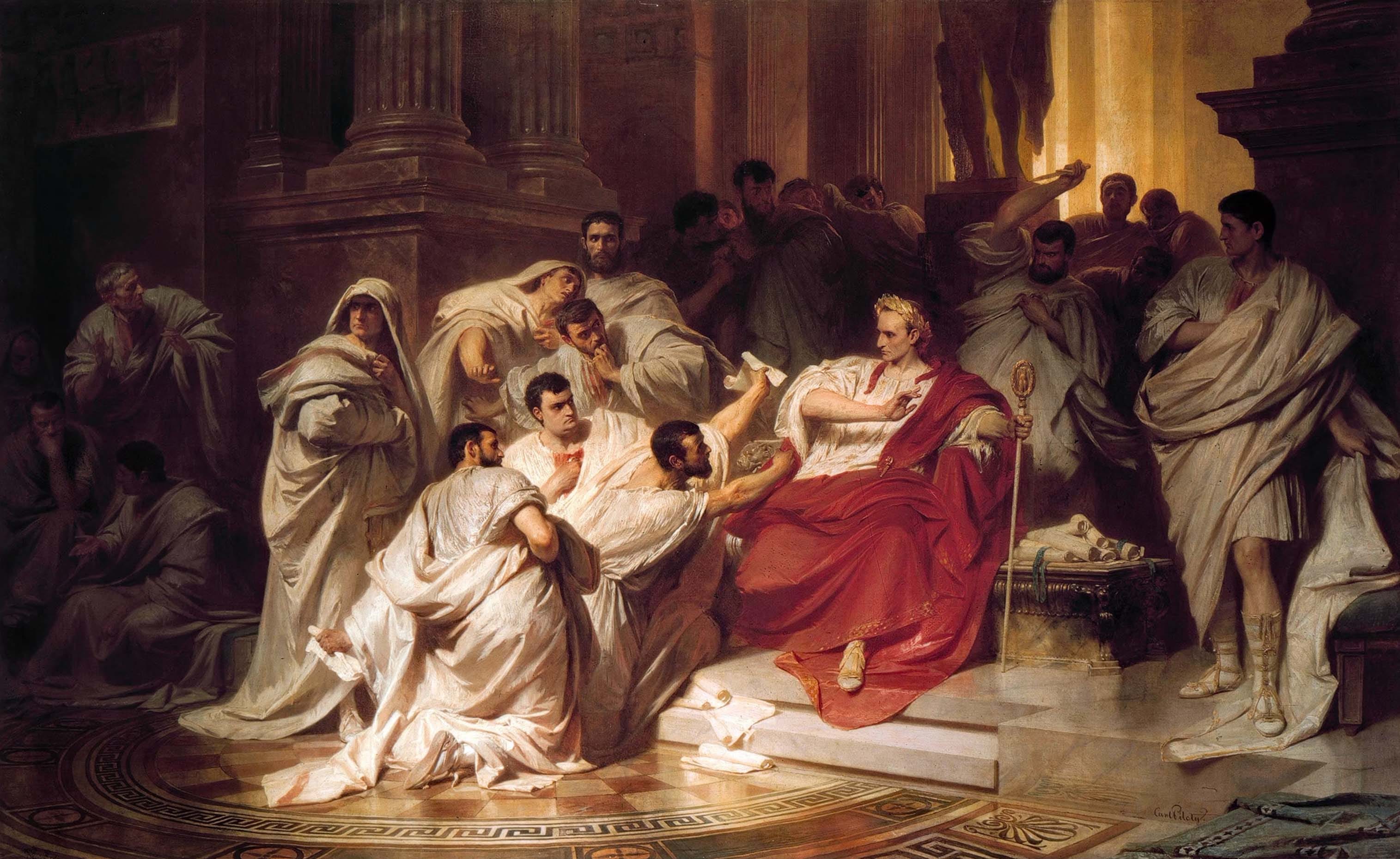
Caesar’s clemency alone may not have been sufficient to doom him. But the result of it certainly was. No longer able to mobilise armies against him, the enemies of Caesar turned to words. Caesar, however, was not aware that he was still at war.
The danger of flattery is a subject we have indeed covered at INVICTUS. As we explored, flattery is worse than theft because the flatterer seeks to take something from you by dishonest means, but does so by also corrupting you in the process.
What happened to Julius Caesar is perhaps the supreme example of exactly this. Once his enemies realised that praise was the means by which to penetrate the Caesarian armour, they were relentless:
“When they had begun to honour him, it was with the idea, of course, that he would be reasonable; but as they went on and saw that he was delighted with what they voted, — indeed he accepted all but a very few of their decrees, — different men at different times kept proposing various extravagant honours, some in a spirit of exaggerated flattery and others by way of ridicule”
Cassius Dio, Roman History, XLIV.7
Whether Cassius Dio was exaggerating when he continued that “some actually ventured to suggest permitting him to have intercourse with as many women as he pleased” we cannot know. But what is abundantly clear is that the honours and titles showered upon Caesar reached a level at which alarms bells should have begun screaming.
When a person publicly flatters you to the extent that their words or proposals demean themselves, that person in truth almost certainly despises you. The sources are indeed clear that Caesar’s enemies used flattery to lure him into a deadly trap:
“Others, and they were the majority, followed this course because they wished to make him envied and hated as quickly as possible, that he might the sooner perish. And this is precisely what happened, though Caesar was encouraged by these very measures to believe that he should never be plotted against by the men who had voted him such honours, nor, through fear of them, by any one else; and consequently he even dispensed henceforth with a bodyguard”
Cassius Dio, Roman History, XLIV.7
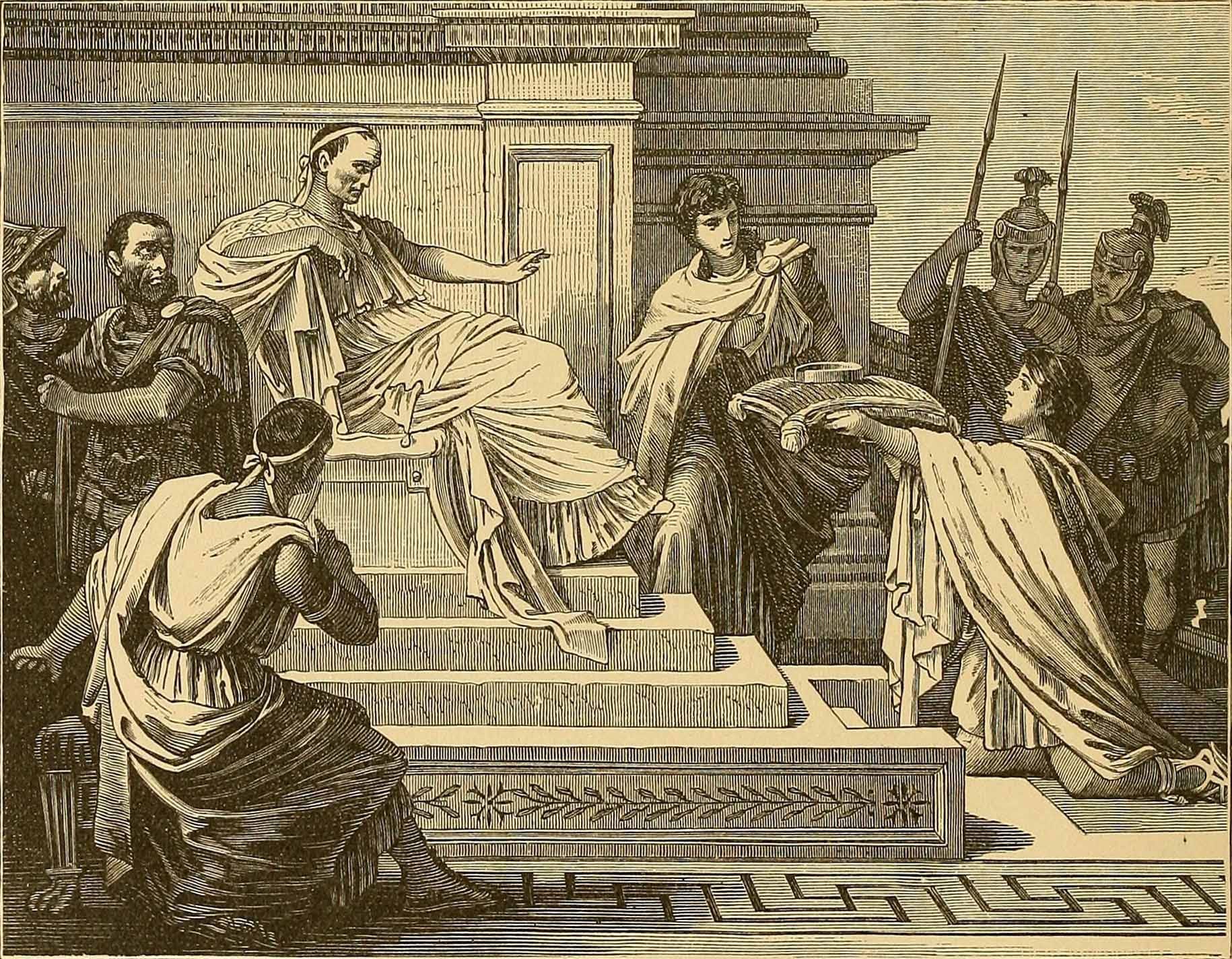
Caesar, convinced that these people were sincere in their praise, and that serious opposition had died at the Battles of Pharsalus and Munda, walked straight into the trap by not only accepting these, but appearing to enjoy it.
This of course would be crowned, so to speak, by the ultimate poisoned chalice, when people, and most famously Mark Antony, began to publicly offer Caesar a crown. Exactly who engineered the spectacle of offering Caesar the kingship of Rome is unclear. Whether Caesar had genuinely orchestrated it to ‘test the waters’, or Antony actually did wish to restore the Roman monarchy, or else the Dictator’s enemies were behind it all does not really matter. What did matter was that it appeared plausible that Caesar mighty secretly be desiring permanent autocratic power.
Caesar’s track record of permitting and accepting outlandish flattery, even if it might well have been out of naivety, had punctured the veil of sincerity and convinced too many that his ambitions were selfish. In order for the Senate to safeguard their own position, destroy Caesar and undo his life’s work, they needed to paint him as a cartoon villain. This they would do, fostering in Caesar the hubris which would ultimately unshield him, and which was epitomised by his infamous boast on the 15th March 44 BC
“Well, the Ides of March are come,” and the seer said to him softly: “Ay, they are come, but they are not gone.”
Plutarch, Life of Caesar, 63
Caesar was defeated, but in truth, he was extraordinarily lucky. Were it not for the incompetence of the conspirators allowing Mark Antony to escape, Rome might well have been condemned to decades more of the Republic’s corruption and misrule, and Caesar henceforth remembered as a mere curiosity of history, rather than a driver of it.
Fortunately, Caesar’s adoptive son was waiting in the wings, and would learn from his mistakes. As a result, he would achieve both lasting power and popularity.
So what did Augustus get right that Caesar got wrong?
