
The 3 Virtues that Made Rome Great
How Romulus built the soul of the Eternal City...

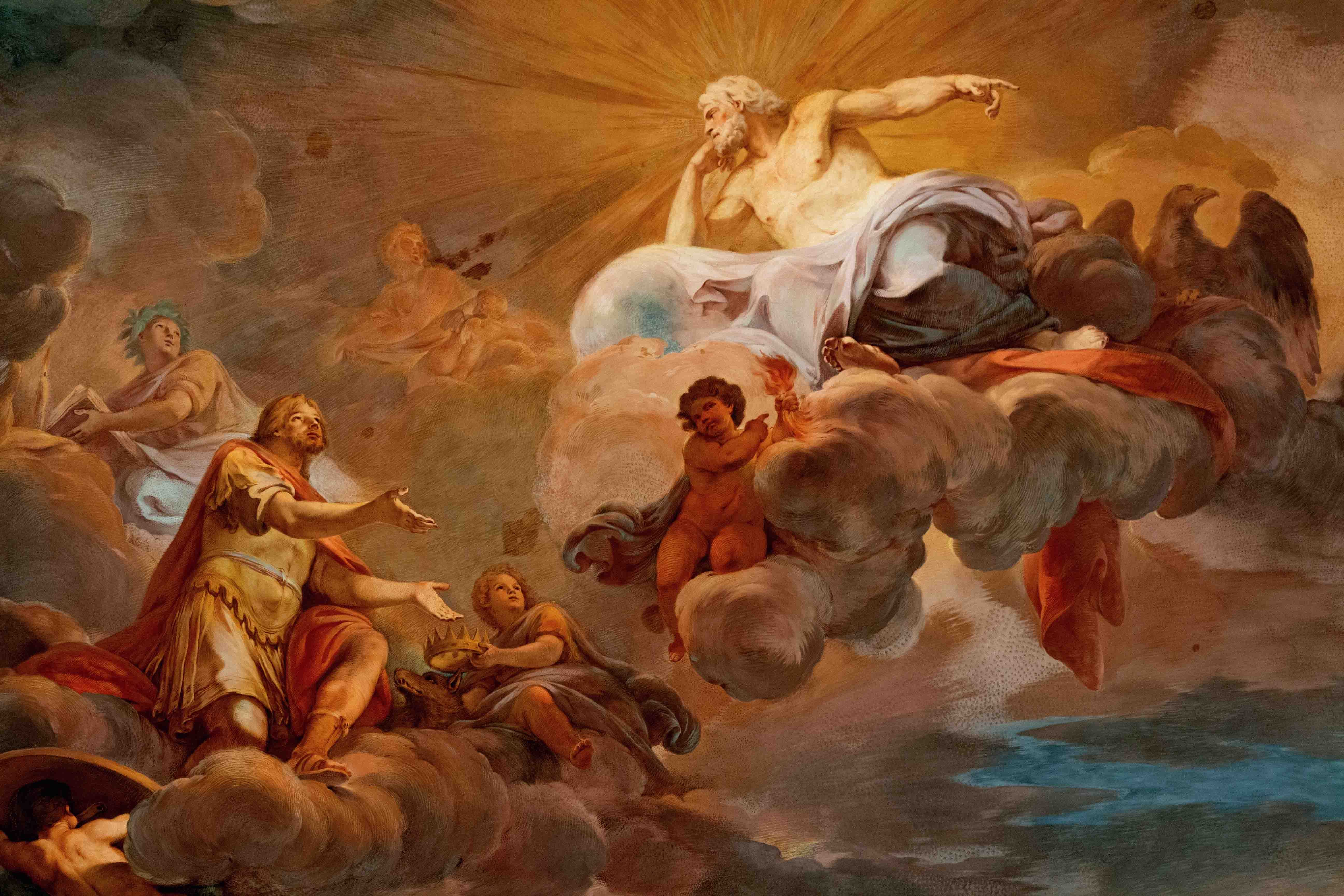
“Then Romulus his grandsire’s throne shall gain, Of martial tow’rs the founder shall become, The people Romans call, the city Rome. To them no bounds of empire I assign, Nor term of years to their immortal line…”
Virgil, Aeneid, Book I.1276-1280
2,779 years ago today, the city of Rome was founded, and the principal taproot of the Western world was planted.
Yet as Romulus marked the boundaries of his new city, few present on the 21st April 753 BC could have imagined that the rustic plot of land before them would one day be the seat of an empire widely revered as the apex of civilisation. But it did, and many of the reasons why are due precisely to the character of its founder.
One year ago, we considered the wider story of Rome’s foundation. In a special piece today, we take an in-depth look at Romulus specifically and how the three key virtues that he embodied shaped both his kingship and the character of the Roman people themselves…
1 - Iustitia - The Pursuit of Justice
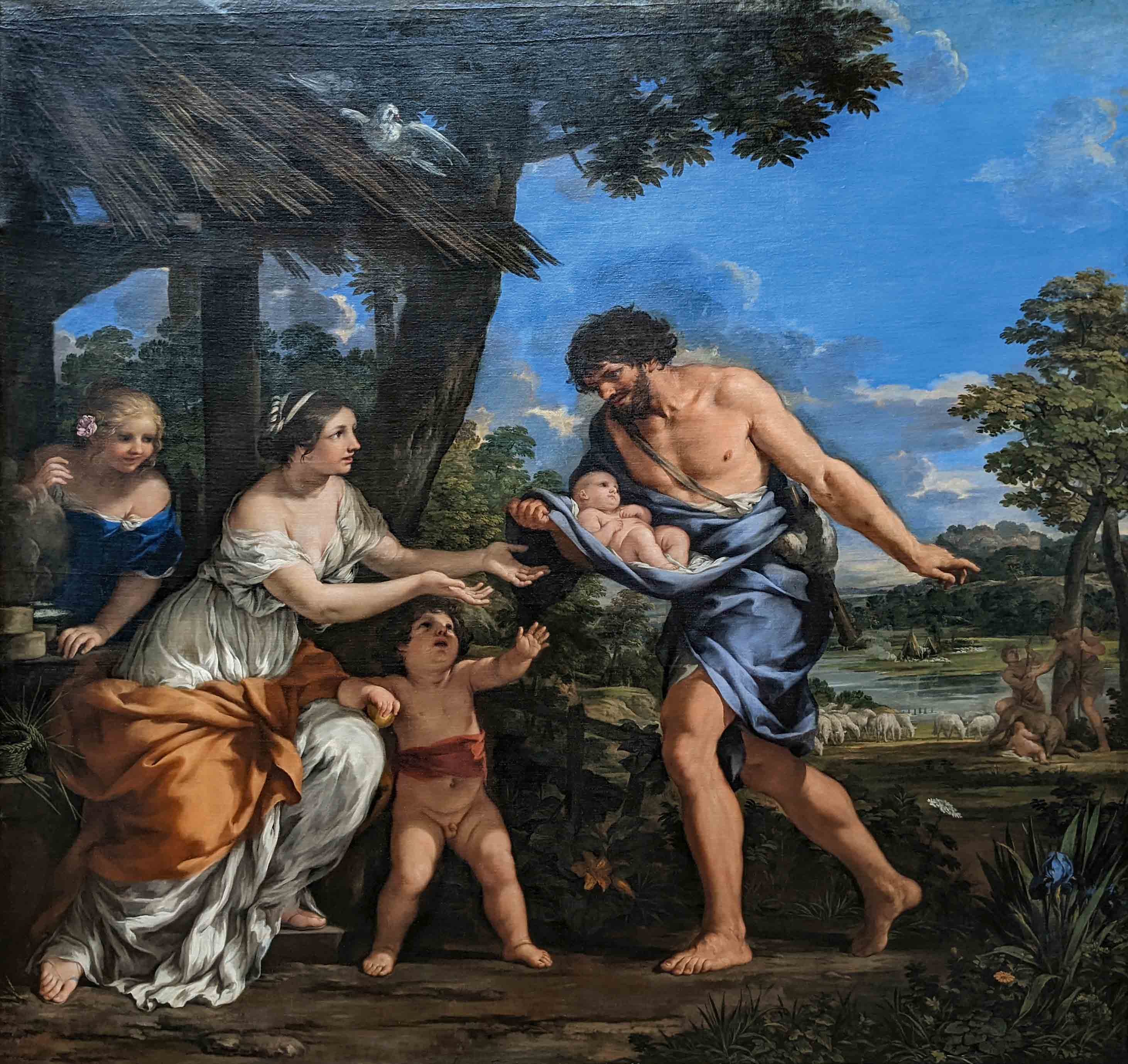
Both Romulus and Remus may have been born to an exalted lineage, but they grew up in the most humble of settings. Before their eighteenth birthday, as far as either knew they were the sons of a lowly shepherd, and lived accordingly. As a result, Rome’s first and founding king was the living fusion of classes — noble in bearing yet commoner in upbringing:
“When they came to be men, they showed themselves both in dignity of aspect and elevation of mind not like swineherds and neatherds, but such as we might expect those to be who are born of royal race and are looked upon as the offspring of the gods; and as such they are still celebrated by the Romans in the hymns of their country. But their life was that of herdsmen, and they lived by their own labour, generally upon the mountains in huts which they built, roofs and all, out of sticks and reeds”
Dionysius of Halicarnassus, Roman Antiquities, I.79
The boys were not yet aware that they had been cheated out of their royal destiny when they were mere babies, when Amulius had usurped the Alban throne from their grandfather Numitor. Yet the misrule and injustice that had resulted was evident in the rampant crime that stalked the land, and both started to fight back against it:
“The children thus born and thus brought up, when arrived at the years of manhood, did not loiter away their time in tending the folds or following the flocks, but roamed and hunted in the forests. Having by this exercise improved their strength and courage, they not only encountered wild beasts, but even attacked robbers laden with plunder, and afterwards divided the spoil among the shepherds. And in company with these, the number of their young associates daily increasing, they carried on their business and their sports”
Livy, Ab Urbe Condita, I.4
Romulus in particular however, who “seemed to exercise his judgement more, and to have political sagacity” (Plutarch, Life of Romulus, 6), was better able to rally the downtrodden of Latium to the cause.
When the boys turned eighteen, Remus was captured in an ambush set by a band of enraged robbers, and taken to Amulius. It was at this moment that the shepherd Faustulus at last revealed to Romulus his true identity and royal lineage. The only reason, however, that Romulus was well placed to do something about it, to rescue his brother and overthrow the usurper, was due to the years of credibility he had built up as somebody prepared to risk his life for the pursuit of justice. All of which had been done before he was presented with the opportunity of greatness.
His followers — the first ‘Roman army’ — were not a legion of professional soldiers, but a band of aggrieved farmers and outcasts who rallied not just to a man, but a cause that he believably championed. Only together were they able to overthrow Amulius.
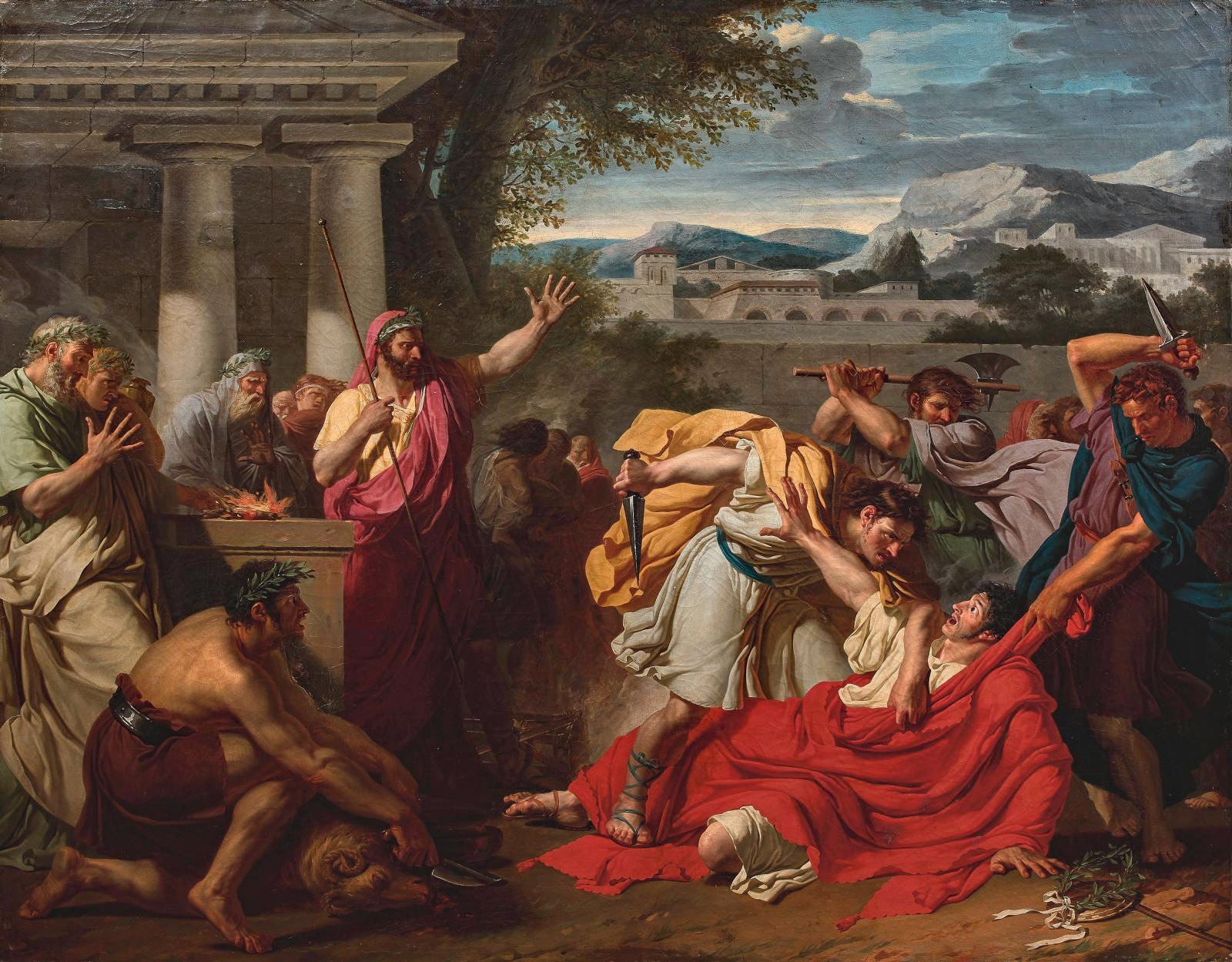
It is indeed clear that the spectacular popularity Romulus would go on to enjoy with the ordinary people years later was precisely due to the fairness of his justice towards the powerful and powerless alike. During the brief period in which Romulus shared the kingship with the Sabine prince Titus Tatius, the sources are explicit that the former deservedly emerged as sole King of Rome due to his integrity in the face of his colleague’s corruption:
“In the fifth year of the reign of Tatius, some retainers and kinsmen of his, falling in with ambassadors from Laurentum on their way to Rome, attempted to rob them of their money, and when they would not stand and deliver, slew them. It was a bold and dreadful crime, and Romulus thought its perpetrators ought to be punished at once, but Tatius tried to put off and turn aside the course of justice. This was the sole occasion of open variance between them; in all other matters they acted in the utmost concert and administered affairs with unanimity. The friends of the slain ambassadors, shut out as they were from all lawful redress, through the efforts of Tatius, fell upon him as he was sacrificing with Romulus at Lavinium, and killed him, but escorted Romulus on his way with loud praises of his justice.”
Plutarch, Life of Romulus, 23.1-3
It is clear too, that the justness of Romulus was instrumental in forging a unique Roman identity which stood out against its neighbours and established a moral weight to ‘Romanness’ itself:
“There was yet a third policy of Romulus, which the Greeks ought to have practised above all others, it being, in my opinion, the best of all political measures, as it laid the most solid foundation for the liberty of the Romans and was no slight factor in raising them to their position of supremacy. It was this: not to slay all the men of military age or to enslave the rest of the population of the cities captured in war or to allow their land to go back to pasturage for sheep, but rather to send settlers thither to possess some part of the country by lot and to make the conquered cities Roman colonies, and even to grant citizenship to some of them.”
Dionysius of Halicarnassus, Roman Antiquities, II.16
It may seem a basic ethical advance today — to settle and commit to ‘Romanising’ conquered peoples rather than putting them to the sword — but for a ruler of a small city state in the 8th century BC to choose this, at a time when existential tribal wars were commonplace, was truly extraordinary.
Not for nothing therefore did the Romans go on to worship Iustitia (the origin of ‘Lady Justice’) as a goddess. Not for nothing, either, did multiple authors centuries later deplore the rapacious sackings of Carthage and Corinth in 146 BC as heinous acts which fundamentally ruptured the Roman character and fatally tarnished the legitimacy of the Republic. As Velleius Paterculus put it, “The path of virtue was abandoned for that of corruption, not gradually, but in headlong course” (History of Rome, 2.1).
Romulus was just, and at her height, so too was Rome. At the same time, the justice of the Roman state would be rooted in the most basic societal unit of all — the family…
2a - Pietas to Family
One of the chief Roman virtues, pietas, has an easy but misleading translation in English. It is the direct root of piety, but the Roman concept was far broader than pure religious devotion, and therefore far more significant on a societal level.
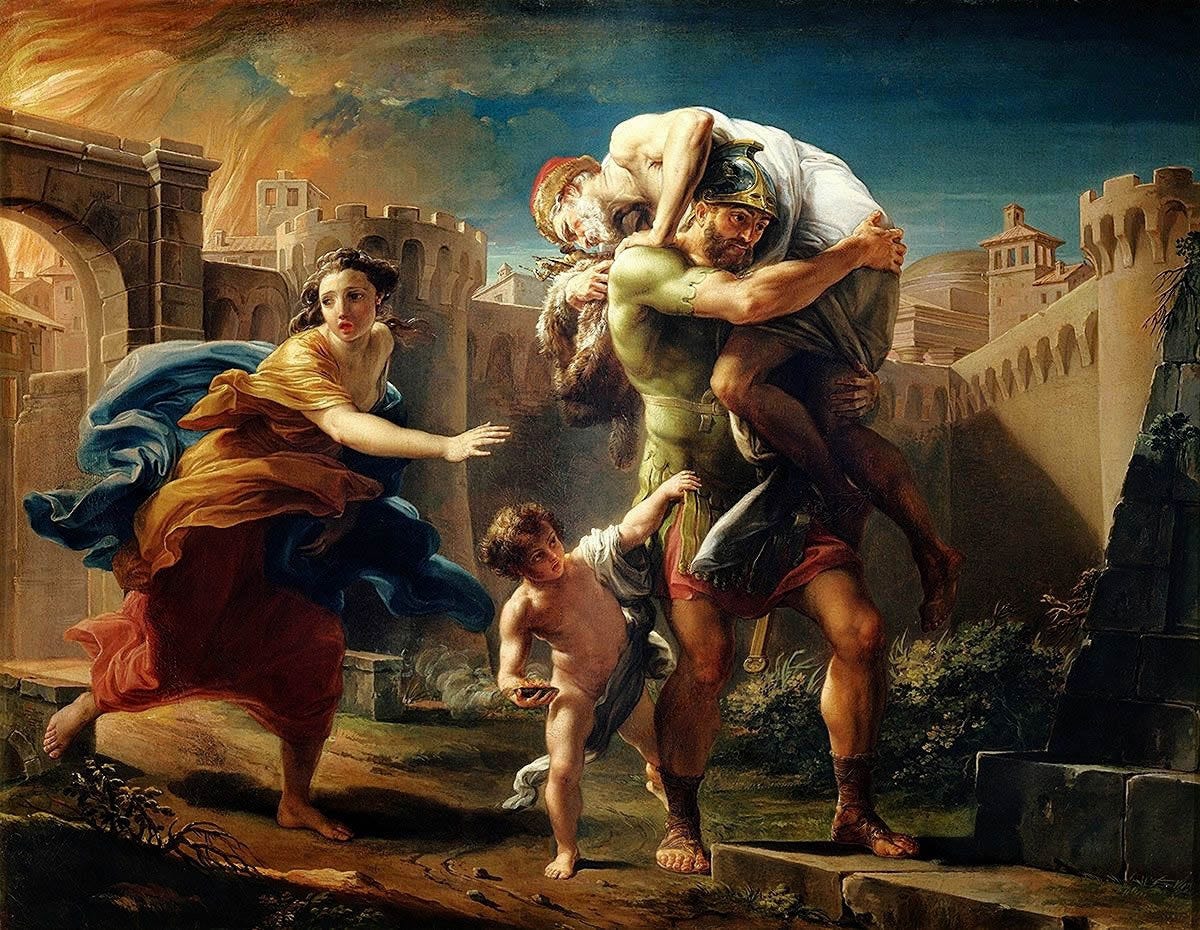
Pietas is better translated as duty, and with it the Romans intended obligation to the family and country as much as to the gods. Furthermore, by ‘family’ they did not simply mean your immediate relations, but your ancestors too. The image of Aeneas dutifully carrying his elderly father on his shoulders from the burning ruins of Troy is a potent image of pietas in classical mythology. More immediate to the first Romans, however, was the example of Romulus himself.
As mentioned previously Romulus had already distinguished himself before the Foundation of Rome by overthrowing the cruel Amulius from the throne of Alba Longa. A crucial detail that needs to be reiterated is that Romulus did not do this out of a personal quest for power. The uprising swelled due to the general injustice of Amulius, but the catalyst for Romulus taking up arms was the duty he owed to his captured brother, and moreover, his duty to avenge the injustice done to his mother and grandfather:
“When the youth heard every circumstance of their fortune from the beginning, he was touched both with compassion for his mother and with solicitude for Numitor. And after taking much counsel with Faustulus, he decided to give up his plan for an immediate attack, but to get ready a larger force, in order to free his whole family from the lawlessness of Amulius, and he resolved to risk the direst peril for the sake of the greatest rewards, but to act in concert with his grandfather in whatever the other should see fit to do.”
Dionysius of Halicarnassus, Roman Antiquities, I.80
It is also crucial to reiterate that up until this point, Romulus did not know that Rhea Silvia or Numitor were in any way related to him. According to the prevailing accounts, it is only after Remus was captured that the shepherd Faustulus divulged this truth to him. Romulus, therefore, takes up arms not out of any sentiment towards the individuals, but out of pure pietas — duty to family because it is the right thing to do.
Fine, you may counter. But since he is still restoring his family to the monarchy, is this not simply indirect personal ambition?
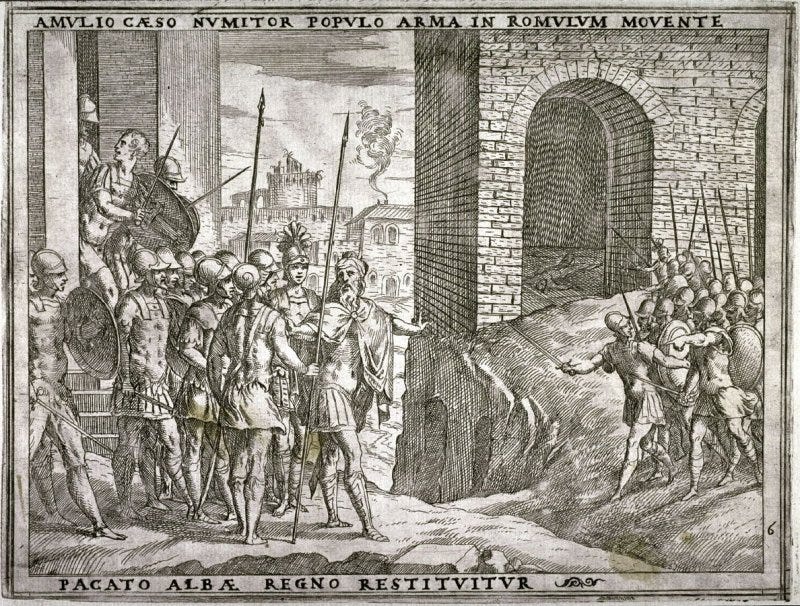
No, it wasn’t. For a start, once the uprising is successful, and Amulius is slain, both Romulus and Remus immediately submit to Numitor and pledge absolute fealty to him, before removing themselves from the Alban royal succession:
“When the young princes, coming up with their band through the middle of the assembly, saluted their grandfather king, an approving shout, following from all the people present, ratified to him both that title and the sovereignty. Thus the government of Alba being committed to Numitor, a desire seized Romulus and Remus to build a city on the spot where they had been exposed and brought up.”
Livy, Ab Urbe Condita, I.6
Romulus and Remus move to found a new city precisely to not intrude upon the governance of the city they had just liberated. There was no earthly reward for their deeds other than restoring the proper balance, and the knowledge that the evil committed against their house had been avenged.
One of the great achievements of Romulus as king was indeed his meshing of family and civic duty, resulting in one of the most characteristic aspects of Roman civilisation — the close bond between clients and their patrons. As Dionysius of Halicarnassus recounted, it was Romulus who first legislated this, establishing an explicitly paternal bond — patron and patrician after all deriving from pater (father) — between elites and their social inferiors:
“It was the duty of the patricians to explain to their clients the laws, of which they were ignorant; to take the same care of them when absent as present, doing everything for them that fathers do for their sons with regard both to money and to the contracts that related to money; to bring suit on behalf of their clients when they were wronged in connexion with contracts, and to defend them against any who brought charges against them; and, to put the matter briefly, to secure for them both in private and in public affairs all that tranquillity of which they particularly stood in need.”
Dionysius of Halicarnassus, Roman Antiquities, II.10
In short, Romulus birthed the concept of noblesse oblige, recasting the cold and inhuman structure of the state into one massive extended and interconnected family. Thus did Romulus elevate pietas into a civic virtue, and needless to say, this played a fundamental role in establishing a uniquely Roman identity built on organic and meaningful social cohesion.
But you may be thinking that there is a large elephant in the room. After all, didn’t Romulus kill Remus? How could the murder of his own brother possibly square with pietas?
Perverse though it may initially sound, the death of Remus actually represents the other side of the pietas coin. Ironically, it reveals the one thing that superseded family duty in the eyes of the Romans…
