
Medici Advice for Wayward Sons
Lorenzo the Magnificent's last letter to his teenage son...

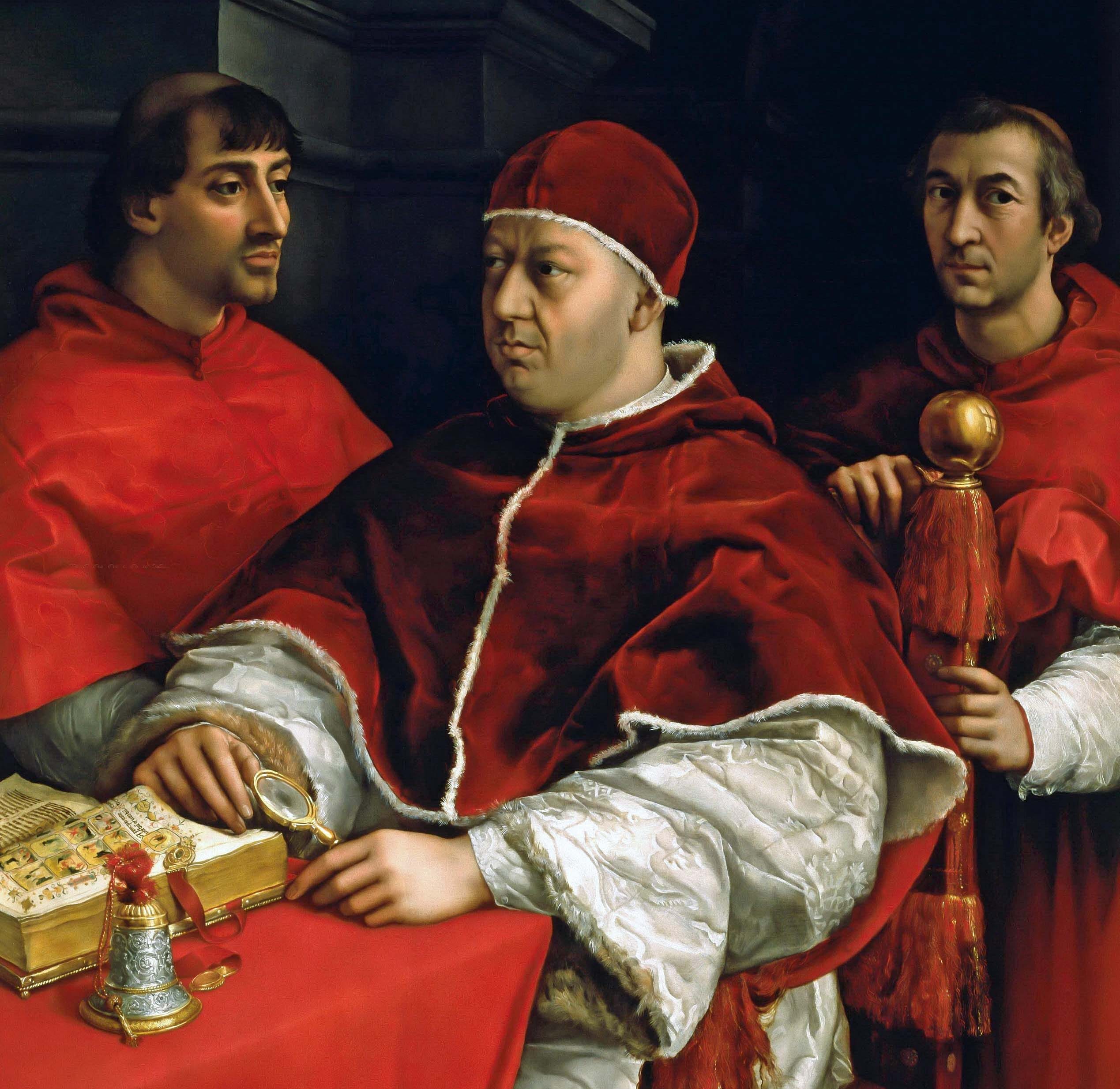
In 1489 Lorenzo the Magnificent, ruler of Florence, head of the House of Medici and manager of the world’s first truly international bank, made the family’s single most audacious investment.
Wielding his extraordinary influence, he convinced Pope Innocent VIII to make his second son, Giovanni de’ Medici, a cardinal. Since Giovanni was just thirteen years old, he would become the youngest cardinal in the history of the Church. Lorenzo, however, was acutely aware of how bad it could all look, and how easily the family’s reputation could implode, if Giovanni turned out to be a wayward son and shirked the tremendous new responsibilities he now faced.
So when the time came for Giovanni to formally take up his position in Rome in the March of 1492, he was surprised to find a letter waiting for him at his new accommodation. It was from his father, who was by then seriously ill and close to death. In that letter, Lorenzo the Magnificent shared his parting advice to a son upon whom everything now depended.
Lorenzo could not have known then that young Giovanni would one day be elected Pope Leo X, and hold the destiny of Europe within his palm. But his advice in this letter certainly got young Giovanni there.
So whether you are the father of a boy who is on the cusp of adulthood, a new life or new responsibilities, or you are that boy, here is what Lorenzo the Magnificent, godfather of the Renaissance, can teach you about ensuring success and insuring yourself against failure…
Remember Where You Came From
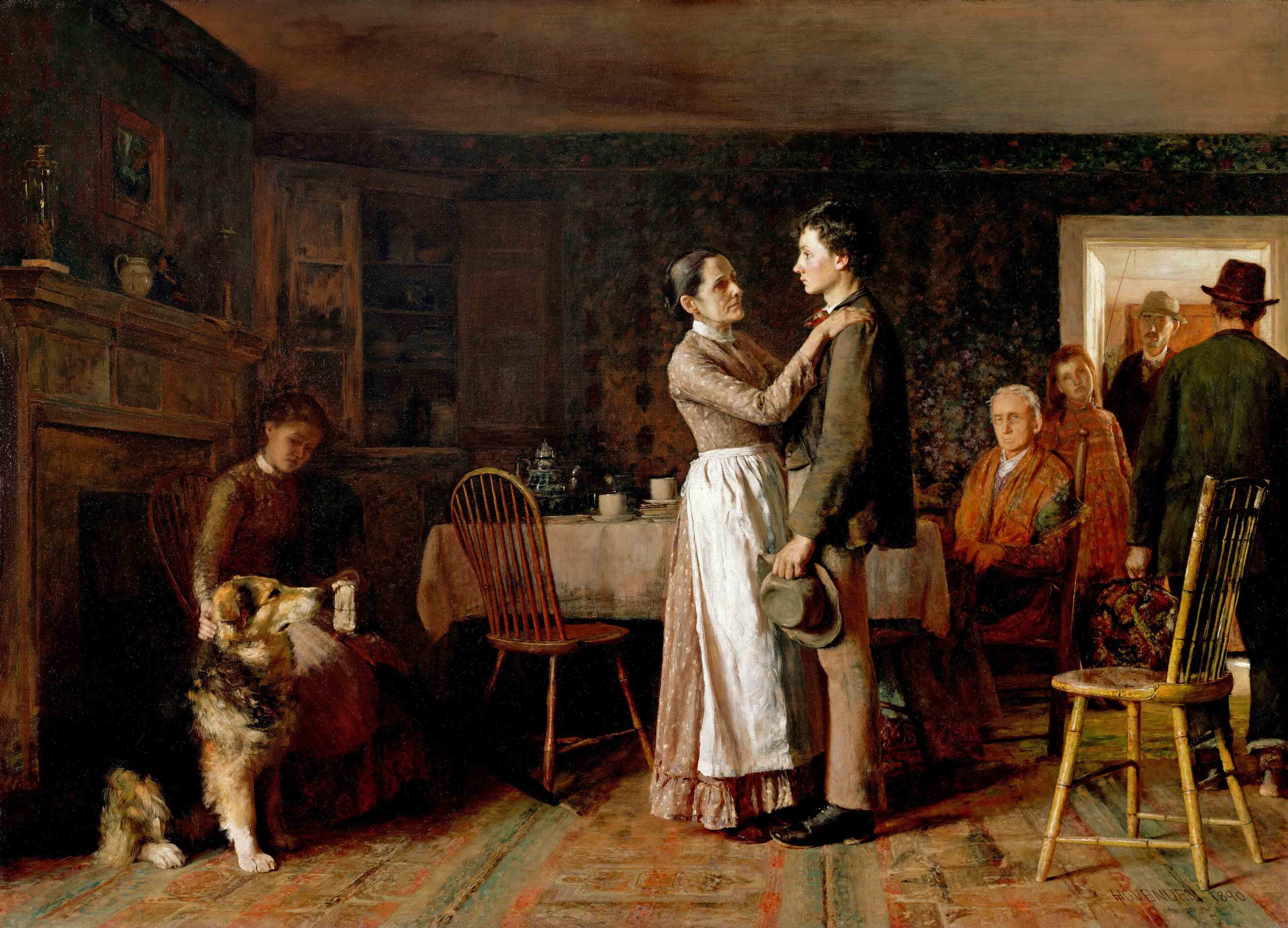
While Lorenzo’s own political machinations may have gotten Giovanni the cardinal’s hat, he was self-aware enough to realise two things. Firstly, that the Medici family had exposed itself dangerously by this. Secondly, that he had placed enormous pressure on his teenage son. Should Giovanni put a foot wrong, after all, then the dubious manner of his elevation would be easy ammunition for any critic.
Lorenzo therefore wisely commences his letter with a swift puncture to his now seventeen year old son’s possible ego. He reminds him that while he has received a great honour, it is not his own merit that has brought him to Rome, and that he owes the great prestige of his new position to others:
Therefore my first recommendation is that you endeavour to be grateful to our Lord God, remembering every hour that it is not by your own merits or solicitude that you have attained the Cardinalate, but by the grace of God. Show your gratitude to Him by leading a saintly, exemplary, and honest life”
Lorenzo the Magnificent to Giovanni de’ Medici, March 1492
Entering a new station of life, be it at workplace or in any broader community, can offer us much. But it also asks of us humility. An understanding that our new rank is not a reward in and of itself, but an opportunity to earn reward.
Not all of us of course acquire a princedom in Italy. But almost any kind of promotion can spark envy and sow discord, especially when others believe you too young or unqualified. As Lorenzo remarks, the single best antidote to any such resentment is not to actively fight such allegations, but to set an example by your conduct. Do not, in other words, tell people that you should have this job, but show that you are the right person for it. Only this will blunt criticism and deflect it from ever successfully landing.
A key to achieving this organically is indeed never forgetting where you came from. As a teenager, Giovanni had scarcely left the family household when he entered that of the Church. Lorenzo thus urged him to treat this as a natural progression, rather than an abrupt dislocation:
“It would be indeed most shameful, contrary to your duty, and to my expectations if at a time when others generally acquire more reason and a better understanding of life, you should forget the good precepts learned as a boy”
Lorenzo the Magnificent to Giovanni de’ Medici, March 1492
The simple truth is that the simple lessons we are taught as children — from controlling our temper to social skills — are not rendered obsolete by aging. On the contrary, they are arguably more important in adulthood than childhood, and it is the misfortune of aging that we tend to forget them or downplay their relevance. Lorenzo therefore made sure to praise his son for remembering at least one of those lessons:
“I was greatly pleased last year to learn that without being reminded by any one you had been several times to confession and to communion, for I conceive there is no better way of obtaining the grace of God than by habituating oneself to persevere in these duties. This seems to me the best advice I can begin with”
Lorenzo the Magnificent to Giovanni de’ Medici, March 1492
A father after all should remember that his son needs recognition as well as admonition, and both need the other in order to have meaning.
Beyond this however, Lorenzo understood all too well that as a teenage boy now going to ‘the big city’, young Giovanni was about to face a barrage of people and influences that would try to lead him astray…
Beware Bad Actors

When I myself first left England and moved to Rome at 23, I knew only one person in the Eternal City. So I asked him what advice he would have for somebody wishing to start a new life in Rome, and as a middle-aged professor of art history who had lived there for decades, I knew he was unlikely to reply with a dull cliché. Sure enough, his response indeed remains emblazoned upon my memory.
“Never forget why you came here”, he warned, “because the city will throw everything at you to distract you”. Over the decade which followed, my appreciation for his wisdom only grew. In such a city, where the entire spectrum of human emotion is on full and extravagant display, where meeting one person suddenly explodes your network of acquaintances and friends sixfold, it is enormously difficult to control your time, or even be aware it needs controlling. At the same time, any ‘big city’ has no shortage of unscrupulous souls ready to prey upon the naive, or else those who took the wrong paths in life and are eager to corrupt others into doing the same out of a defiled need for validation.
Before you know it, years can pass as your dreams disappear behind mounting distractions that focus you on the days and blind you to the months. As a result, I am ever grateful that due to the advice I had received at the beginning, the anchor of my own time in Italy was a fear of arriving at the end of it and realising I had wasted too much of it.
It was therefore as inspiring as it was humbling, — not to mention uncanny — to discover that Lorenzo the Magnificent had identified this exact same dynamic over half a millennium earlier:
“I know, as you are now going to Rome, that sink of all iniquities, that you will find some difficulty in following it, as bad examples are always catching, and inciters to vice will not be wanting. Your promotion to the Cardinalate, as you may imagine, at your age and for the other reasons already mentioned, will be viewed with great envy, and those who were not able to prevent your attaining this dignity will endeavour, little by little, to diminish it by lowering you in public estimation and causing you to slide into the same ditch into which they have themselves fallen, counting on success because of your youth. You must be all the firmer in your stand against these difficulties, as at present one sees such a lack of virtue in the College.”
Lorenzo the Magnificent to Giovanni de’ Medici, March 1492
More often than not, evil is a patchwork woven of poor decisions rather than a single and cartoonish will to destroy. “Inciters to vice” may or may not ‘know not what they do’. Regardless, it is in the company of such individuals that it is all the more difficult to stay the course as you are, like the frog in slowly boiling water, drawn into a life which only years later reveals itself as ruinous.
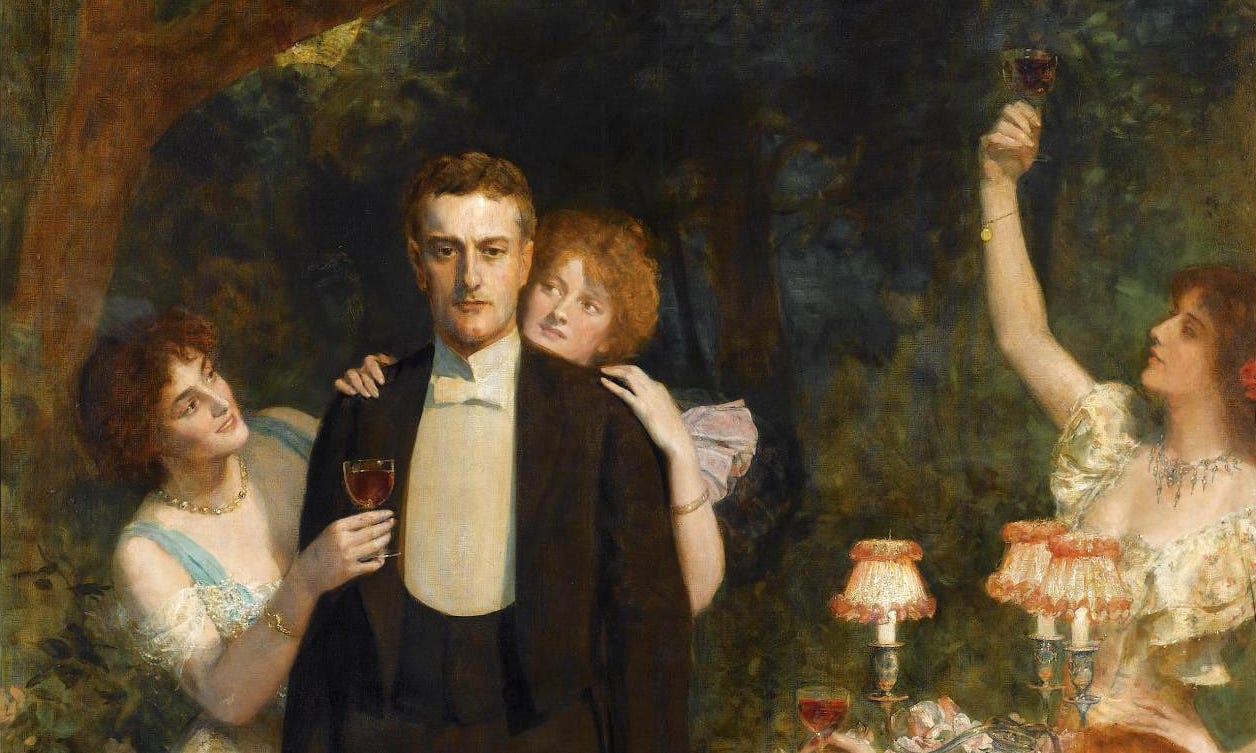
“Never forget why you came here” indeed, and it will be far harder for people to lead you astray. Are you getting that job because you believe in the mission? After the years of office intrigue, power politicking and budget cuts, will that still be the case, or will it degenerate into mere survival and running out the clock until the next role? Are you going to university because you love the subject? Beware those who will lead you into drifting, and will guilt you into thinking you simply must attend this party tonight, despite it breaking your body clock for the rest of the week.
Be vigilant of bad actors, both immediate or potential, and seek out those who genuinely reflect the “reason why you came”, and will actively help you fulfil it or at least passively inspire you:
“I recollect however to have known a good many learned and good men in the College, leading exemplary lives. It will be well that you should follow their example, for by so doing you will be the more known and esteemed as being different from the others. It is imperative above all things that you should avoid as you would Scylla and Charybdis the reputation of being a hypocrite and of evil fame”
Lorenzo the Magnificent to Giovanni de’ Medici, March 1492
It is of course up to you to exercise judgment and seek out such people, but in terms of ‘breaking into’ that circle, once again childhood lessons will go a long way:
“Be not ostentatious, and have a care to avoid anything offensive in conduct and in conversation, without affecting austerity or severity. These are things you will in time understand and practise better, I conceive, than I can write them”
Lorenzo the Magnificent to Giovanni de’ Medici, March 1492
So far, Lorenzo has given sound advice on how to not fumble our entry into a new world. But what do we do when we are in? Especially if we want to not only make a good impression, but actually get ahead in potentially hostile surroundings?
As Lorenzo reveals in the second half of the letter, there are two strategies you must follow if you want to thrive as well as survive in a new environment, and be the proud instead of the wayward son…
