
How to Use a Victory
In 1535, Charles V won the war, and an even greater peace...

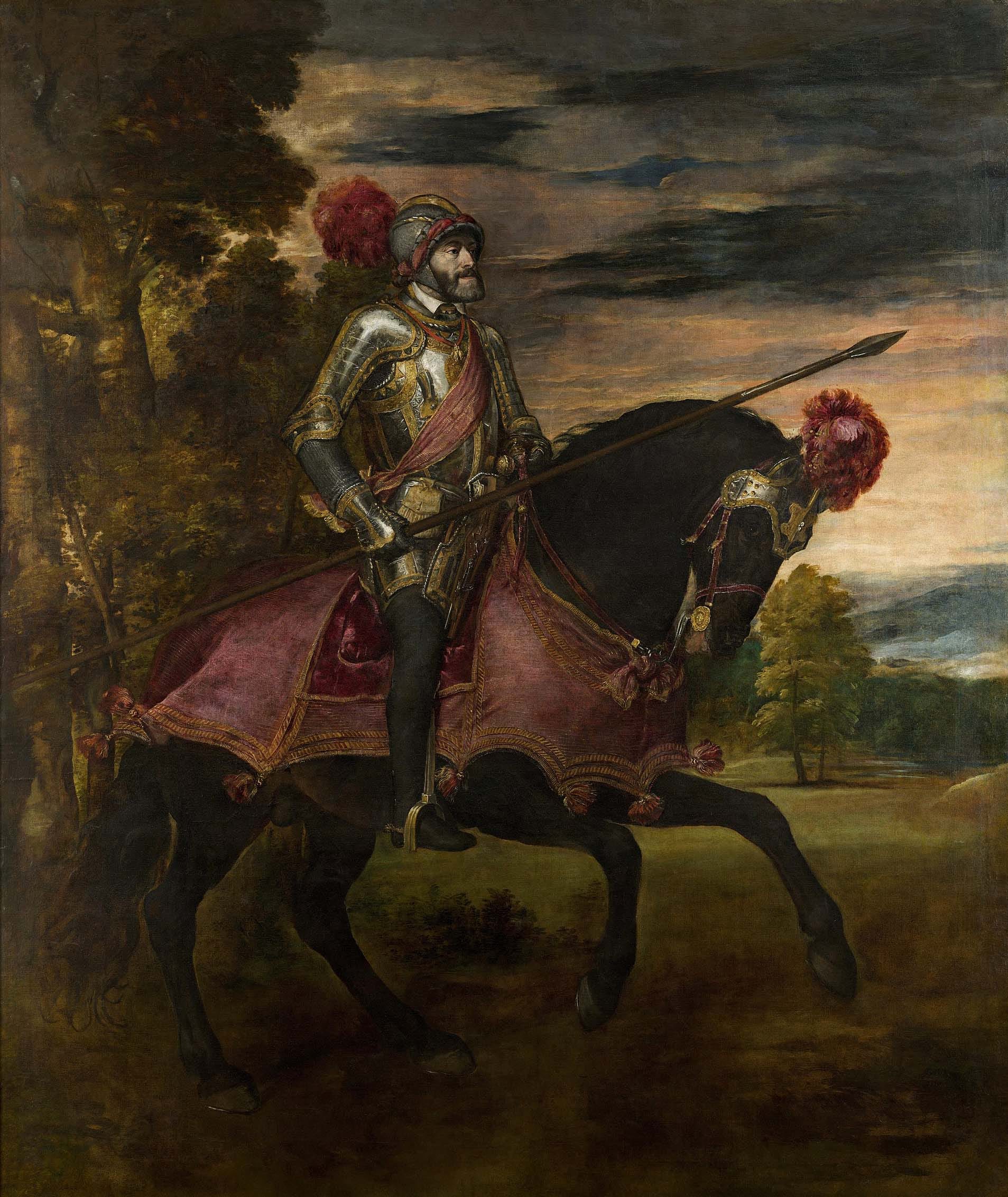
It is an ironic truth that victory can be the ruin of men just as readily as defeat.
Defeat, after all, if survived in the short term, can lead to introspection and improvement. Victory however, tempts hubris, and can easily invite stagnation within and the rancour of friends if the victor loses touch with what genuinely enabled that victory.
How we respond to victory, therefore, is no less important than how we respond to defeat. One man who understood this well was indeed the most powerful man of the 16th century — Charles V, Holy Roman Emperor.
So much so that while his dramatic victory over the Ottomans at Tunis in 1535 is all but forgotten today, the Emperor’s visit to Sicily and Naples immediately afterwards is widely commemorated and fondly remembered across the Italian South, where he remains a revered figure.
Today, we explore what Charles V can teach you about guarding against arrogance, and consolidating your victories…
Who is it all For?
Charles V was a man defined above all by the most solemn sense of duty. For a man who by election and inheritance had come to be sovereign of the Holy Roman Empire, Spain, the Netherlands, Hungary, Burgundy, much of Italy and beyond, this was a priceless virtue.
Quiet and reserved by nature, the Emperor was uncomfortable with adulation and celebration. Peace-loving and cultured, throughout his long reign he was continually frustrated by the interruption of war, whether it came from the French king or the Ottoman sultan. A deeply pious man, he further deplored the schism which increasingly ruptured Western Christianity throughout his lifetime. But Charles V, despite the enormous extent of his domains, never once failed to answer the call of office or faith.
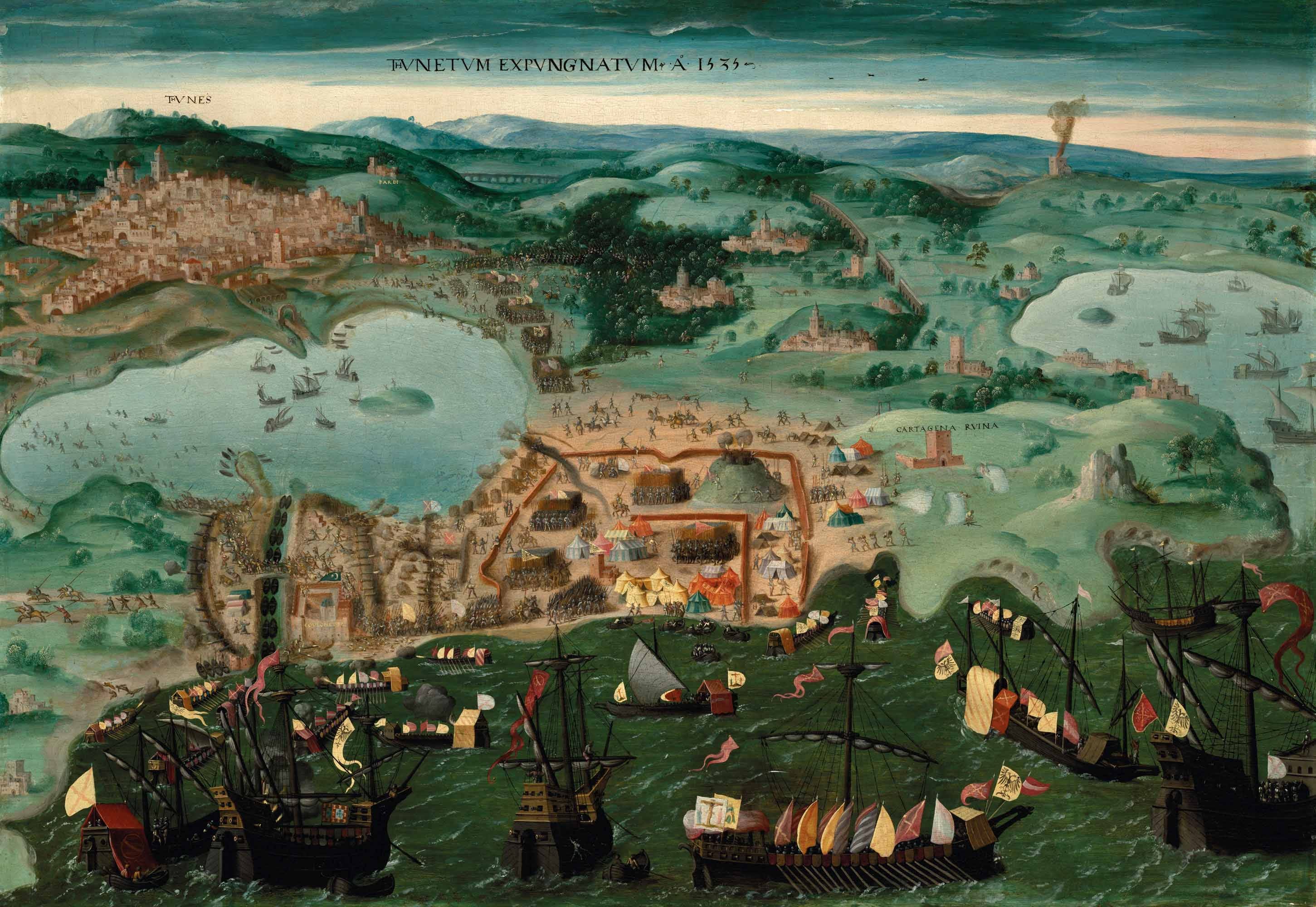
1535 would see perhaps the most spectacular example of this, when the thirty five year old Emperor was forced to respond to Ottoman expansion across North Africa. When allied Tunis fell to the armada of Suleiman the Magnificent, leaving the entire western Mediterranean vulnerable to invasion, Charles V rallied his disparate realms and assumed direct command. In an impressive feat of logistics as well as leadership, the vast multinational Christian force repelled the Ottoman fleet, navigated the contested Strait of Sicily and landed on the shores of north Africa on the 15th June 1535.
By the month’s end Charles succeeded in ousting the Turks from Tunis, defeating the Sultan’s greatest lieutenant, Barbarossa, in the process. It was a resoundingly efficient victory, and the Emperor could easily have just returned to the imperial heartlands of Germany to celebrate the triumph.
But he did not. Charles, after all, knew that what had just happened held more relevance for some of his subjects than others. North Africa, after all, was a distant concern for fishermen on the shores of the Baltic. But Charles was also the King of Sicily, and for the Sicilians, Ottoman expansion and Barbary pirate raids were a constant and existential threat. The Turks, after all, had come within a day’s sail of the island, and what Sicilians feared above all was that they would simply be forgotten after the glory of victory died down — especially as Sicily had been ruled from abroad for some centuries.
It was a fear that Charles would allay in spectacular style…
The Art of Productive Celebration
Just two weeks after the reconquest of Tunis, Sicilians relieved at their salvation were stunned with fresh news — the victorious Emperor was coming to visit them in person.
But this was to be no mere passing salute. For the Emperor had decided to postpone his return to the Empire, and better acquaint himself with his Italian subjects. Using the celebration of the Tunisian victory to do this was one of the true masterstrokes of Charles V.
Thus on the 20th August 1535, Charles disembarked at Trapani before ecstatic crowds. For the first time in a century, a King of Sicily had set foot on Sicilian soil, and that man was the hero of Europe. The euphoria was only enhanced by the presence of twenty thousand Christians in the resplendent entourage who Charles’s campaign had liberated from the chains of Ottoman slavery.
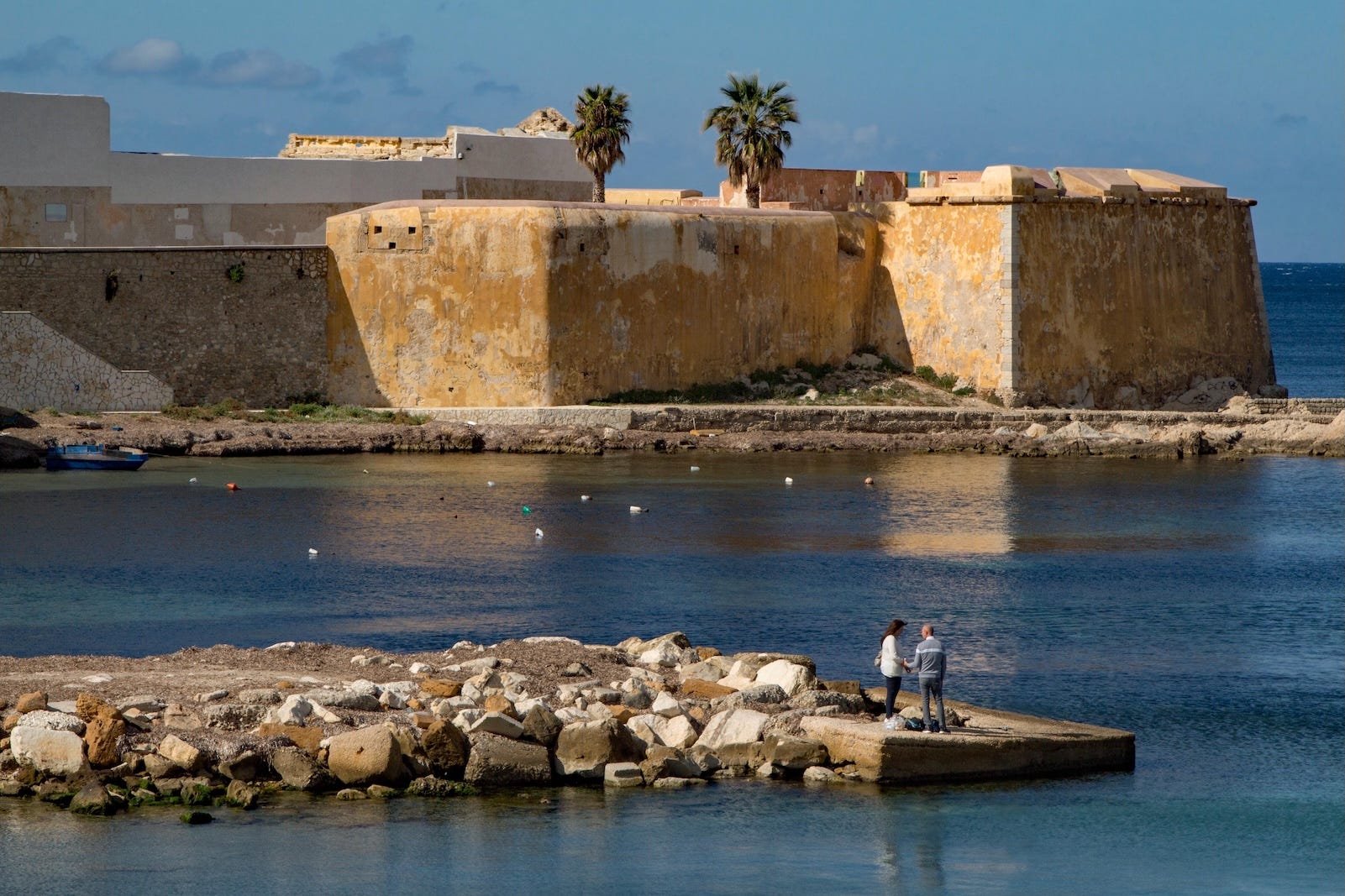
The Emperor further endeared himself to the populace by style and substance. Still today the Trapanesi proudly recount how Charles referred to the city in his speeches as the Chiave del Regno — literally the ‘Key to the Kingdom’. This was not mere idle flattery however. Charles was under no illusions that the Ottoman threat had been permanently beaten back, and Trapani, being the largest port on Sicily’s western coast — and closer to Africa than Italy — was indeed the key to the island’s defensive network. The Emperor’s visit would prove to be a significant spur to investment in the city’s fortifications, and the ramparts built in the years which followed indeed deterred any further Muslim aggression against the city, and remain a source of pride today (see picture above).
Charles remained in Trapani for two weeks — a remarkable commitment for a city that was not a capital — during which time he acquainted himself with her local governance. Celebration there was aplenty, but it was backed up with fresh substance. Parades, after all, are temporary, but laws are generally not. Thus the Emperor’s arrival was quickly supplanted in the popular memory by his confirmation of an array of legal privileges for the city, which would go on to spark something of a social and economic boom. Consecrating these reforms with a solemn pledge to uphold them, sworn by Charles in the Cathedral itself, crowned a fortnight which still defines the city’s identity to this day.
For the Trapanesi, the visit of Charles V was a triumph beyond anything they had cause to expect. The defeat of the Turks abroad was one thing, but enjoying tangible and local gains was quite another.
But nothing would compare with what happened next, when Charles demonstrated decisively that your attitude is vastly more important than your means when you want to capitalise upon a victory…
