
How to Spark a Local Renaissance
Palladio, Patronage and Community Power...

To commission great monuments and works of art is not merely an aristocratic pastime. It is the central driving force behind the construction — or reconstruction — of civilisation itself.
At its core, patronage is somebody, or a group of people, realising that something is missing from their community, and working to fill that gap. Even if done out of a cynical desire for fame, it is a win-win situation. The town receives something beautiful, and the people who made it happen are recognised and remembered.
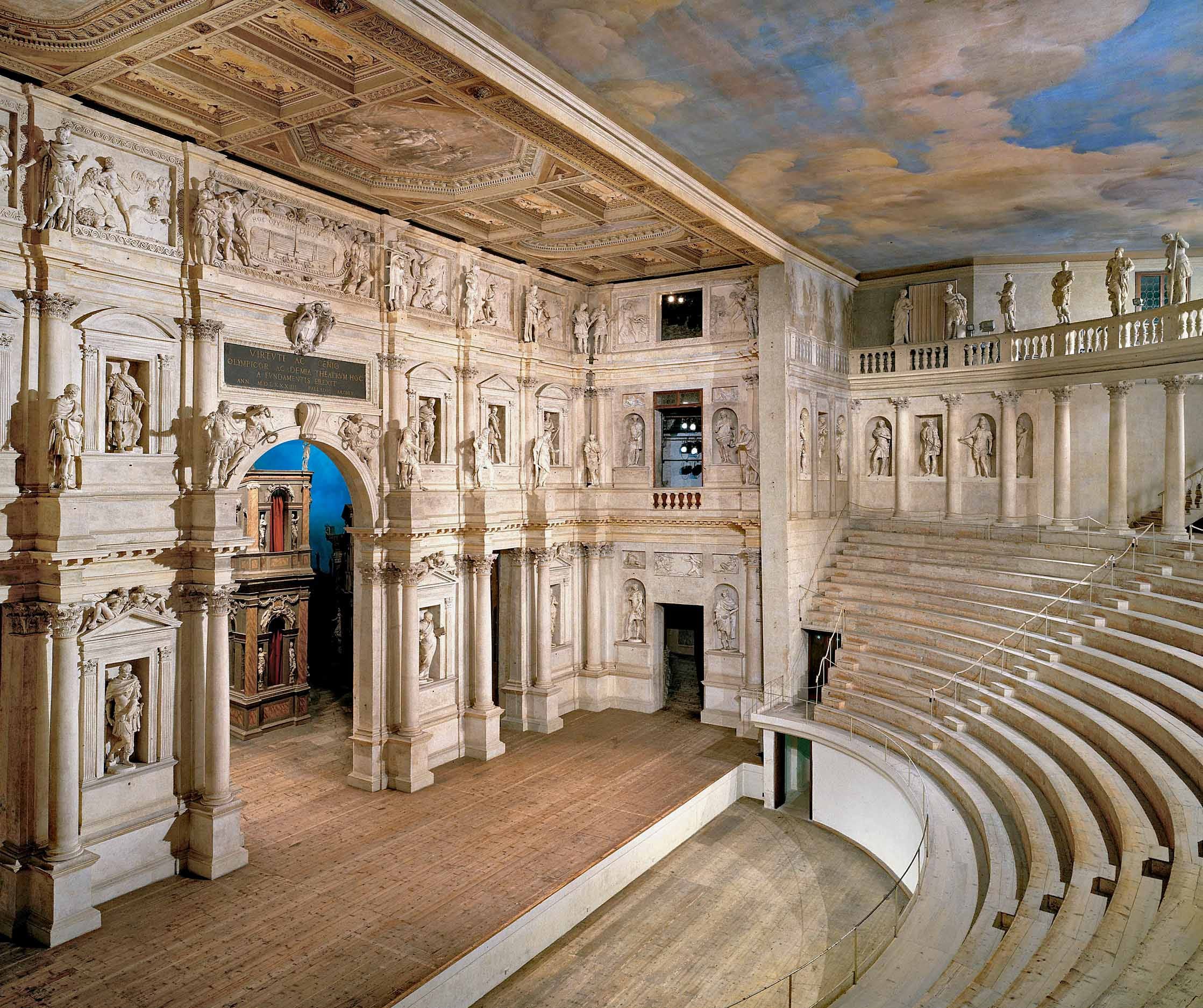
But while we typically associate patronage with nobility and royalty, committed yet otherwise ‘ordinary’ citizens can play a central part too. We at INVICTUS indeed stand in support of The Culturist and Evan Amato’s new project to patronise talented artists today. Today however let us consider another, especially grand, example of ‘citizen patronage’ from history — the monumental Olympic Theatre of Vicenza, which in 1585 became the first permanent theatre to be built in the West since the days of Ancient Rome.
Remarkably this theatre, A UNESCO World Heritage Site which still today hosts theatrical productions, was not commissioned by a government, but ‘crowdfunded’ into existence by private citizens.
So in a special piece today, we consider how a small group of visionary men were able to translate a dream into reality, and therefore how you too can do the same…
At INVICTUS, our mission is to explore the practical wisdom you can learn from the greatest leaders, thinkers, and artists of the past, through their own words and deeds.
If this resonates with you then subscribe below to receive an in-depth article every week exploring how influential figures were able to achieve what they did, and how you can start following in their footsteps…
Networking
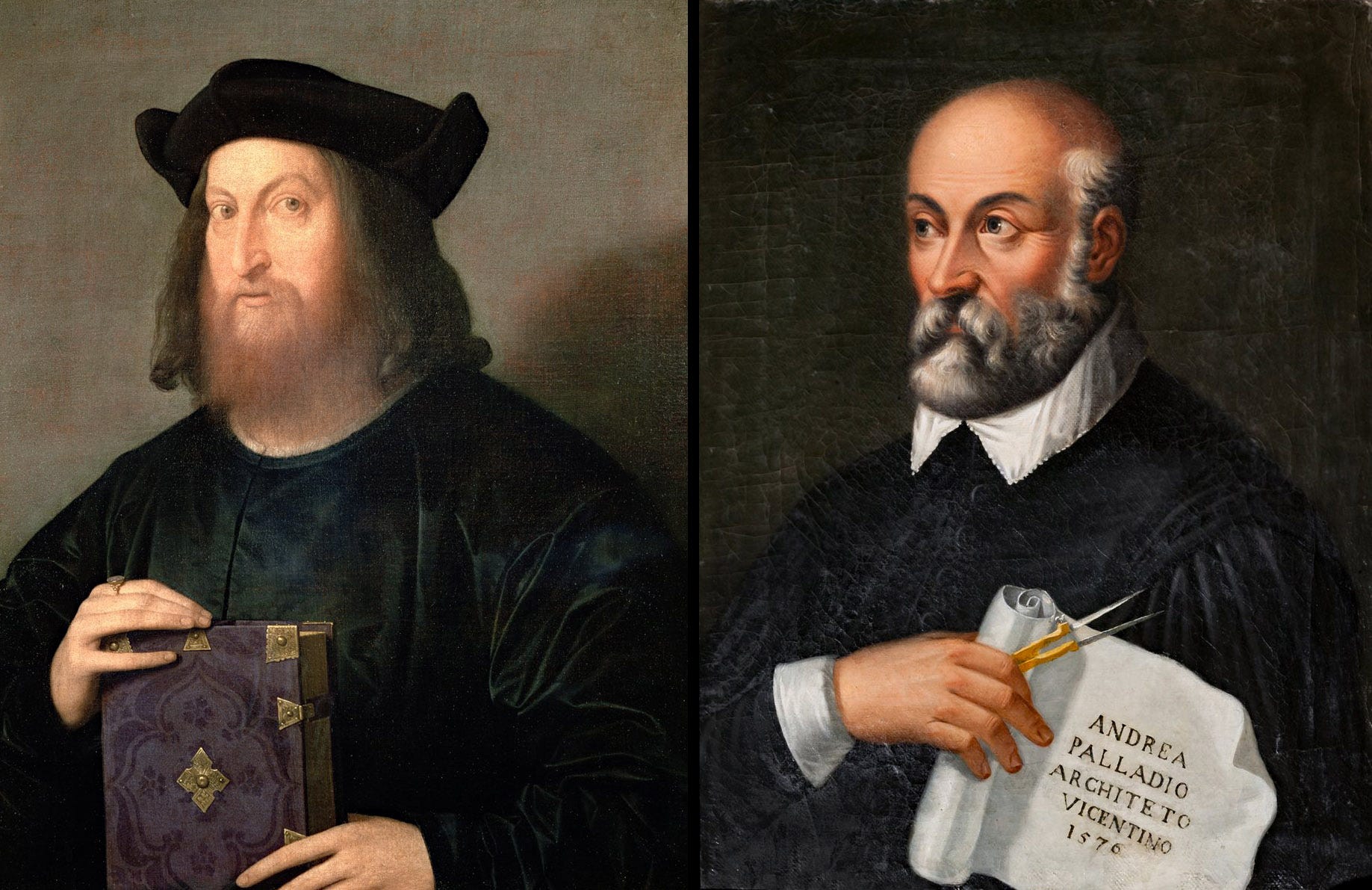
The city of Vicenza was not a major centre of Europe in the mid-16th century. Indeed it was not even a capital city, but little more than a frontier town of the expanding Republic of Venice, who had lost her political autonomy over two hundred years earlier. Compared to her Venetian overlord, as well as nearby Padua and Verona, Vicenza was a dwarf among giants. But she did have one particular asset — an ambitious resident who loved learning yet had failed in politics.
Indeed Gian Giorgio Trissino’s involvement in state affairs was such a disaster than in 1509 he had been briefly exiled as a traitor for siding with the Holy Roman Empire against Venice. But giving up his wilder and more unrealistic personal ambitions would be his making, as he began to focus on what actually mattered more to him. With the Italian Renaissance now its full bloom, Trissino was fascinated by ancient literature, and grew eager to seek out others who shared this passion.
Over the decades which followed, Trissino’s house doubled as Vicenza’s ‘book-club’, where the curious were guaranteed an interesting conversation, on subjects much of the population cared little about. It is where many would go to lament how far things had fallen since Classical Antiquity, and how impoverished the Italy of their times was compared to that of the Caesars. Trissino’s altruistic sacrifice, however, was that while he himself was not directly responsible for the Olympic Theatre, he wove the network which was.
In particular, it was Trissino who launched the career of the man who almost single-handedly revived the built aesthetics of the West to their ancient glory — Andrea Palladio. For in 1538, the aging scholar took a chance on the then unknown young stonemason, and paid for him to go to Rome to study the emerging ruins. The long-term results of that investment speak for themselves, as the ‘Palladian’ style would go on to become the dominant aesthetic of aristocratic villas, monuments and government buildings from Germany to Virginia.
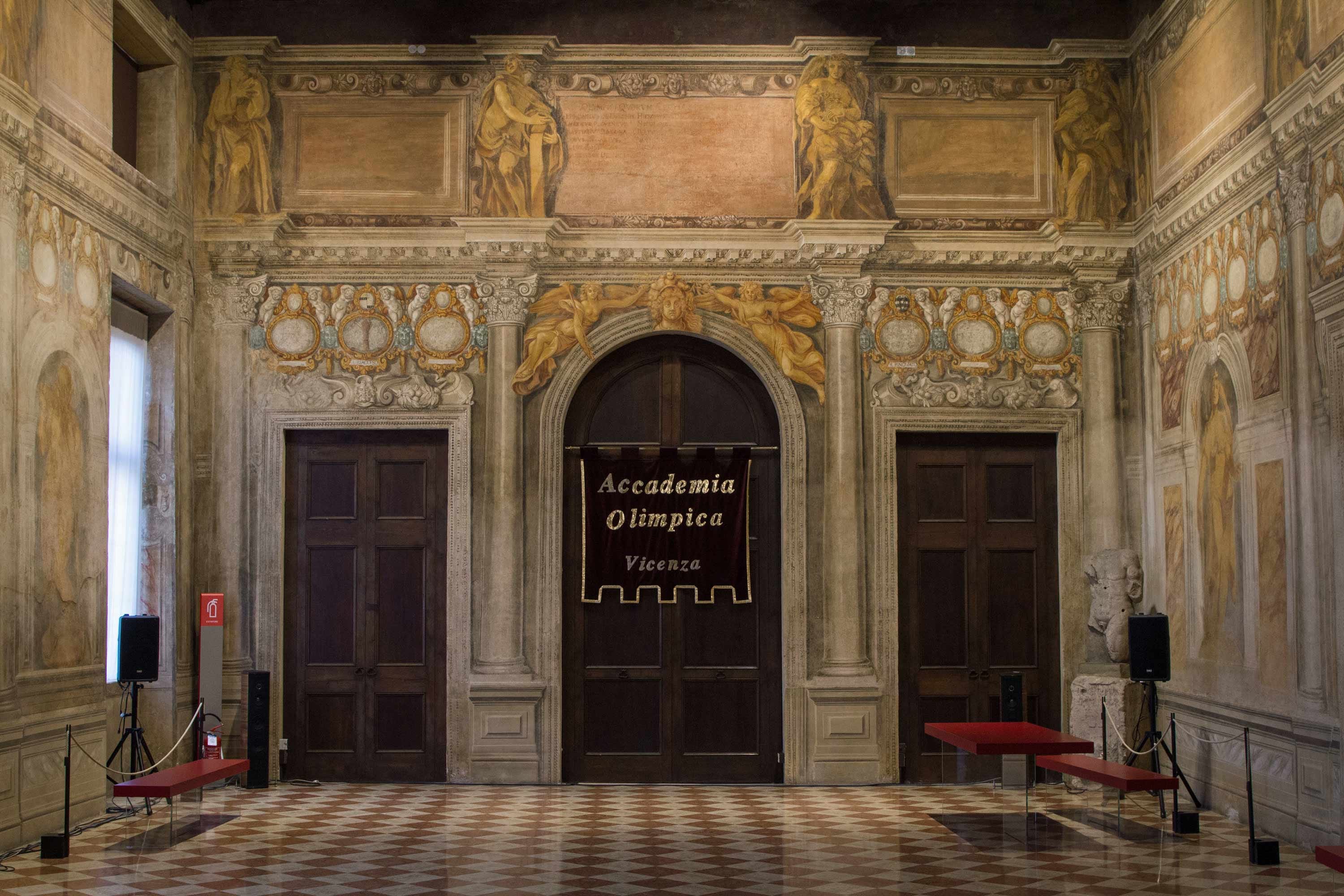
But in the short term, Vicenza itself would experience an astonishing cultural blossoming. In 1555, five years after Trissino’s death, 21 Vicentine citizens from his circle — including Palladio — together founded the Accademia Olimpica. Dedicated to promoting a love of the arts and sciences, the ‘Olympic Academy’ was unusual in that it was open to anybody passionate about these fields and distinct in them, irrespective of social status.
Soon enough, the Academics became fascinated by the plays of Ancient Greece, and frustrated that such drama was no longer performed in Europe. They had the texts, but not the venue. So they decided to build one…
Preparing
We take for granted today that cities have theatres. But for the men of 16th century Italy, they were a distant memory. While drama had flourished in Ancient Greece and Rome, following the collapse of the Western Empire theatres increasingly became associated with a now-discredited pagan world. Saint Augustine, after all, famously denounced the venues of his own day as "gratuitously fanning the flame of human lust" (City of God, II.14).
For much of the medieval era therefore, the construction of theatres was near universally prohibited in Western Europe. Ironically, this merely resulted in the de facto censorship of 'sophisticated' productions, encouraging the spread of amateurish and bawdy 'undertheatre'. The men of the Accademia Olimpica, deploring this decay, resolved to reclaim theatre for dignified society, and resolved to use their own money to do it.
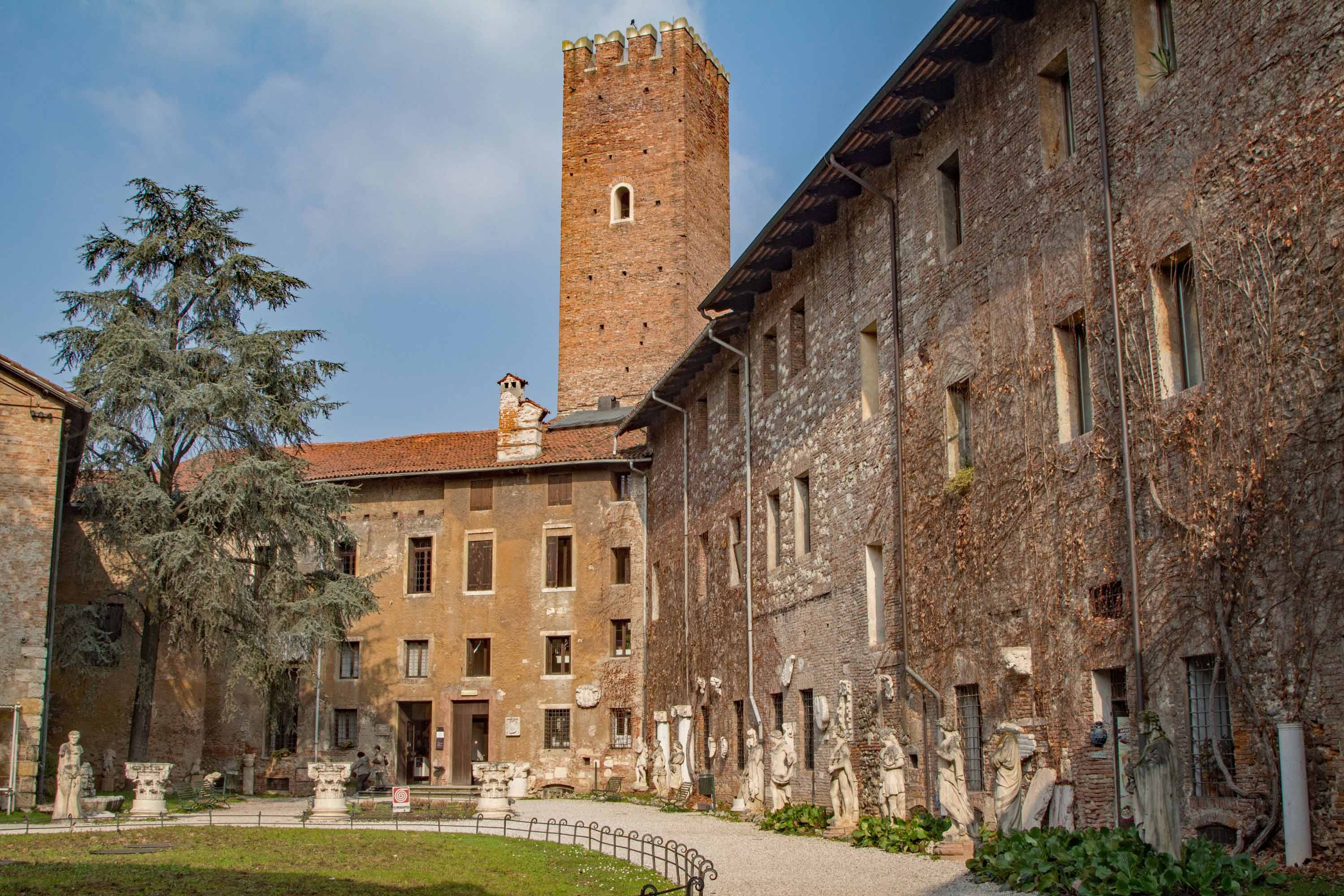
On the 15th February 1580, the Academics submitted an application to the city authorities for a plot of land. What they received was far from what could be called prime real estate. It was indeed a run-down patch on the eastern extremity of the city where the “prigioni vecchie” (“old prisons”) stood. Fortunately, the Olympic Academics were just as much concerned with revitalising their city as they were broader civilisation.
With the funds raised and a site secured, the Academics did not have to look far for the man to take the next step. Though he was now seventy two years old, Andrea Palladio was still an active member of the Accademia, and readily took up the challenge of his peers to design a civic monument the likes of which Italy had not seen for over a thousand years.
What followed however is a potent reminder of how collective will is just as important as individual talent when it comes to achieving grand things…
Sowing
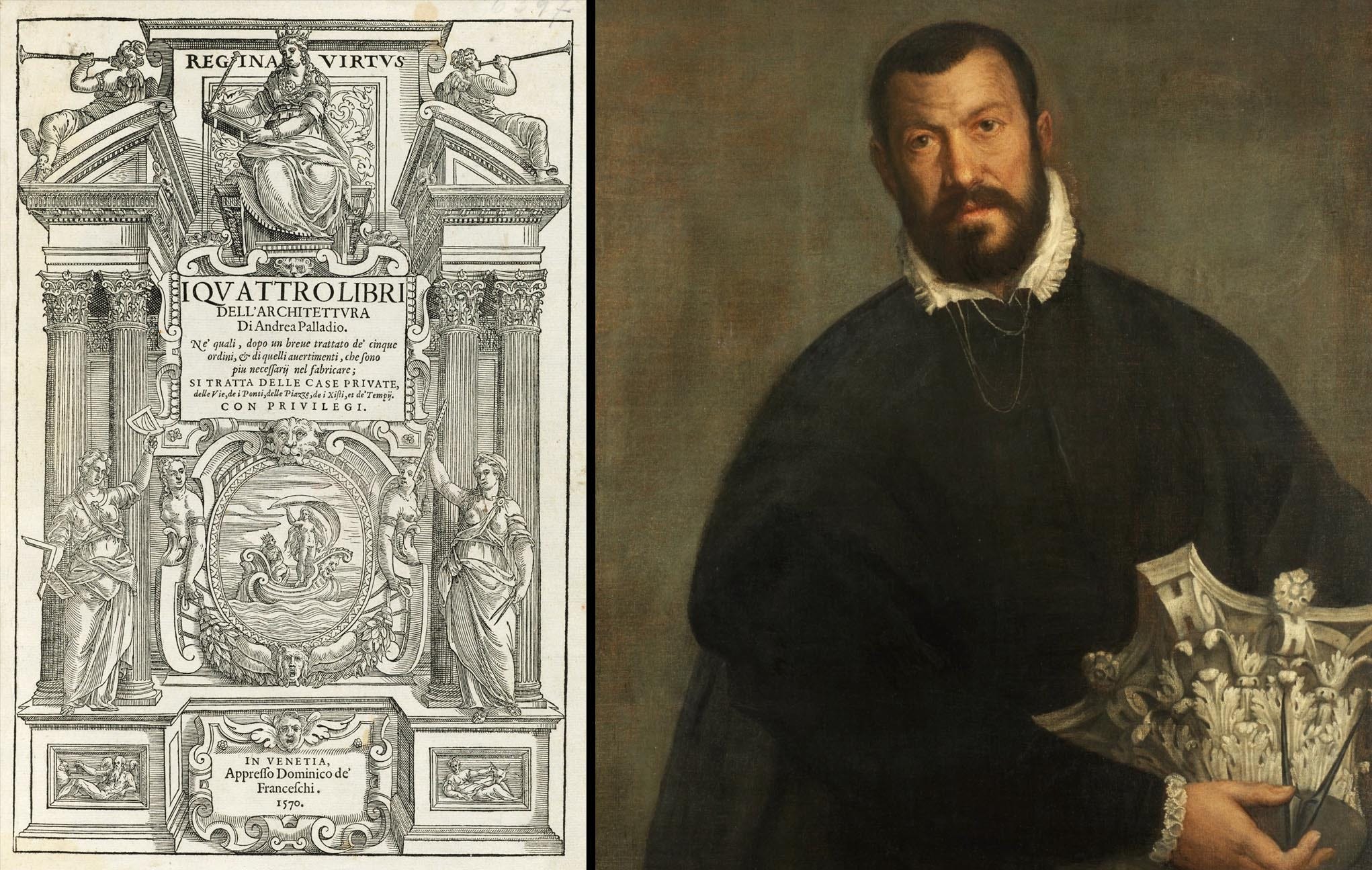
Ever since Trissino had first sent him to Rome, Palladio had been dumbstruck at how the buildings of his own day paled in comparison to those of Ancient Rome, and was determined to ‘re-normalise’ such vision and quality. But Palladio did not simply copy — he sought to capitalise upon what innovation had occurred since Antiquity to improve upon the ruins he saw. Two qualities above all others therefore graced his plans - a tightly mathematical approach to proportions, and an awareness of the surrounding landscape and how it could complement architecture.
Over the course of his long career, Palladio would apply these principles to scores of buildings across the Veneto and in Venice herself, immortalising the essence of the Renaissance in stone. No fewer than 23 of the villas he designed — also UNESCO World Heritage Sites — still grace the hinterlands of Vicenza. In 1570, Palladio recorded his learned wisdom for posterity in The Four Books of Architecture’, a seminal treatise that would have profound implications for European architecture for centuries to come.
When the time came to design the Olympic Theatre therefore, Palladio had a bedrock of unrivalled experience to draw upon. It could all have come crashing down, therefore, when just six months later, Palladio died of old age. It is indeed in moments like these when many great ambitions of the past died in the cradle, condemned to remain forever a dream and never a reality.
Fortunately for posterity however, the Accademia had not pinned all of their cultural hopes on one man alone, as the cultural blossoming they had triggered in Vicenza was beginning to produce a new generation of talent. Thus a young local architect, Vincenzo Scamozzi, himself inspired by the work of Palladio and enthused by his own studies of the classical world, stepped in to take up the project with enthusiasm, alongside Palladio's son Silla. The Academics, likewise, remained fully committed in spirit and financial backing.
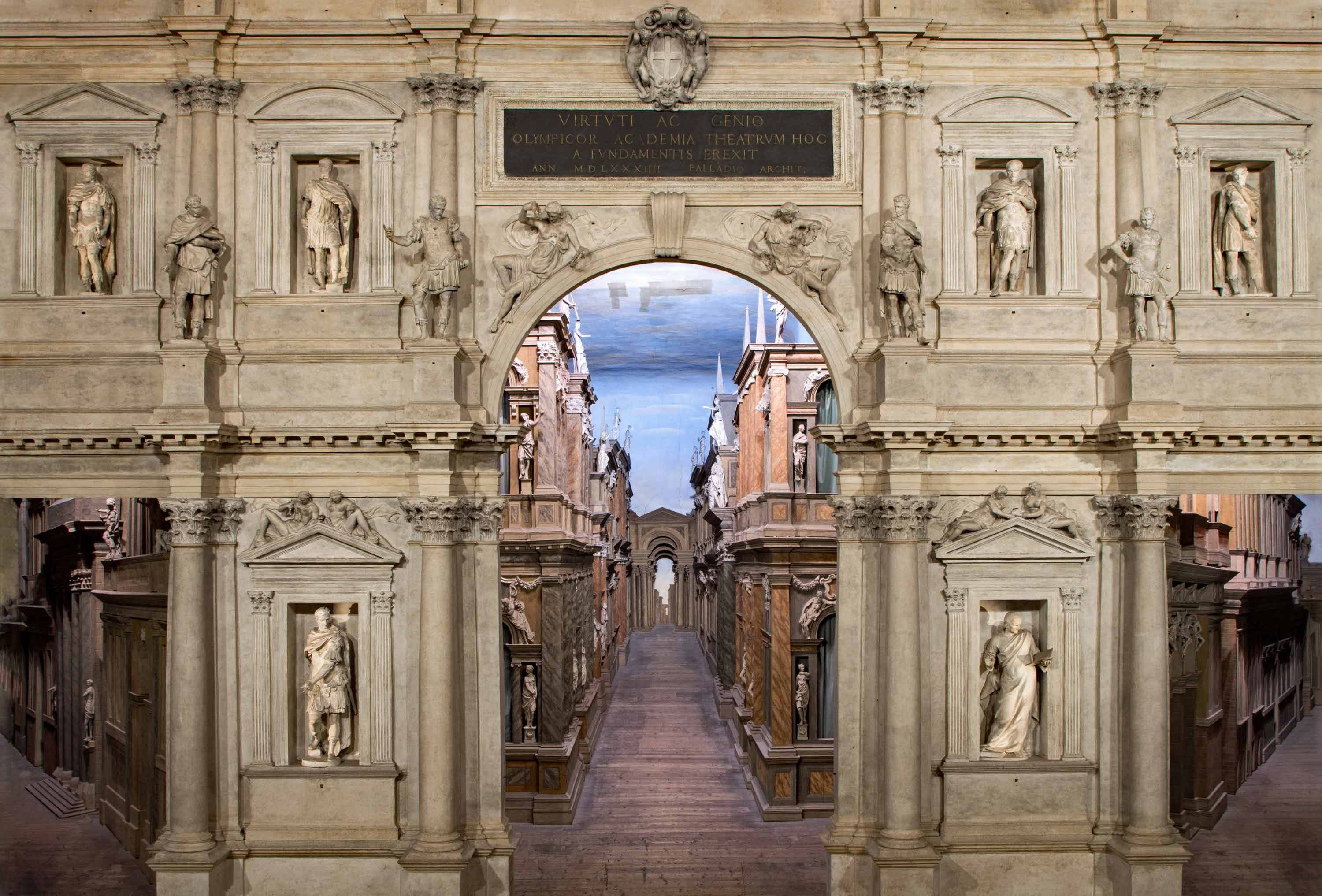
The death of Palladio therefore was an emotional, but not terminal blow to the project. Scamozzi’s own contribution indeed is a marvel in its own right. With a production of Oedipus Rex planned as the inaugural performance of the Theatre, Palladio’s successor reproduced the seven streets of the city of Thebes, unfurling in wood behind the triumphal arch of the scaenae frons (stage background). A masterpiece of perspective, the streets appear to vanish into the distance, yet the stage is only seven metres deep. It is an ingenious solution for maximising available space, and also the oldest surviving theatre scenery in the Western world, having miraculously survived centuries of fire and war.
As a result, barely five years after work began, the interior was ready for its first performance, on the 3rd March 1585…
Reaping
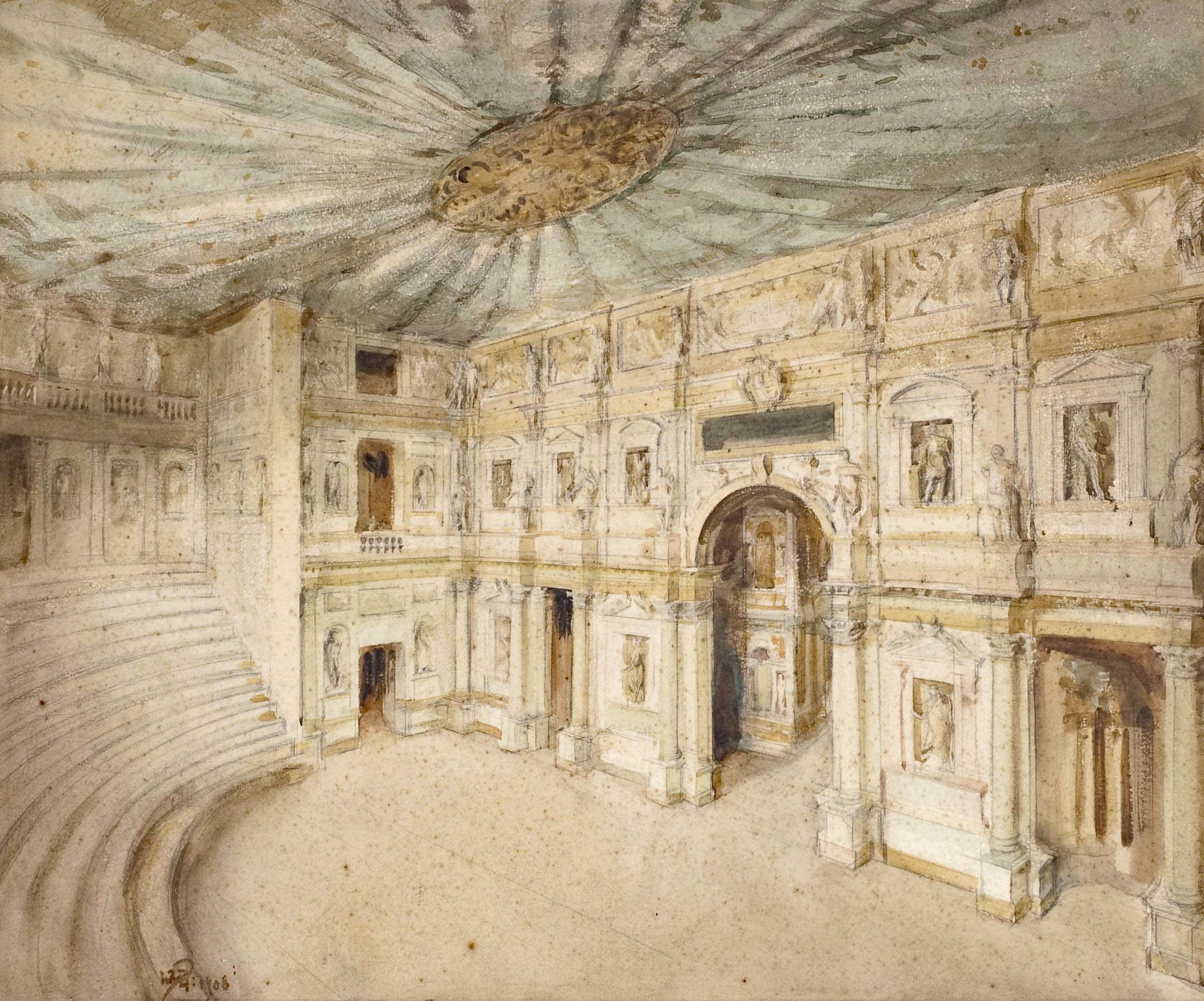
One need only look at it to understand what a spectacular achievement the Olympic Theatre is. What the Olympic Theatre represents, however, is just as magnificent as what it is.
Palladio’s design is a love letter to the classical world, but one that uses ancient knowledge instead of lazily imitating any one edifice he had seen. Moreover, the Theatre is a monument to a deeply encouraging feat — that in less than a single human lifetime Vicenza had been transformed from an impoverished backwater into a laboratory of civilisational reconstruction, by means of a citizen rather than government-driven initiative. The statues which adorn the colonnade behind the spectators (visible on the right of the article cover image), depicting the Accademia members who had made the Theatre possible, are indeed a fine reminder of this.
From the moment of its triumphant inauguration, the fame of the Olympic Theatre spread to Venice and beyond, enduring even centuries later. Visiting in 1786, Germany’s most famous man-of-letters, Goethe, gushed with praise when he saw it:
“The Olympic theatre is a theatre of the ancients, realised on a small scale, and indescribably beautiful. However, compared with our theatres, it reminds me of a genteel, rich, well-bred child, contrasted with a shrewd man of the world,
who, though he is neither so rich, nor so genteel, and well-bred, knows better how to employ his resources”Johann Wolfgang von Goethe, 19th September 1786
Once the site of dilapidated prisons, it was now a venue so prized that it would host the highest ceremonial occasions of state, receiving Pope Pius VI in 1782, as well as Emperors Francis I of Austria in 1816 and Ferdinand I in 1838.
Almost half a millennium on from its completion, the Theatre may be a World Heritage Site, but it still hosts performances, and the Accademia Olimpica still meets in Vicenza. What was once a strictly local project would organically become a watershed moment in Europe. With the bar set by the Olympic Theatre, over the centuries to come the concept of a great European city lacking a permanent theatre of her own would indeed be unthinkable. Monuments of entertainment, once considered scarcely better than brothels, were now objects of prestige and inseparable from the highest of culture.
Through the Olympic Theatre, the Accademia and its illustrious members therefore, the Vicentines reclaimed the dignity of their city, and of broader civilisation itself, and it all began with a niche book-club…