
How To Praise Yourself Without Boasting
Plutarch on the art of dignified self-promotion...


“To boast unseasonably is to play an accompaniment to madness”
Pindar, Olympian Odes, IX
You have surely been there. Felt that creeping dread, when somebody starts to praise your successes, or wants you to talk about them.
Perhaps it was a well-meaning friend. Perhaps a potential employer. Even worse, perhaps it was in front of a crowd. Perhaps the praise was sincere, perhaps it was a throwaway social courtesy. Either way, you sense the trap, and wish you were anywhere else, praying for the subject to change and the spotlight to shift.
After all, you know that people admire and envy success, but judge harshly anyone who acknowledges their own success, let alone promotes it. It is an impossible situation, to be escaped as quickly as possible, no?
But it doesn’t have to be. On the contrary, it is a test Man subconsciously sets to determine how worthy you are of your success. Failing it through awkwardness or arrogance tarnishes both you and your success. Passing it, however, can enhance them enormously. One man who can help you pass that test is Plutarch, who once wrote an exceptional essay appropriately titled How One Can Praise Oneself Without Exciting Envy.
Today therefore, we explore how Plutarch can help you achieve the impossible, and master the art of dignified self-promotion…
Beware Vainglory
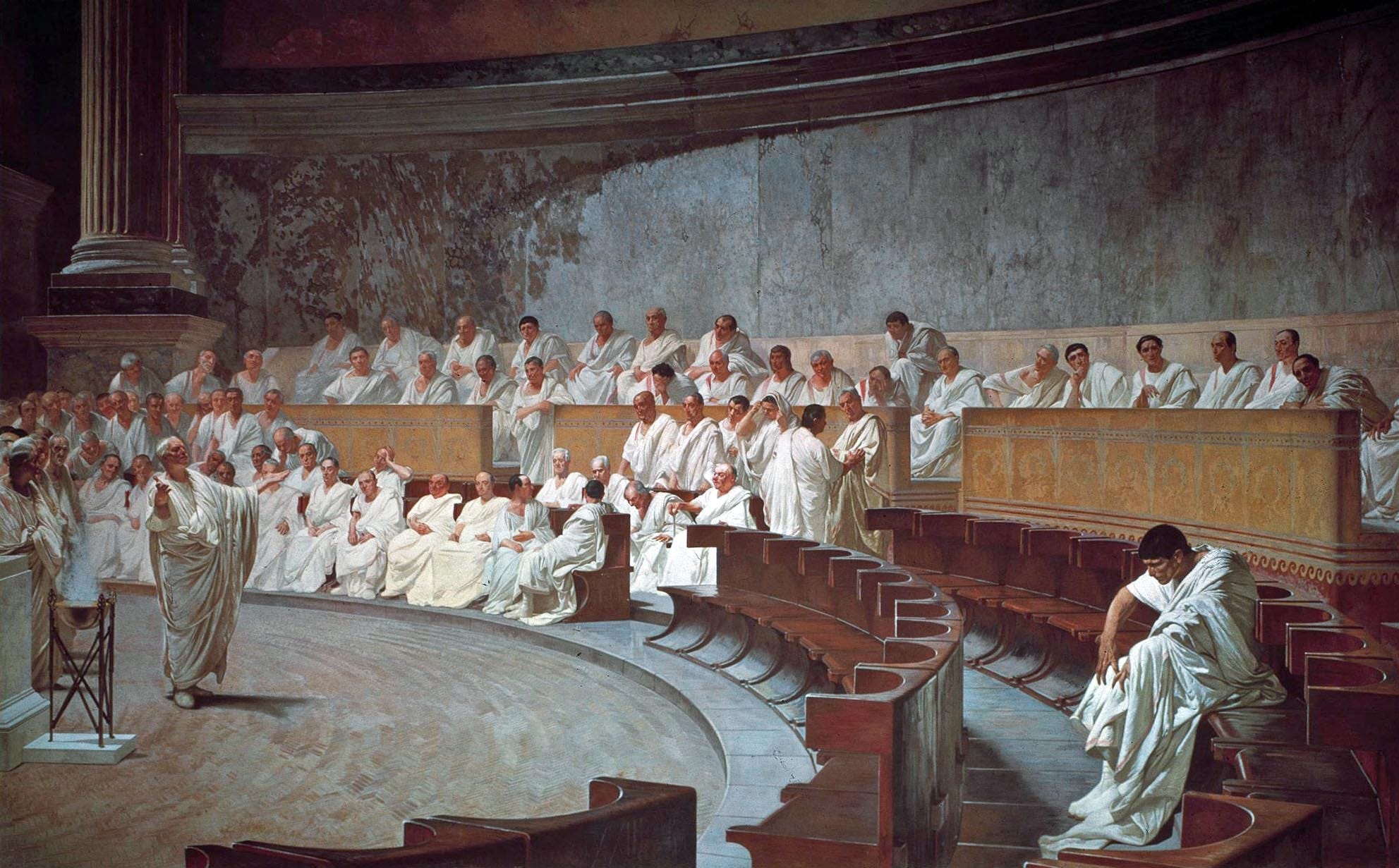
Plutarch begins by taking the proverbial bull by the horns. There is no getting around it — praising yourself is extremely risky. Very few people are good at it, and getting it wrong is guaranteed to backfire spectacularly. What is more, people inherently dislike feeling pressured to praise somebody else, and will be even more alert to how you respond to that praise as a result:
“To others a man's self-praise is most nauseous. For first we think those impudent who praise themselves, since modesty would be becoming even if they were praised by others; secondly, we think them unjust in giving themselves what they ought to receive from others; thirdly, if we are silent we seem to be vexed and to envy them, and if we are afraid of this imputation, we are obliged to heap praise upon them contrary to our real opinion, and to bear them out, undertaking a task more befitting gross flattery than honour”
Plutarch, How One Can Praise Oneself Without Exciting Envy, I
After all, people generally fall into one of two camps. The first includes those who would happily elbow others out of the way and boast of their achievements, either unaware or uncaring of how repelling this is to an observer. Adherents of the second on the other hand are sensitive to human nature and aware of ‘how things look’. Fearful of being perceived as a man of the first camp, they seize up at the thought of praise, and exchange arrogance for awkwardness. Ultimately, while the first is generally more damaging, both are ‘social misses’.
According to Plutarch, both indeed stem from the same error — misunderstanding the proper place for self-praise. A man of the first camp has succumbed to vainglory, or an excessive love of one’s own virtue. He refuses to let his success speak for itself, and fails to understand that people will organically connect his success to him if it is sufficiently admirable. He does not need to make explicit his own role, or claim the achievement as solely his own:
“That is vainglory then, when men seem to praise themselves that they may call forth the laudation of others; and it is especially despised because it seems to proceed from ambition and an unseasonable opinion of oneself… But when, not merely content with praising themselves, they vie with the praise of others, and pit their own deeds and actions against theirs, with the intent of outshining them, they add envy and malignity to their vanity”
Plutarch, How One Can Praise Oneself Without Exciting Envy, III
If your words are selling yourself, rather than the success, they will therefore rarely land well. He cites the example of Cicero, whose tiresome boasting of his role in suppressing the Conspiracy of Catiline was not only off-putting to Romans but actively fed rumours that he had in fact exaggerated the extent of the conspiracy for political gain.
Yet the second camp errs by assuming that self-promotion is never virtuous. As Plutarch points out, standing up for your own qualities is not the same as celebrating them:
“But self-praise cannot be blamed, if it is an answer to some charge or calumny… As then we esteem those persons vain and without sense who in walking hold themselves very erect and with a stiff neck, yet in boxing or fighting we commend such as hold themselves up and alert, so the man struggling with adversity, who stands up straight against his fate, “in fighting posture like some boxer,” and instead of being humble and abject becomes through his boasting lofty and dignified, seems to be not offensive and impudent, but great and invincible”
Plutarch, How One Can Praise Oneself Without Exciting Envy, IV-V
But actually praising yourself directly is the most blunt form of self-promotion possible. It is high risk with low reward. There are other and better ways of going about it which significantly reduce the risk and greatly amplify the reward.
Fortunately, Plutarch begins with one particular strategy that completely circumvents vainglory and virtually guarantees a positive reception…
The Profit of Praising Others
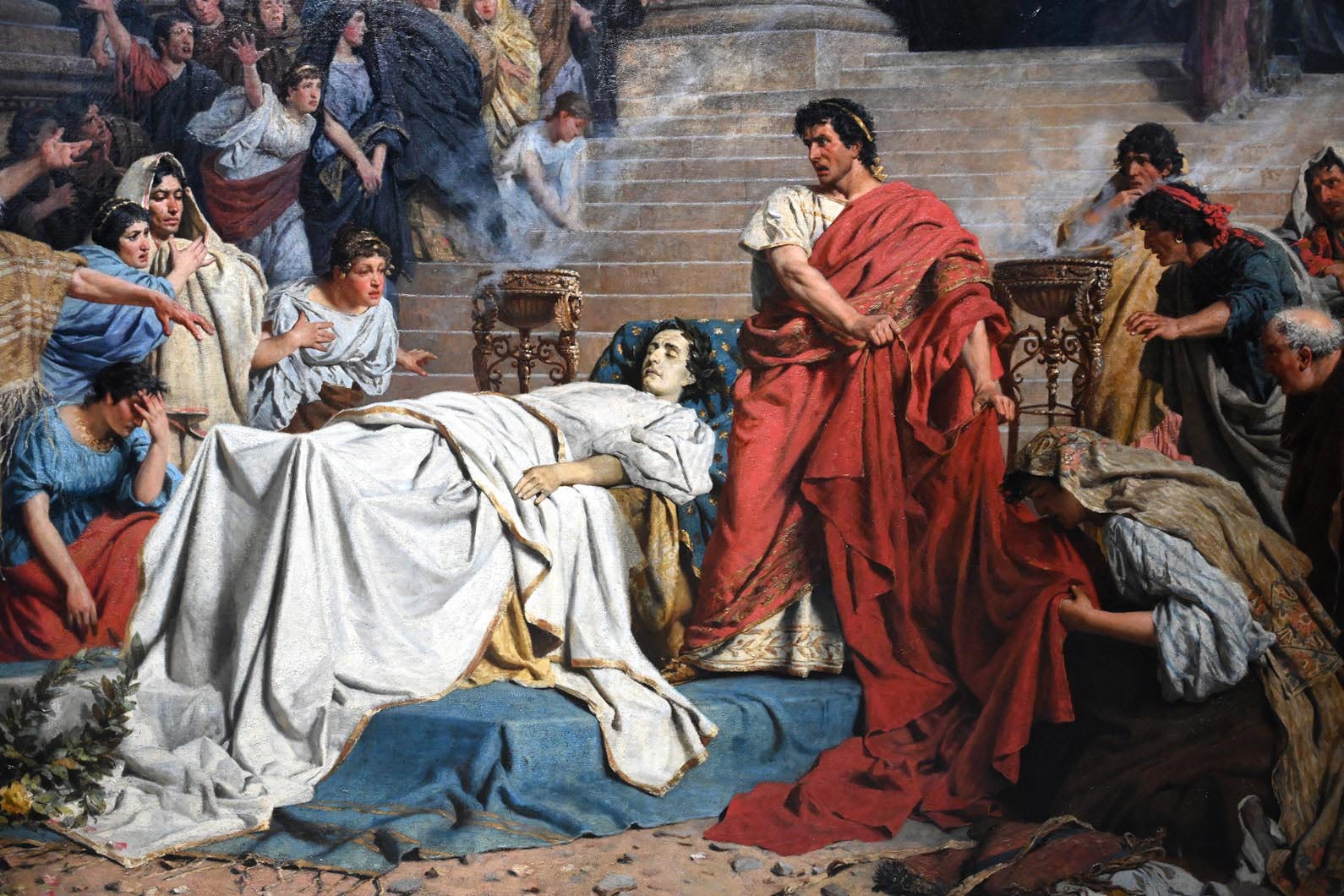
Ego obviously lies at the heart of why self-praise is so unappealing when mishandled. The somewhat overlooked side of this coin however is the effect it has on the ego of the listener.
As mentioned above, the more you extol your achievements, the greater the social pressure you are applying to the listener to congratulate you, particularly if this all happens in the presence of others. The fallout of that social pressure is that the listener in turn becomes anxious that their own reaction will be judged. Being backed into such a corner, and feeling obliged to ‘fake’ a response is unpleasantly close to humiliation — the listener feels socially exploited for the speaker’s gain.
As Plutarch advises, however, there is a simple rhetorical tactic to not only avoid this, but indeed entirely reverse the outcome:
“However it is worth while to notice in his speech that he most artistically inserts praise of his audience in the remarks about himself, and so makes his speech less egotistical and less likely to raise envy…Thus he cunningly insinuates into the audience with his own praises what they will gladly hear, for they rejoice at the enumeration of their successes, and their joy is succeeded by admiration and esteem for the person to whom the success was due”
Plutarch, How One Can Praise Oneself Without Exciting Envy, IX
As before, praise is always more effective when it comes from others. Praise is also infectious. The shrewd speaker therefore can use this knowledge to elicit recognition of his own achievements. In the most Machiavellian sense, praising others in such a situation is a low risk investment with a potentially high reward.
Are you in charge of a team? Praise the team, and then what the team has achieved. Others will then fill in the obvious space, and admire you all the more for it. Oftentimes, showing grace and ‘rhetorically sharing’ your achievements with someone else, provided it is not done in an obviously superficial way — it must be plausible that the third party genuinely played some kind of role, even if just in moral support — triggers a natural reciprocating effect.
Moreover, it creates the conditions for the ideal scenario — when people suspect you are downplaying your role because you are focused on the mission rather than the glory. Curiosity and goodwill are sparked in equal and abundant measure, and respect cascades.
A classic, and indeed classical, variation of this which has been widely used throughout history is for the speaker to attribute their victory to higher powers:
“Well also did Timoleon, who erected a temple at Syracuse to the goddess of Fortune after his success, and dedicated his house to the Good Genius. Excellently again did Pytho of Ænos, (when he came to Athens after killing Cotys, and when the demagogues vied with one another in praising him to the people, and he observed that some were jealous and displeased,) in coming forward and saying, “Men of Athens, this is the doing of one of the gods, I only put my hands to the work.” Sulla also forestalled envy by ever praising fortune, and eventually he proclaimed himself as under the protection of Aphrodite”
Plutarch, How One Can Praise Oneself Without Exciting Envy, XI
The key, as Plutarch suggests, lies in ensuring the audience feels admiration, and not envy. Make it clear that you and your team worked for that achievement, and worked for a cause:
“For as it is with house and farm, so also is it with glory and reputation, people for the most part envy those who have got them easily or for nothing, not those who have bought them at the cost of much toil and danger”
Plutarch, How One Can Praise Oneself Without Exciting Envy, XIV
As Plutarch has shown therefore, praising others is a simple yet potentially powerful strategy for presenting your own quality in an endearing manner. However, this is not always feasible.
What if you did achieve something — either at work or beyond — that actually was all your doing? What if you truly do deserve the sole credit for it, and therefore cannot directly praise others without coming across as fake and fishing for compliments?
Thankfully, Plutarch has you covered, with one secret weapon to rally your audience behind you, and four others to ensure they do not turn against you…
