
How To Face Death As A Hero
Scott of the Antarctic and Heroic Failure...

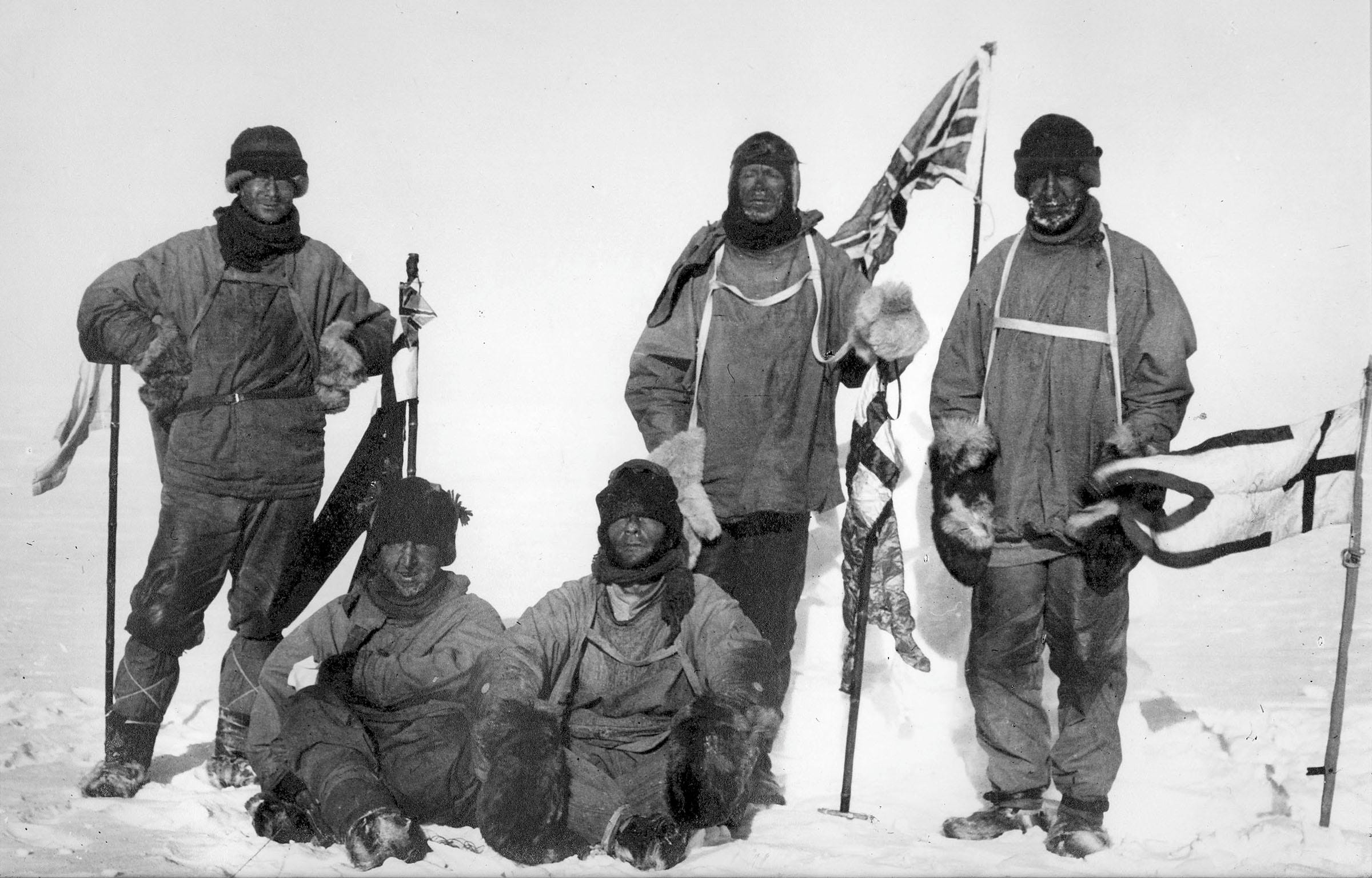
“We are showing that Englishmen can still die with a bold spirit”
Robert Falcon Scott, Letter To Sir J. M. Barrie, March 1912
To be a leader is to be responsible for others. What could be a more harrowing test for a leader, therefore, than the dread realisation that those he is responsible for are going to die, and there is absolutely nothing he can do to save them?
It is precisely this monstrous scenario which confronted Captain Robert Falcon Scott, leader of the fateful Terra Nova expedition to the South Pole, in the March of 1912.
Crushed by the disappointment of being beaten to the Pole by a rival team, Scott and his four companions would then be crushed by an Antarctic freeze whose fury exceeded all predictions of the time. Over weeks of torturous hardship, the expedition transformed into one of the most tragic last stands of Man against Nature in history.
It was too much for the human body to endure, and one by one, all five would perish in the frozen wastes of Antarctica. But from this tragedy a heroism emerged which would inspire a nation, and from his moving final acts, leave a case study of leadership in the face of doom.
So, 114 years after his heroic end, let us explore what Captain Scott’s extraordinary diaries and moving final letters can teach you about how a true leader faces certain failure…
At INVICTUS, our mission is to explore the practical wisdom you can learn from the greatest leaders, thinkers, and artists of the past, through their own words and deeds.
If this resonates with you then subscribe below to receive an in-depth article every week exploring how influential figures were able to achieve what they did, and how you can start following in their footsteps…
What is Beyond Control is Beyond Worry
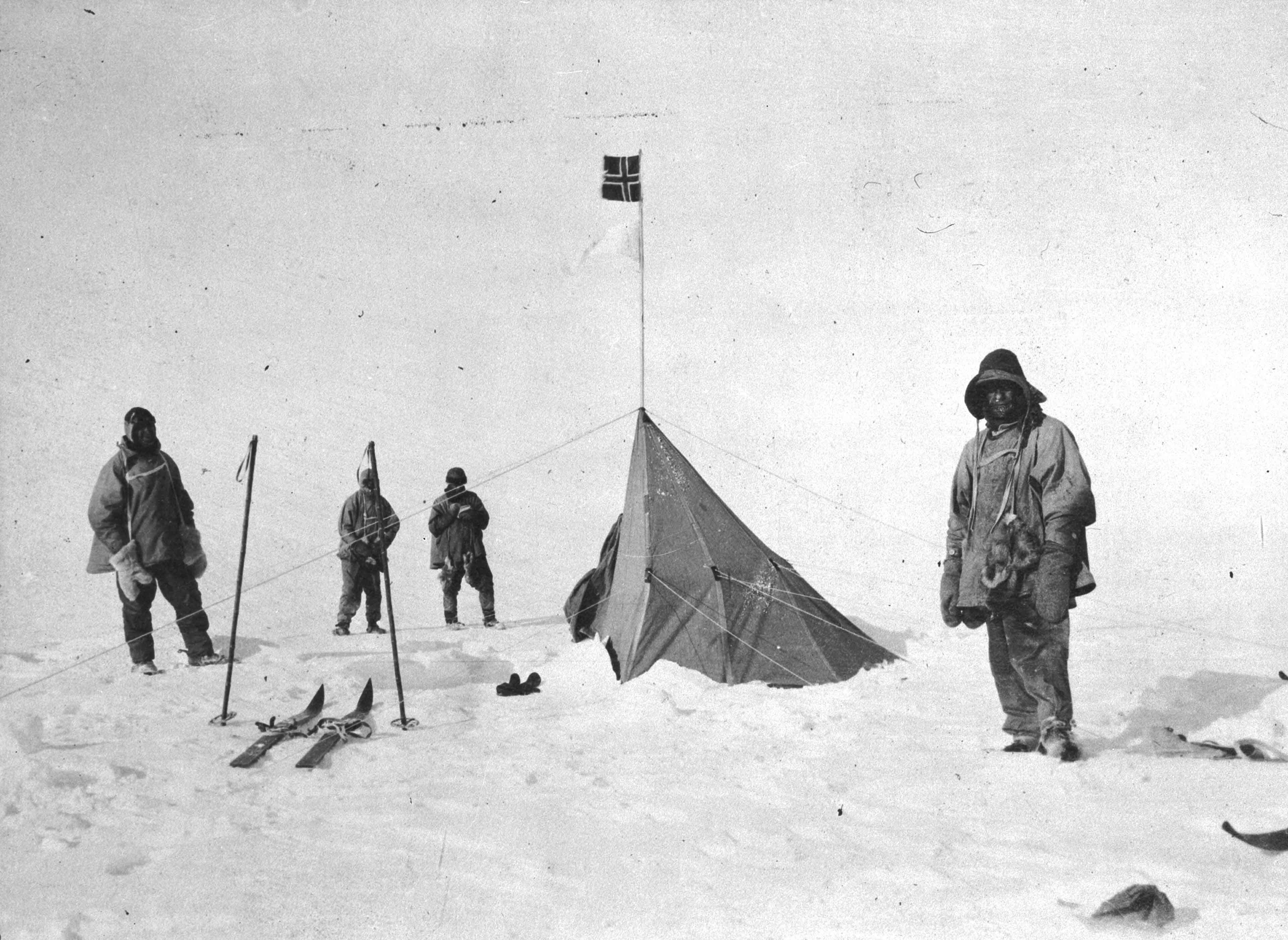
The 17th January 1912 should have been the crowning moment of Captain Robert Falcon Scott’s life.
After 13 years of preparation, and 78 days fighting against the elements, himself and the four men of the Terra Nova expedition he had chosen — Henry Robertson Bowers, Edward Adrian Wilson, Edgar Evans and Lawrence ‘Titus’ Oates — reached the South Pole. They were the first Englishmen to do so. To their dismay, however, they were not the first men.
On their approach, they had discovered Polheim, a tent crowned with a Norwegian flag, containing a letter which confirmed that a team led by Roald Amundsen had beaten them to the Pole by just five weeks. In his journal — which was recovered alongside his body many months later — Scott recorded his aching disappointment, and the shame he felt at having let down his companions:
“Great God! this is an awful place and terrible enough for us to have laboured to it without the reward of priority”
Robert Falcon Scott, 17th January 1912
Only one team could ever be the first to the Pole. Finding out they had been denied the chance forever, knowing the pain it had taken to get here, and the thought of returning all the way to Britain as failures, must have been agonising. Regardless, Scott allowed himself only the briefest outburst, before doing all that was in his limited power to raise the men’s spirits:
“Well, it is something to have got here, and the wind may be our friend tomorrow. We have had a fat Polar hoosh [A high-energy stew commonly eaten by polar explorers] in spite of our chagrin, and feel comfortable inside — added a small stick of chocolate and the queer taste of a cigarette brought by Wilson. Now for the run home and a desperate struggle. I wonder if we can do it”
Robert Falcon Scott, 17th January 1912
Hindsight, however, has rendered those last words exceptionally poignant. 862 miles on foot, across the world’s most inhospitable terrain, now stood between Scott’s team and salvation. Little did they know however, that the Antarctic summer of 1912 would be a rare anomaly, and one far worse than the experts who had advised Scott in London had even imagined was possible.
Scott’s foremost quality, however, was his acceptance of what was in his control, and what was not. There was nothing he could do to stop the plunge in temperatures to a crippling -40°C, nor prevent the horrifying consequences of the weather on his men. A week out from the Pole, Edward Wilson was struggling with snow blindness and Titus Oates was having problems walking, while Edgar Evans was suffering from blistered fingers, and his nose was frostbitten.
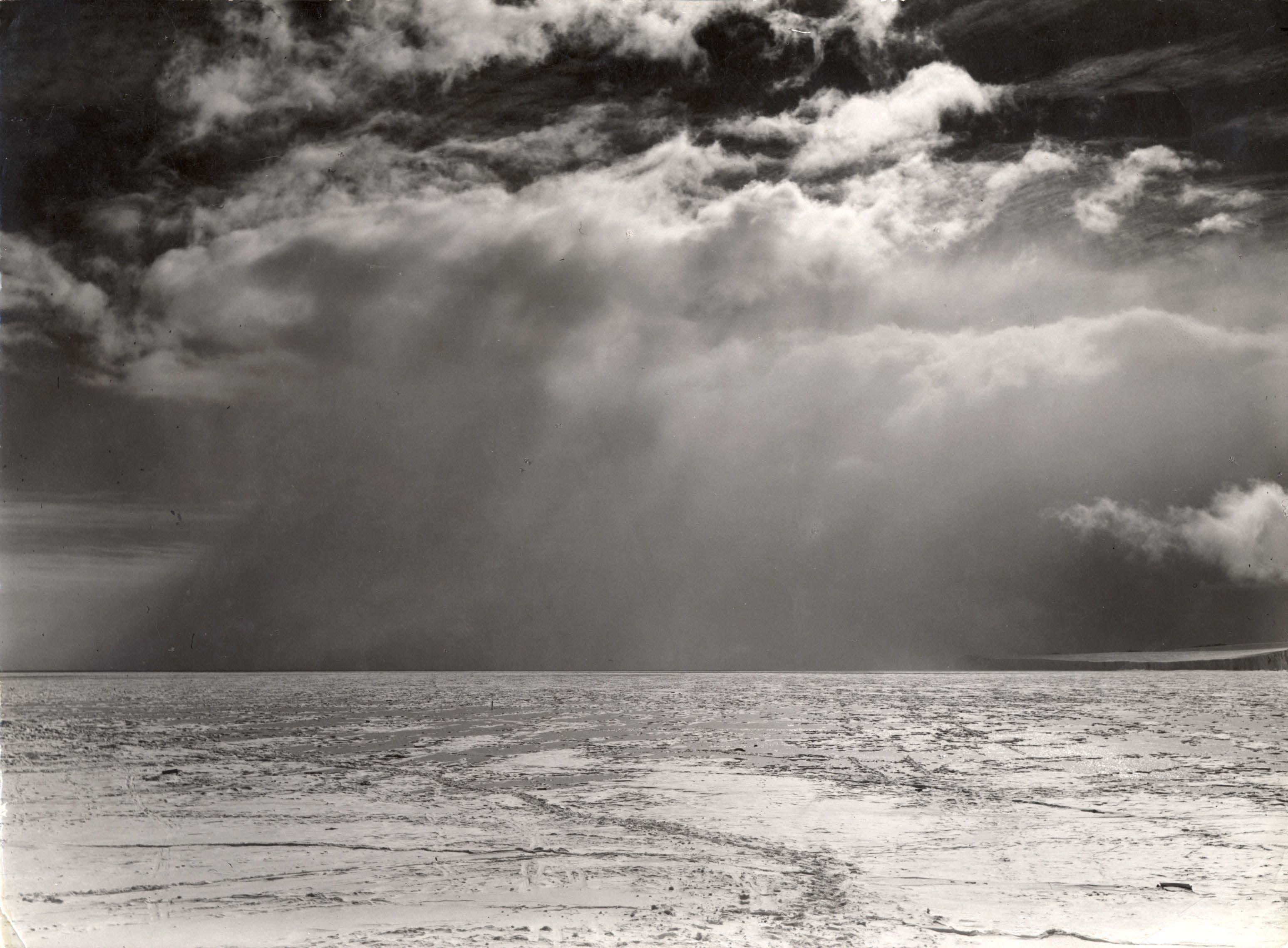
What he could do, however, was balance morale and progress. The days could be terrible, so Scott at least made sure the nights offered something to look forward to, as his later entry on the 4th March rather sums up:
“Things looking very black indeed. As usual we forgot our trouble last night, got into our bags, slept splendidly on good hoosh, woke and had another, and started marching”
Robert Falcon Scott, 4th March 1912
As long as Scott was keeping the men on track, fed and rested to the best of his ability and the means available, he was doing all he could. The tragedy of Terra Nova, however, was that the uncontrollable overpowered the controllable.
On the 4th February, both Scott and Evans plunged into a crevasse that opened up in front of them. While Scott miraculously avoided serious harm, the already suffering Evans evidently suffered a serious head injury, and would never be his normal self again. “A rather trying position. Evans has nearly broken down in brain, we think”, Scott wrote on the 16th. The next day, seeing Evans lagging behind, Scott went back for him, reaching him just as he collapsed in the snow. But there was nothing he or anyone could do for a man slipping into a coma in deepest Antarctica, except be with him in his most vulnerable moment. The 35 year old Edgar Evans died later that night surrounded by his comrades.
The unseasonable chill was a double curse to the Terra Nova team. Apart from the obvious danger to the men themselves, the friction caused by the ice crystals on the ground made it even harder to pull the sledges. Progress was demoralisingly slow, and every delay threw off the timings of the carefully organised expedition. As a result, when Scott and his men reached the Mount Hooper depot on the 9th March, hoping to meet supplies and salvation from the coast, they met ice and air:
“Yesterday we marched up the depot, Mt. Hooper. Cold comfort. Shortage on our allowance all round. I don’t know that anyone is to blame. The dogs which would have been our salvation have evidently failed. Meares had a bad trip home I suppose.”
Robert Falcon Scott, 10th March 1912
To this day, the conduct of Cecil Meares and the explanation for why he was not there remains debated. To his credit, Scott refused even in his own private diary to blame anybody. In any case, he knew that any reasons were irrelevant in that moment. He was there and the essential supplies were not.
As expedition leader, Scott now had to face the blunt truth that they did not have sufficient food or fuel to leave Antarctica alive. As a leader, his priority now was no longer survival, but legacy…
If You Cannot Save Lives, Save Memories
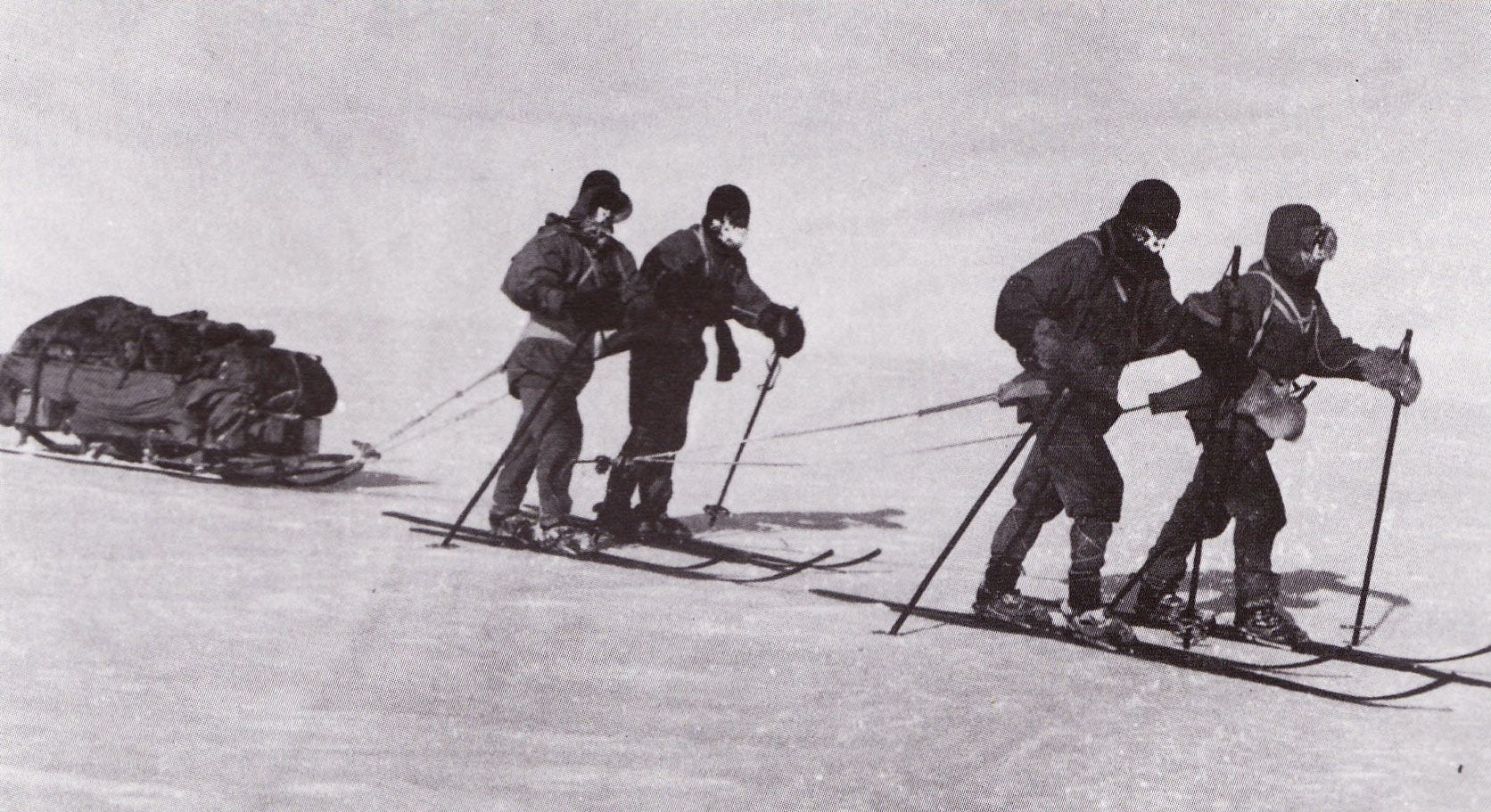
“No idea there could be temperatures like this at this time of year with such winds. Truly awful outside the tent. Must fight it out to the last biscuit, but can’t reduce rations.”
Robert Falcon Scott, 14th March 1912
The Mount Hooper depot had been among the last of Scott’s hopes, and so too that of the men. Two days later, when it became clear that reaching the next supply base, fifty five miles yonder at One Ton Depot, was all but a mathematical impossibility, Scott was forced to give the very worst of orders.
He commanded Wilson, who was in charge of the medicine, to hand each man 30 opium tablets, as “the means of ending our troubles to us, so that any one of us may know how to do so”. Nobody would be forced to endure a slow death, and a painless way out remained should they choose it. To their credit, when the bodies were later found, nobody had touched them. Time, however, was all but up.
On the 16th March, Oates, by now almost immobilised by frostbite and gangrene, and wracked by guilt at slowing the others down, committed a sacrifice which has since passed into immortality:
He was a brave soul. This was the end. He slept through the night before last, hoping not to wake; but he woke in the morning—yesterday. It was blowing a blizzard. He said, ‘I am just going outside and may be some time’. He went out into the blizzard and we have not seen him since.”
Robert Falcon Scott on Lawrence Oates, 16th March 1912
Scott, unwilling to anchor a man to life who had already made his peace with death, did not stop him. What he did do, however, was turn his thoughts back to what little power did remain to him. He could no longer save his men’s lives. But he could save the memories their loved ones — and the world — would have of them. Trusting a search party would find their bodies one day, Scott began to write messages for the families of the men. In his diary entry for the 16th March, he wrote the following for Oates, who had been a veteran of the Boer War:
“Should this be found I want these facts recorded. Oates’ last thoughts were of his Mother, but immediately before he took pride in thinking that his regiment would be pleased with the bold way in which he met his death. We can testify to his bravery. He has borne intense suffering for weeks without complaint, and to the very last was able and willing to discuss outside subjects. He did not — would not — give up hope to the very end”
Robert Falcon Scott on Lawrence ‘Titus’ Oates, 16th March 1912
What a comfort it would surely have been to Oates’ mother, to know her son had not died alone, and that he died a dutiful son and soldier.
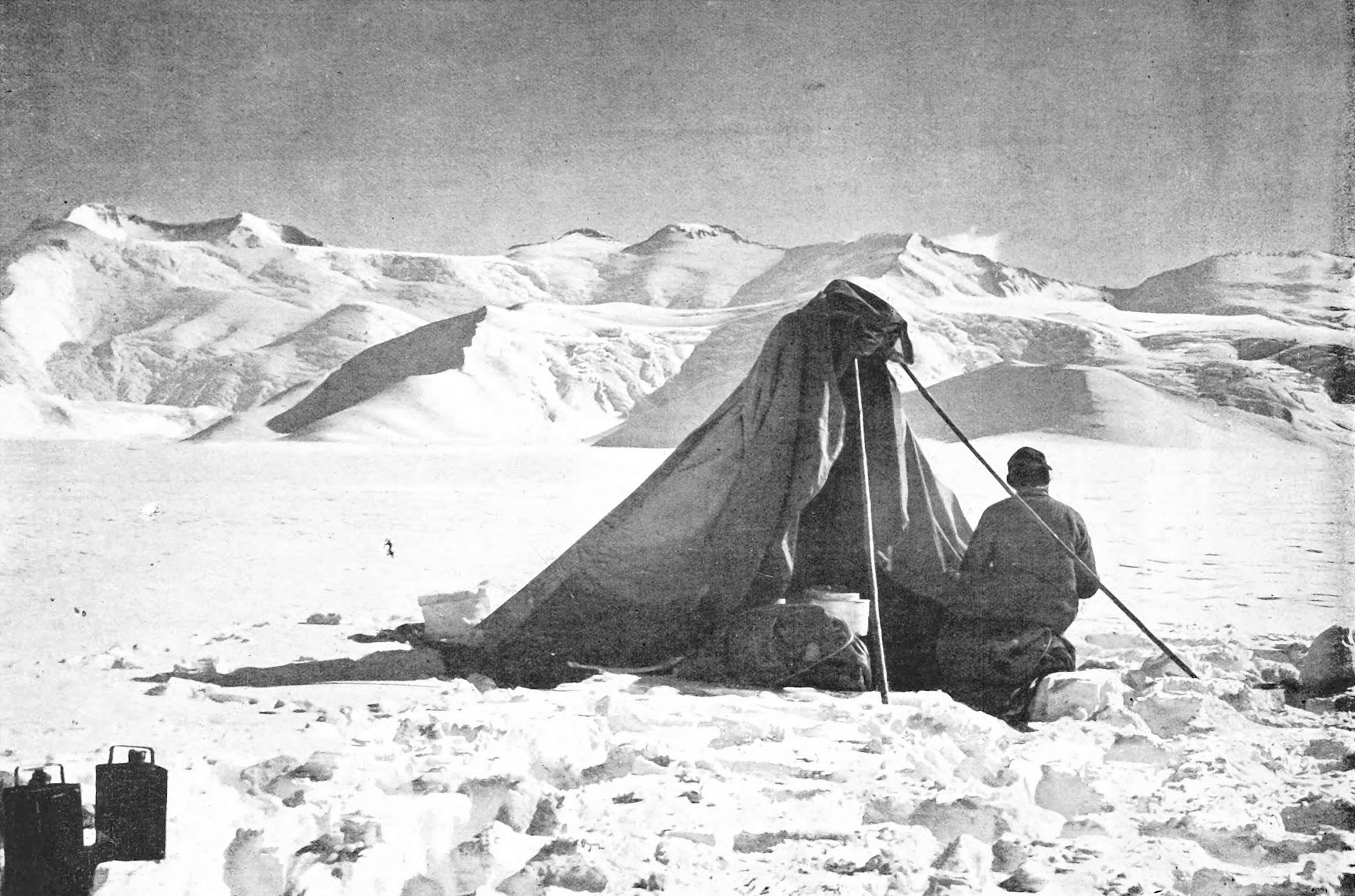
Only a few more days passed before Scott, now suffering from debilitating frostbite himself, would need to write the others. Inching on through the blizzard, the last three of the Terra Nova got within just eleven miles of the next depot, before the storms grew too much. Immobilised in their tent, their life force drained over the last ten days of March. It would appear that Bowers was the next to go, and Scott wrote the following letter to his mother:
My Dear Mrs. Bowers,
I am afraid this will reach you after one of the heaviest blows of your life. I write when we are very near the end of our journey, and I am finishing it in company with two gallant, noble gentlemen. One of these is your son. He had come to be one of my closest and soundest friends, and I appreciate his wonderful upright nature, his ability and energy. As the troubles have thickened his dauntless spirit ever shone brighter and he has remained cheerful, hopeful, and indomitable to the end. The ways of Providence are inscrutable, but there must be some reason why such a young, vigorous and promising life is taken.
My whole heart goes out in pity for you.
Yours,
R. Scott
To the end he has talked of you and his sisters. One sees what a happy home he must have had and perhaps it is well to look back on nothing but happiness.
He remains unselfish, self-reliant and splendidly hopeful to the end, believing in God’s mercy to you
Robert Falcon Scott, Letter to Mrs Bowers, March 1912
It was as brief as the deep chill would allow, as the dying Scott raced to write to as many as he could. By the last days of the month, he found himself alone in the tent, as Wilson too succumbed at his side. To his comrade’s now widow, the Captain extolled his bravery at the end:
My Dear Mrs. Wilson,
If this letter reaches you Bill and I will have gone out together. We are very near it now and I should like you to know how splendid he was at the end — everlastingly cheerful and ready to sacrifice himself for others, never a word of blame to me for leading him into this mess. He is not suffering, luckily, at least only minor discomforts.
His eyes have a comfortable blue look of hope and his mind is peaceful with the satisfaction of his faith in regarding himself as part of the great scheme of the Almighty. I can do no more to comfort you than to tell you that he died as he lived, a brave, true man — the best of comrades and staunchest of friends.
My whole heart goes out to you in pity,
Yours,
R. Scott
Robert Falcon Scott, Letter to Mrs Wilson, March 1912
So little had remained to Scott, but at the same time, everything. By a few words, he had ensured his men would be remembered, and remembered as heroes. His duty to them fulfilled with admirable humility, the Captain then turned to his own family…
Remember Your Family
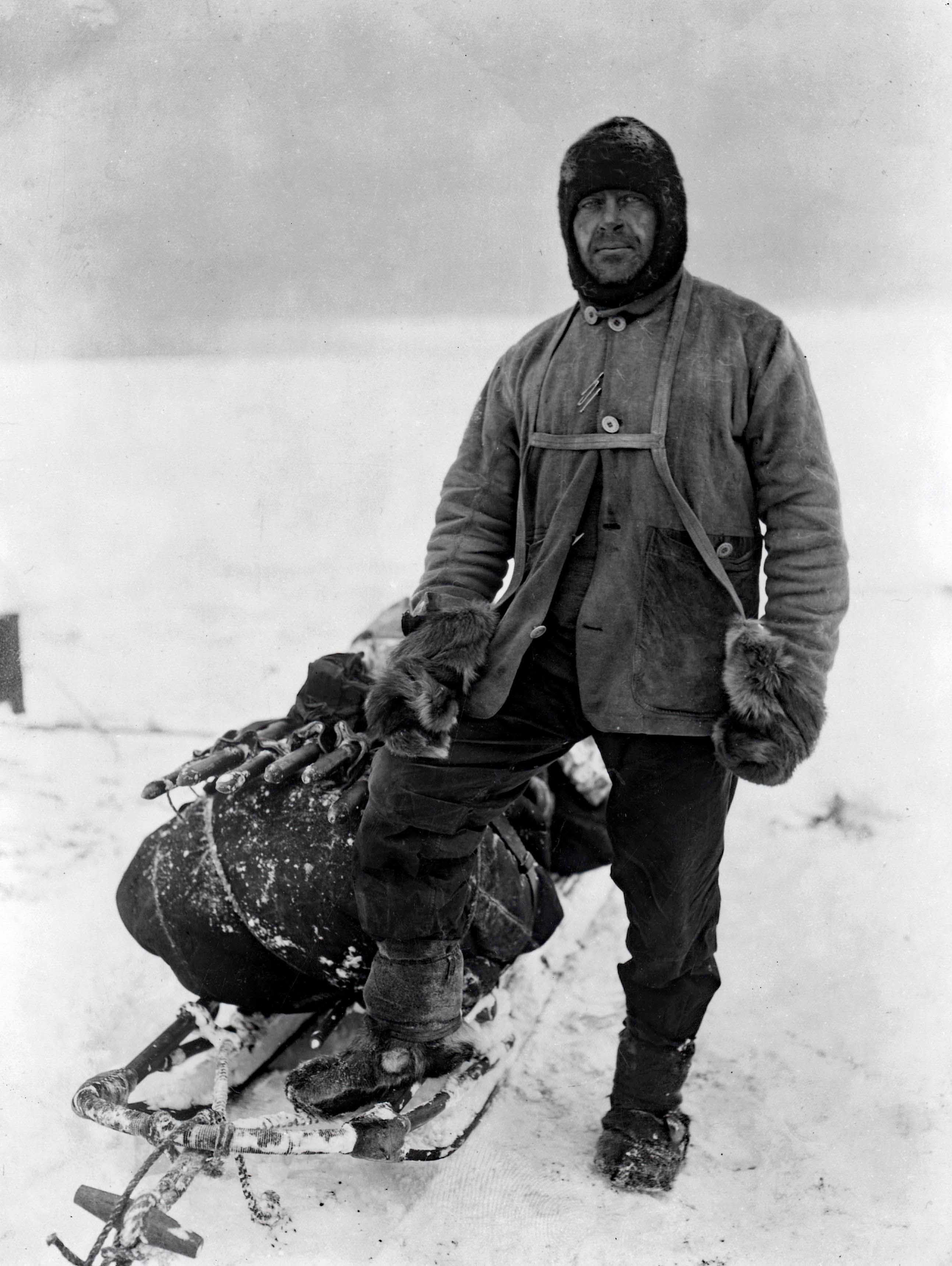
One cannot imagine the feeling, or perhaps by then that total absence of feeling which comes with the accepting embrace of certain death, that accompanied Robert Falcon Scott as he commenced his last letter to his wife Kathleen with the words “To my Widow”.
Certainly, he harboured great foresight, thinking of almost everything. First of course, a reminder that he was with her in all ways except in body:
“Dearest darling — we are in a very tight corner and I have doubts of pulling through — In our short lunch hours I take advantage of a very small measure of warmth to write letters preparatory to a possible end — the first is naturally to you on whom my thoughts mostly dwell waking or sleeping — If anything happens to me I shall like you to know how much you have meant to me and that pleasant recollections are with me as I depart…
…Well dear heart I want you to take the whole thing very sensibly as I’m sure you will – The boy will be your comfort. I had looked forward to helping you to bring him up but it is a satisfaction to feel that he is safe with you”
Robert Falcon Scott, Letter to My Widow
He proceeds to reassure her that he will bear no ill will at all should she choose to remarry, and indeed encourages her to do just that if honourable circumstances permit it, and it will make her happy. Moreover, no man can remain unmoved by the brief paragraphs Scott was then able to write about his son. Wisdom he had doubtless hoped to impart over many long years, compressed now into mere lines on a page:
“I must write a little letter for the boy if time can be found, to be read when he grows up. The inherited vice from my side of the family is indolence - above all he must guard, and you must guard him, against that. Make him a strenuous man. I had to force myself into being strenuous, as you know – had always an inclination to be idle. My father was idle and it brought much trouble…
You see I am anxious for you and the boy’s future – make the boy interested in natural history if you can, it is better than games – they encourage it at some schools – I know you will keep him out in the open air – try and make him believe in a God, it is comforting. Oh my dear my dear what dreams I have had of his future and yet oh my girl I know you will face it stoically…”Robert Falcon Scott, Letter to My Widow
It is notable that Scott, of the last Terra Nova men, had been perhaps the most sceptical when it came to faith. Yet one has the distinct impression that his last days had a powerful effect on him indeed — as of course they would — and that sharing the company of devout men rekindled that faith. Certainly Wilson’s own last letter to his parents reveals the immense spiritual fortitude with which he had faced his own death:
“Looking forward to the day when we shall all meet together in the hereafter. I have had a very happy life and I look forward to a very happy life hereafter when we shall all be together again. God knows I have no fear of meeting Him–for He will be merciful to all of us”
Dr Edward Wilson to his Parents, March 1912
In any case, at least one of Scott’s last wishes was handsomely fulfilled. Kathleen ensured that his son, then three and half years old, would develop more than a mere ‘interest' in natural history. Forty nine years later, Peter Scott would help to found the World Wide Fund for Nature, and would receive a knighthood for services to animal conservation.
But beyond his men, and his kin, Captain Scott was well aware that there was a third party waiting for news…
Let Death Mean Something
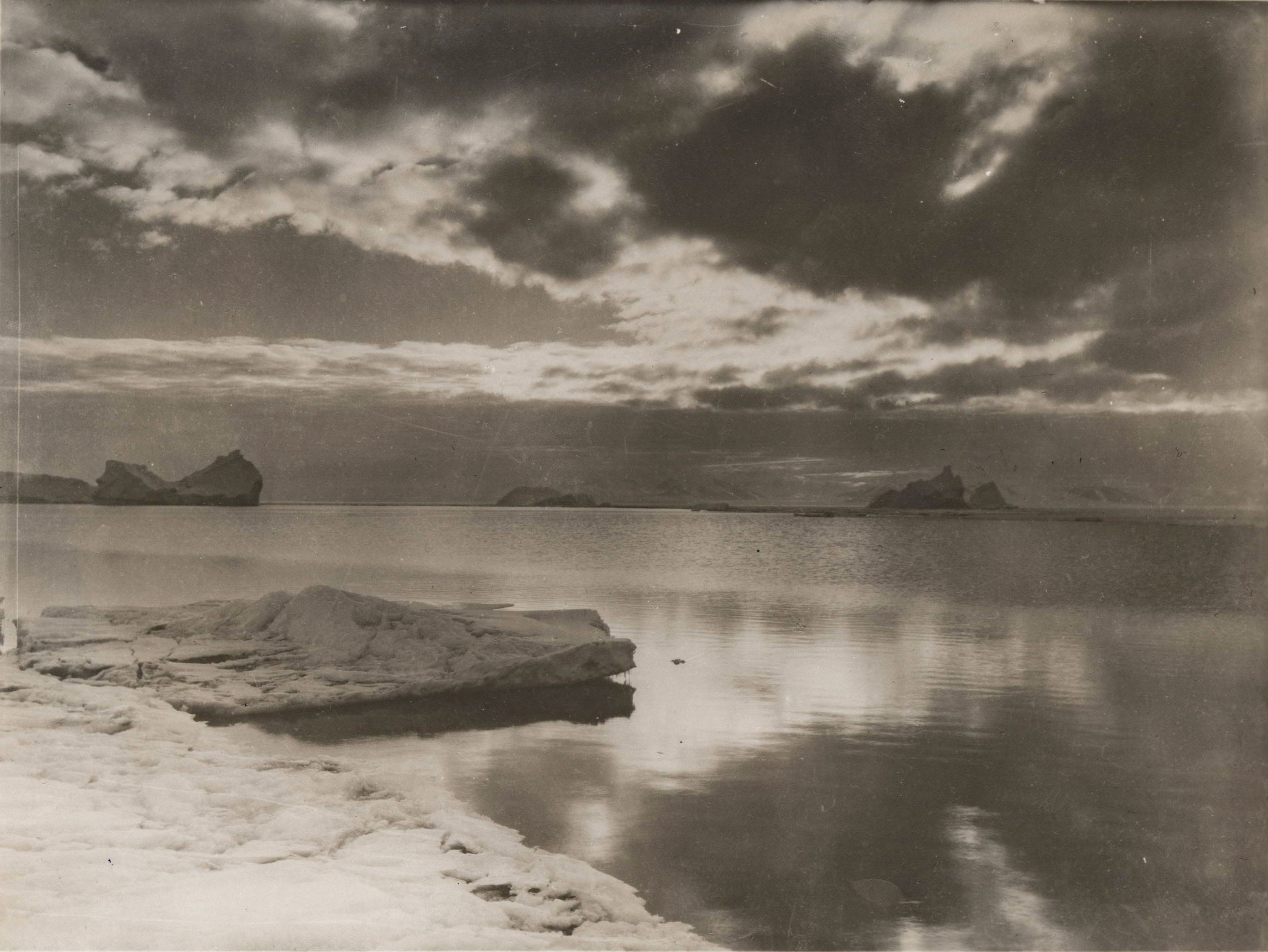
As one of the last great wildernesses on Earth, the South Pole remained the last Holy Grail of the Heroic Age of Exploration. Tremendous prestige was guaranteed to whoever conquered it. The Terra Nova expedition had hoped to do so in the name of Britain, and Scott was acutely aware of this burden of expectation.
Concluding the letter to his widow, Scott made plain his duty to his King and Country:
“There is a piece of the Union flag I put up at the South Pole in my private kit bag together with Amundsen’s black flag and other trifles – give a small piece of the Union flag to the King and a small piece to Queen Alexandra and keep the rest a poor trophy for you!”
Robert Falcon Scott, Letter to My Widow
At the same time, the question of what kind of example he was setting evidently troubled Scott greatly in his last days. Among the twelve letters he was able to author before the end, there are frequent urgings to his friends to look beyond the material failure of the expedition:
“After all we are setting a good example to our countrymen, if not by getting into a tight place, by facing it like men when we were there. We could have come through had we neglected the sick”
Robert Falcon Scott to Sir Francis Charles Bridgeman, March 1912
Captain Scott would rather have died than ‘succeeded’ if the price of victory meant leaving a man behind. Indeed, as a true Edwardian gentleman he was proud to die with this principle unstained:
“I think this makes an example for Englishmen of the future, and that the country ought to help those who are left behind to mourn us”
Robert Falcon Scott to Sir James Barrie, March 1912
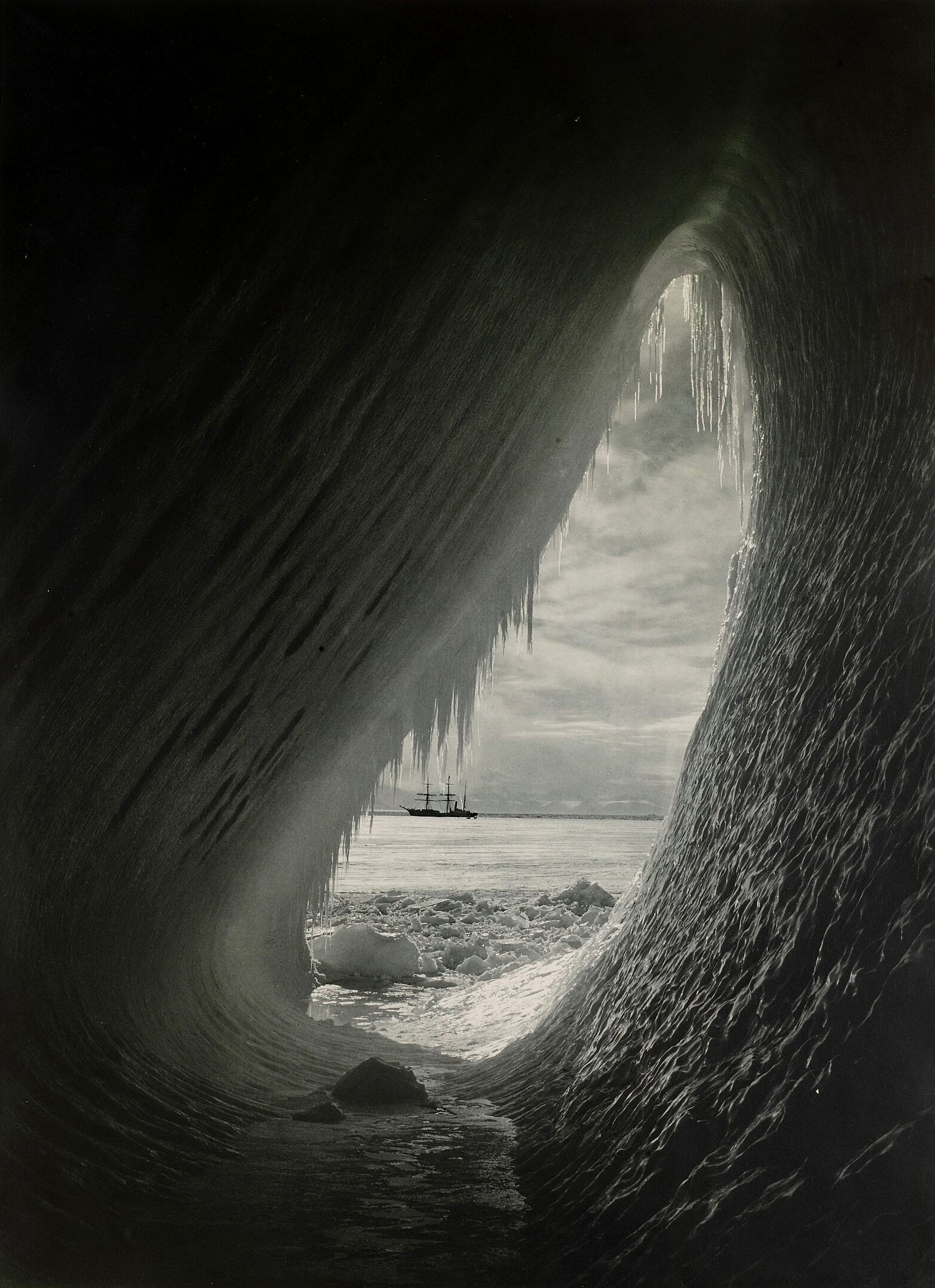
To this end, Scott wrote one final, extraordinary appeal, this time to the British people themselves. The Message to the Public would soon become famous, and read across every corner of the Empire. It is a straightforward piece, which achieved three things. Firstly, Scott succinctly explained the reasons for his failure. Secondly, and more crucially, he emphasised that this failure should not deter future attempts in better conditions:
“The Beardmore Glacier is not difficult in fine weather, but on our return we did not get a single completely fine day; this with a sick companion enormously increased our anxieties…
…But all the facts above enumerated were as nothing to the surprise which awaited us on the Barrier. I maintain that our arrangements for returning were quite adequate, and that no one in the world would have expected the temperatures and surfaces which we encountered at this time of the year. On the summit in lat. 85° 86° we had -20°, -30°. On the Barrier in lat. 82°, 10,000 feet lower, we had -30° in the day, -47° at night pretty regularly, with continuous head wind during our day marches”
Robert Falcon Scott, Message to the Public, March 1912
Scott was adamant that the Terra Nova should be taken as something to be learned from, that men should continue to seek to do extraordinary things, and that unforeseen disasters are simply the price of discovery.
In that vein, he concluded his letter with a stirring call to Britannia, to not give up on heroism:
“We are weak, writing is difficult, but for my own sake I do not regret this journey, which has shown that Englishmen can endure hardships, help one another, and meet death with as great a fortitude as ever in the past. We took risks, we knew we took them; things have come out against us, and therefore we have no cause for complaint, but bow to the will of Providence, determined still to do our best to the last. But if we have been willing to give our lives to this enterprise, which is for the honour of our country, I appeal to our countrymen to see that those who depend on us are properly cared for.
Had we lived, I should have had a tale to tell of the hardihood, endurance, and courage of my companions which would have stirred the heart of every Englishman. These rough notes and our dead bodies must tell the tale, but surely, surely, a great rich country like ours will see that those who are dependent on us are properly provided for.
R. SCOTT
Robert Falcon Scott, Message to the Public, March 1912
To his final appeal, the nation responded extravagantly. Over £75,000 (At least £10 million in today’s money) was raised in public donations to support the dependents of the dead men. By order of the Educational Council, the story of Scott’s expedition was read to over 750,000 schoolchildren, as the men of the Terra Nova became the last great heroes of ‘old’ Britain, before the First World War mounted its near fatal challenge to the notion of heroism mere months later…
The Noblest End
His last tasks as leader performed, on the 29th March 1912, the last man of the Terra Nova’s polar conquerors left his last diary entry:
“Every day we have been ready to start for our depot 11 miles away, but outside the door of the tent it remains a scene of whirling drift. I do not think we can hope for any better things now. We shall stick it out to the end, but we are getting weaker, of course, and the end cannot be far.
It seems a pity, but I do not think I can write more.
R. Scott.
For God’s sake look after our people”
Robert Falcon Scott, 29th March 1912
It is a mark of Scott’s determination that the Terra Nova should mean something that along with their dwindling provisions, the men had hauled thirty-five pounds of Arctic rock samples to the very end. Upon their recovery, the data retrieved from those very samples would be used to help scientists calculate the age of Antartica itself.
The scientific contribution of the Terra Nova was grand therefore, yet its heroic legacy is grander still.
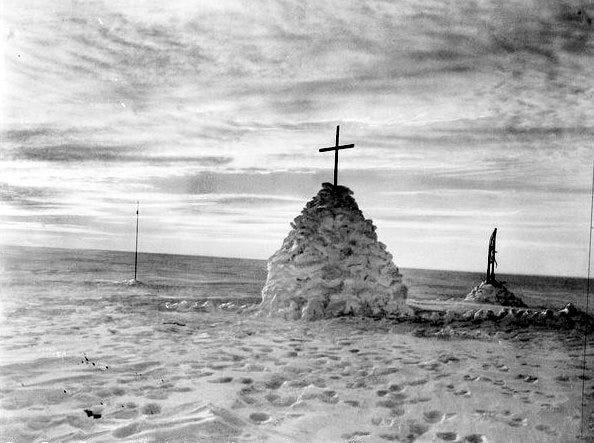
Seven months later, when a recovery team at last found the lonely tent of the Terra Nova, the bodies revealed something that the letters alongside them could not. Scott, it transpired, had died last, and his final act was to throw his arm over the body of Wilson, in one final brotherly embrace. As Royal Naval surgeon Dr Edward Atkinson would go on to state in his subsequent report:
“This I can do on the facts. I don’t think men ever died a nobler death”
Thus can nobility of spirit transform earthly defeat into everlasting triumph...
A great read, encouragement and challenge. Thank you.
A lamentable blindspot in my education, this moved me to tears! Thank you, truly inspirational