
How Much Affection Should You Show Your Children?
An aristocratic guide to fatherhood...

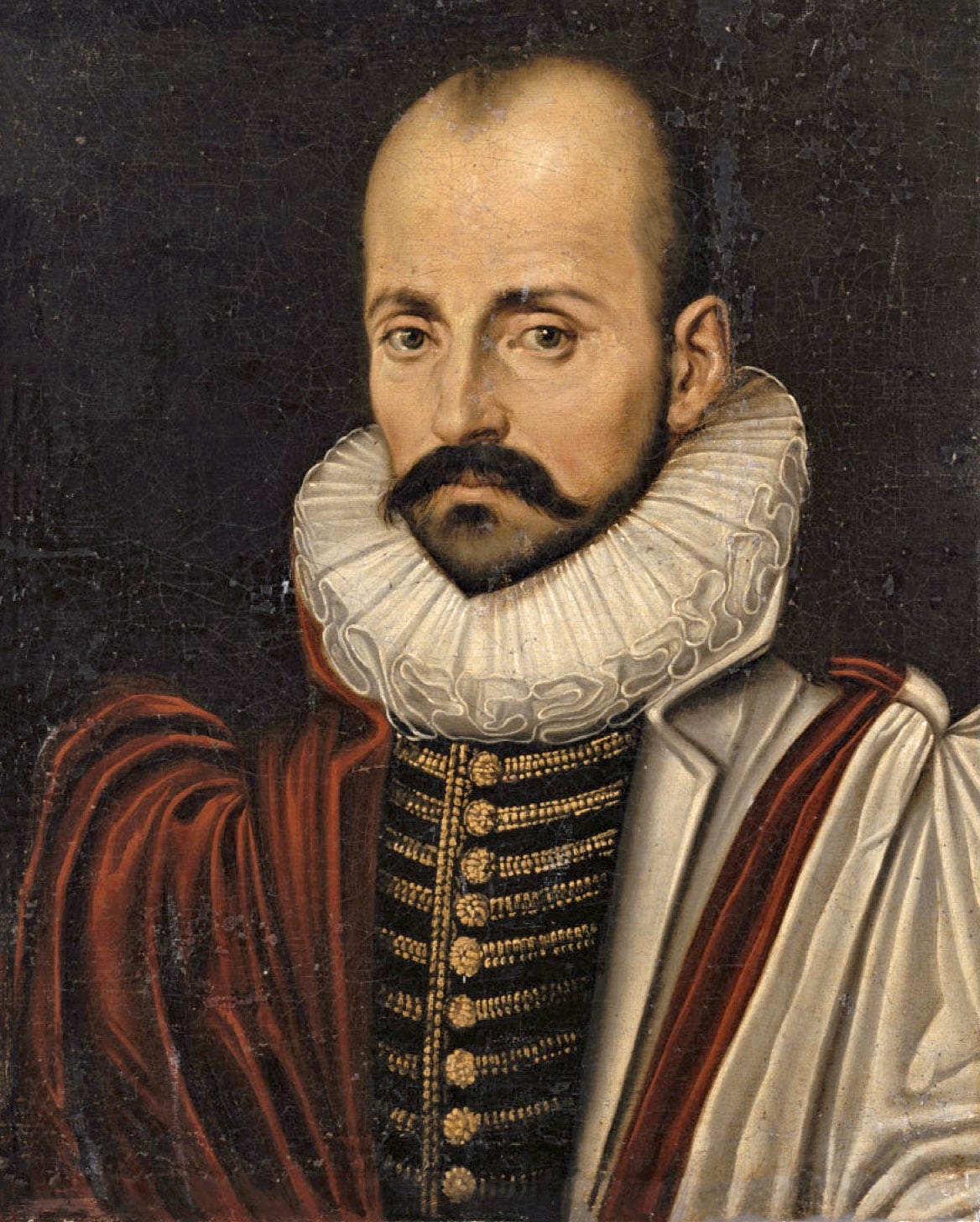
“A father is very miserable who has no other hold on his children’s affection than the need they have of his assistance”
Michel de Montaigne, Of the Affection of Fathers to Their Children, II.8
Fatherhood is, if nothing else, the highest stakes balancing act a man will face in his life.
When to step in, and when to step back, is the near daily judgement call of a father. Should he get it right, both father and child will grow. Should he get it wrong, the child will slip, and it is the father’s curse to live long enough to witness the fall.
Likewise with affection. How can a father express paternal love in a manner which fortifies his child instead of spoiling him?
It is a timeless question which has troubled men of all stations throughout history, and in the late 16th century, one French nobleman sought to answer it, in an aptly named essay titled Of the Affection of Fathers to Their Children.
Here is what Michel de Montaigne can teach you about becoming a better father, and ensuring your family legacy lies in safe hands…
The Truth of Paternal Love
Fully a product of the French Renaissance, Michel Eyquem, Lord of Montaigne, received a classical education so rigorous that when he became a teenager, Latin was the only language he knew.
As a respected courtier of Kings Charles IX and Henry IV, Montaigne was also intimately familiar with the customs of aristocratic France, and he would draw upon all of this when he began to compose his grand inquiry into human nature — the Essays — in the 1570’s. Of the Affection of Fathers to Their Children, which forms Chapter VIII of the second book of the Essays, is indeed intended for an aristocratic audience.
Addressing his work to a certain Madame D’Estissac, the widow of a nobleman, he praises her lavishly for the devotion with which she has raised her son, the future Monsieur D’Estissac. The ‘cause’ of the essay is that son, and Montaigne hoped by his words to leave a record for him of the sacrifices which raised him. It is with a harsh truth that he thus begins:
“If there be any law truly natural, that is to say, any instinct that is seen universally and perpetually imprinted in both beasts and men (which is not without controversy), I can say, that in my opinion, next to the care every animal has of its own preservation, and to avoid that which may hurt him, the affection that the begetter bears to his offspring holds the second place in this rank”
Michel de Montaigne, Of the Affection of Fathers to Their Children, II.8
In other words, our most basic instinct is self-preservation, followed by the love of a parent for their child. Yet Montaigne observes, citing Aristotle, that it is the fate of a creator to love his creation more than that creation will ever love him in return:
“He who confers a benefit on any one, loves him better than he is beloved by him again: that he to whom is owing, loves better than he who owes; and that every artificer is fonder of his work, than, if that work had sense, it would be of him…
He who confers a benefit exercises a fine and honest action; he who receives it exercises the useful only”
Michel de Montaigne, Of the Affection of Fathers to Their Children, II.8
It is the natural order of things, therefore, for paternal love to be selfless, and it is futile for a father to expect his son to reciprocate that love equally. A father’s love, therefore, should serve to foster that same paternal love in his child, so that it will in turn be shown to his grandchild.
Montaigne develops this with a surprisingly cutting and bold observation. That a father should not confuse being taken in by the ‘cute’ stage of fatherhood, when the child is an infant, with actual paternal love:
“Tis oft-times quite otherwise; and, most commonly, we find ourselves more taken with the running up and down, the games, and puerile simplicities of our children, than we do, afterwards, with their most complete actions; as if we had loved them for our sport, like monkeys, and not as men; and some there are, who are very liberal in buying them balls to play withal, who are very close-handed for the least necessary expense when they come to age.”
Michel de Montaigne, Of the Affection of Fathers to Their Children, II.8
By all means, we should play with our children. Montaigne’s point, however, is that we should not lose sight of the fact that the person they grow up to become afterwards is what everything hinges on. While maternal love is essential for infancy, paternal love grows in importance as the child departs it, and as he approaches autonomy.
A father who misjudges this crucial dynamic is heading for bitterness in old age, as his warped instinct laments his adult son’s loss of innocence, and sees him as his rival and not his successor:
“Nay, it looks as if the jealousy of seeing them appear in and enjoy the world when we are about to leave it, rendered us more niggardly and stingy towards them; it vexes us that they tread upon our heels, as if to solicit us to go out; if this were to be feared, since the order of things will have it so that they cannot, to speak the truth, be nor live, but at the expense of our being and life, we should never meddle with being fathers at all.”
Michel de Montaigne, Of the Affection of Fathers to Their Children, II.8
So how are we to avoid this trap, and cultivate fatherly affection in a manner constructive to both ourselves and our sons?
How a Father Can Fail
There are many ways in which we could judge the success or failure of fatherhood. An obvious one that many would cite today is the child spiralling into a life of crime and substance abuse.
Montaigne’s assertion however is arguably more helpful, as it establishes a metric for the father himself:
“Tis unjust that an old fellow, broken and half dead, should alone, in a corner of the chimney, enjoy the money that would suffice for the maintenance and advancement of many children, and suffer them, in the meantime, to lose their’ best years for want of means to advance themselves in the public service and the knowledge of men.”
Michel de Montaigne, Of the Affection of Fathers to Their Children, II.8
In other words, if a father feels he cannot trust his matured children to manage the family estate responsibly, and therefore clings onto it to the bitter end, paternal love has corrupted to paternal spite. Your role as father, as we have after all established, is not to ‘enjoy’ your time with your children, but to raise them into responsible heirs to your family legacy. That therefore is the sole benchmark of consequence when it comes to judging a father.
The death of a wholesome and successful father, Montaigne argues, should not be the moment of traumatic transition from one generation to the next. Passing on responsibility for the headship of the family should have occurred well in advance. The benefits, after all, are twofold. On the one hand, the father will be there to advise, and thus be able to steer the direction of the family. On the other, the son will not be thrown into the deep end without preparation, and will benefit from an apprenticeship of responsibility.
Furthermore, Montaigne argues that at the same time, it is particularly repugnant to horde wealth that our children could make better use of than ourselves:
“A man by this course drives them to despair, and to seek out by any means, how unjust or dishonourable soever, to provide for their own support: as I have, in my time, seen several young men of good extraction so addicted to stealing, that no correction could cure them of it”
Michel de Montaigne, Of the Affection of Fathers to Their Children, II.8
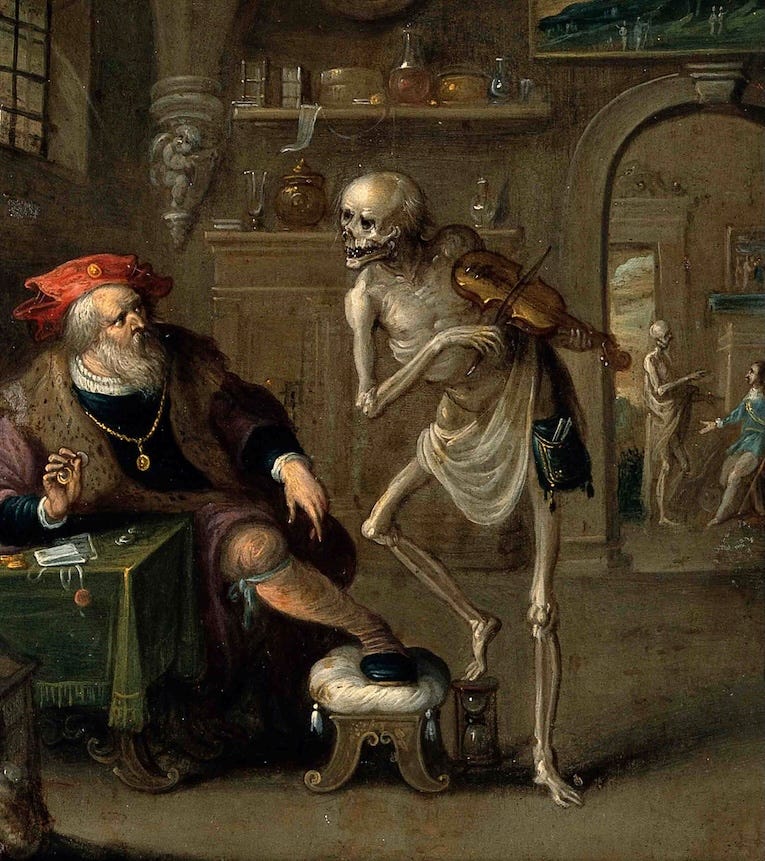
If the child is upstanding, well-intentioned and honed with correct morals, yet faced with an arbitrary barrier caused by financial want, the father should then step in if he possesses the means that would otherwise simply languish untouched in the bank.
A father who, conversely, insists on withholding everything until his death when he could have done otherwise, is, Montaigne argues, committing a double evil. Firstly, he is needlessly fostering a temptation to sin in his children. Secondly, and more damaging to himself, he is encouraging his children to view him as valuable only for what he will leave behind, in place of who he is here and now:
“A father is very miserable who has no other hold on his children’s affection than the need they have of his assistance, if that can be called affection; he must render himself worthy to be respected by his virtue and wisdom, and beloved by his kindness and the sweetness of his manners; even the very ashes of a rich matter have their value; and we are wont to have the bones and relics of worthy men in regard and reverence. No old age can be so decrepid in a man who has passed his life in honour, but it must be venerable, especially to his children, whose soul he must have trained up to their duty by reason, not by necessity and the need they have of him, nor by harshness and compulsion”
Michel de Montaigne, Of the Affection of Fathers to Their Children, II.8
A father has failed in his affection, therefore, when he has made his children dependent on him by coercion and the imposition of arbitrary authority. It is quite logical as a result that Montaigne equates this with the use of force against a child, which he viewed as a perversion of paternal love which backfires far too often:
“I condemn all violence in the education of a tender soul that is designed for honour and liberty. There is I know not what of servile in rigour and constraint; and I am of opinion that what is not to be done by reason, prudence, and address, is never to be affected by force… I have never observed other effects of whipping than to render boys more cowardly, or more wilfully obstinate”
Michel de Montaigne, Of the Affection of Fathers to Their Children, II.8
Montaigne therefore has much wisdom to offer on the ‘youth’ phase of fatherhood. Yet what is arguably more important is the ‘mature’ phase of fatherhood. A father, after all, is the creator of a new generation, and it is a fundamental part of his duty to prepare himself and his family for the transition to that generation.
Crucially, as Montaigne argues, how a father passes the baton on is the difference between a family enduring in strength, and falling apart in acrimony.…
