
C. S. Lewis on Making Marriage Work
The unpopular truths that strengthen marriage...

What, it may be asked, is the use of keeping two people together if they are no longer in love?
C.S. Lewis, Christian Marriage, Mere Christianity, III.6
As C.S. Lewis acknowledged, the traditional Christian doctrines on marriage are “extremely unpopular” for many people.
After all, nobody likes to be told how they should live, and we are caught at a deadly crossroads of history. We disdain ‘organised’ marriage, and romanticise ‘chaotic’ love. We yearn for ‘happily ever after’, yet insist that marriage be transactional and temporary.
We insist, too, that there is but ‘one true love’, and that a spouse who does not provide us with an everlasting feeling of bliss must simply be the ‘wrong person’, and we are therefore justified in leaving them. Love conquers all, until it doesn’t.
But as C.S. Lewis argues in his extraordinary essay on Christian Marriage, the increasing dysfunction of modern marriages stems from a fundamental misunderstanding of human nature and therefore why those “unpopular” doctrines existed in the first place.
Today therefore, we take a detailed look at Lewis’s essay and discover the “extremely unpopular” truths that underpin a healthy and lasting marriage…
Being ‘in Love’ is Temporary
“The most dangerous thing you can do is to take any one impulse of our own nature and set it up as the thing you ought to follow at all costs”
C.S. Lewis, Christian Marriage, Mere Christianity, III.6
An especially corrosive consequence of popular fiction is our blurring of ‘infatuation’ and ‘love’.
To a certain degree, this is an inevitable result of the manner in which fairytales are structured. The hero falls for the maiden, rescues her, and invariably marries her. The end. It is the classic Disney model, but it operates on a deception. Were it reality, the conclusion of the film would in fact be the prologue of their lives. The story invests us in the beginning of their path, but the rolling of the credits denies us its midway, and less still its end. As a result, we are left to subconsciously assume that they indeed ‘lived happily ever after’.
Being a time-honoured and lucrative template for a compelling story, the model has of course been copied in all manner of books and films, from the highest epic to the most routine comedy. It has consequently spilled over into real world expectations of what marriages should become, particularly as the primary consumers of such stories are children who then grow up with them.
Characters say things like “I love you” while in a state of infatuation, and so the word has become identified with the state. But as Lewis points out, infatuation is a feeling, and feelings do not have permanent stimuli:
“Being in love is a good thing, but it is not the best thing. There are many things below it, but there are also things above it. You cannot make it the basis of a whole life. It is a noble feeling, but it is still a feeling. Now no feeling can be relied on to last in its full intensity, or even to last at all. Knowledge can last, principles can last, habits can last; but feelings come and go. And in fact, whatever people say, the state called “being in love” usually does not last. If the old fairytale ending “They lived happily ever after” is taken to mean “They felt for the next fifty years exactly as they felt the day before they were married,” then it says what probably never was nor ever could be true, and would be highly undesirable if it were”
C.S. Lewis, Christian Marriage, Mere Christianity, III.6
The extreme danger of this is clear. While the sources of this influence now extend far beyond childhood Disney films, the end result is the same. An expectation has taken root that marriage will render the ‘prologue’ permanent, and therefore when that expectation is inevitably shattered, so too is the marriage:
“People get from books the idea that if you have married the right person you may expect to go on “being in love” for ever. As a result, when they find they are not, they think this proves they have made a mistake and are entitled to a change — not realising that, when they have changed, the glamour will presently go out of the new love just as it went out of the old one”
C.S. Lewis, Christian Marriage, Mere Christianity, III.6
A person who fails to distinguish being ‘in love’ with their spouse from loving their spouse therefore is doomed to be a Tantalus condemned to Tartarus, eternally reaching for a fruit that will always dangle beyond their grasp. Old age will come, and embrace a burned-out, resentful and regretful soul.
But this is where one “unpopular” Christian doctrine enters the fray to spare us this dread fate — the doctrine that marriage is for life. This may of course sound utterly counter-intuitive. If I am no longer ‘in love’ with my spouse, how can spending the rest of my life with them be anything but a tyranny?
As C.S. Lewis reminds us, it is all in the marriage vows…
Lasting Love is Peace, Not Thrill
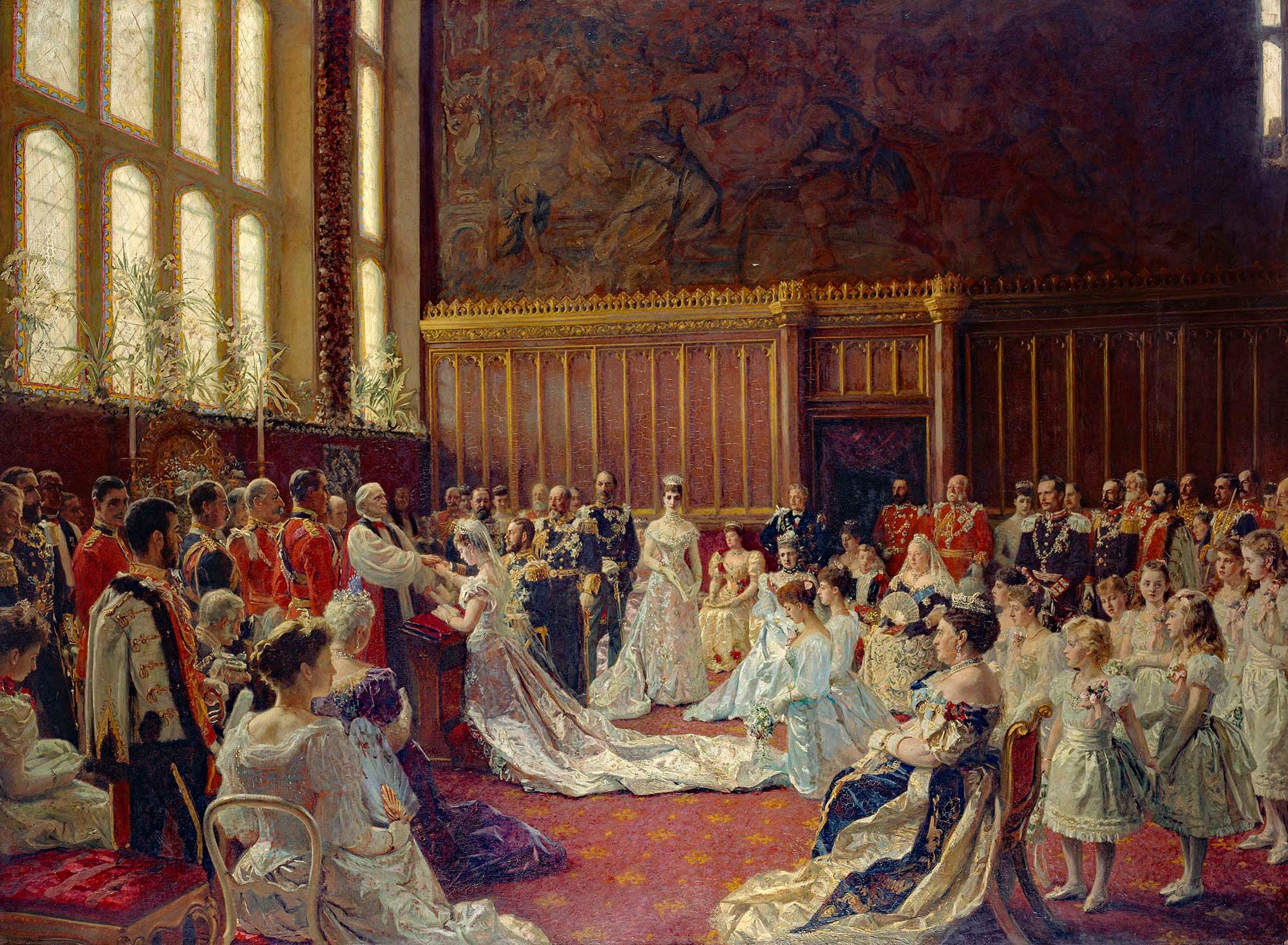
Marriages, especially those conducted within churches, are explicitly forged through spoken vows. The precise wording may vary, but invariably, such vows involve an unambiguous promise by both man and woman to honour and support one another, and stand by each other until death.
There is a tendency perhaps to view such vows today as a pleasant piece of poetry, recited to shore up the romantic architecture of the wedding day. The beauty of true marriage vows, however, is that at the same time as declaring a promise of marriage, we are also reciting instructions on how to make the marriage work. Let us consider a typical vow:
Do you promise to be faithful to [him/her] in good times and in bad, in sickness and in health, to love [him/her] and to honour [him/her] all the days of your life?’
We have in it all the guidance we need for a successful marriage, and indeed referring to our vows periodically can go a long way to ensuring we keep to them. You may be thinking, however, that there is a weak link in the chain here — I am promising to love my spouse, but what if a day comes when I am no longer in love them?
Lewis indeed conceded that “What we call “being in love” is a glorious state, and, in several ways, good for us”. It alerts us to another soul, and is the gateway to a shared life with them. But just as a flashy television advert ceases to awe us once we possess the actual product, so too in the matter of marriage must we understand that the substance of love is not going to be held together by the marketing material that is infatuation:
“But, of course, ceasing to be “in love” need not mean ceasing to love. Love in this second sense — love as distinct from “being in love” is not merely a feeling. It is a deep unity, maintained by the will and deliberately strengthened by habit; reinforced by (in Christian marriages) the grace which both parents ask, and receive, from God. They can have this love for each other even at those moments when they do not like each other; as you love yourself even when you do not like yourself. They can retain this love even when each would easily, if they allowed themselves, be “in love” with someone else. “Being in love” first moved them to promise fidelity: this quieter love enables them to keep the promise. It is on this love that the engine of marriage is run: being in love was the explosion that started it”
C.S. Lewis, Christian Marriage, Mere Christianity, III.6
Infatuation is like a shot of sugar. Love on the other hand is a muscle that requires exercise, but once it is built up, it fuels a satisfaction that reveals the destructive side of a sugar addiction. In the other words of Lewis, rather than trying to recapture your childhood memory of paddling at the beach, a whole new world will open if you now learn to swim.
Indeed as his close friend J.R.R Tolkien similarly argued, getting married is not a crowning achievement, but the beginning of a partnership. That muscle of love is exercised not through random feelings, but through the active work of everyday acts of patience, attention and kindness.
“The thrill you feel on first seeing some delightful place dies away when you really go to live there. Does this mean it would be better not to learn to fly and not to live in the beautiful place? By no means. In both cases, if you go through with it, the dying away of the first thrill will be compensated for by a quieter and more lasting kind of interest. What is more (and I can hardly find words to tell you how important I think this), it is just the people who are ready to submit to the loss of the thrill and settle down to the sober interest, who are then most likely to meet new thrills in some quite different direction. The man who has learned to fly and becomes a good pilot will suddenly discover music; the man who has settled down to live in the beauty spot will discover gardening”
C.S. Lewis, Christian Marriage, Mere Christianity, III.6
This, then, is the virtue of lifelong marriage. It compels both husband and wife to embrace true adulthood, by recognising that the exaggerated image which infatuation creates of a person is ungrounded in reality, and allowing both to finally, and truly love each other for who they actually are. That is why we traditionally promise to have and to hold our spouse ‘for better, for worse, for richer, for poorer, in sickness and in health’. It prevents us from casually throwing in the bin what could, in fact, be repaired. It is a guarantor that the stability of your life is not wholly hostage to your spouse’s instinctive perception of you at your lowest moment, any more than it is at your highest.
As a result, despite many other doctrinal disagreements, many Christian denominations hold that breaking a marriage is “more like having both your legs cut off than it is like dissolving a business partnership or even deserting a regiment”. If you approach marriage as an unbreakable bond, your subconscious will stop looking for ways to break it.
But, you may be thinking, doesn’t this all assumes that we will just ‘get on’ with each other? How do I manage the moments when I disagree with my spouse? It is here that Lewis boldly declares that “something else, even more unpopular, remains to be dealt with”.
Here is how the most maligned marriage doctrine of all actually holds the key to making a lifelong marriage work, and ensuring both partners’ happiness…
