
Aristotle's Advice on Living the Good Life
What actually is Happiness, and how can you achieve it?

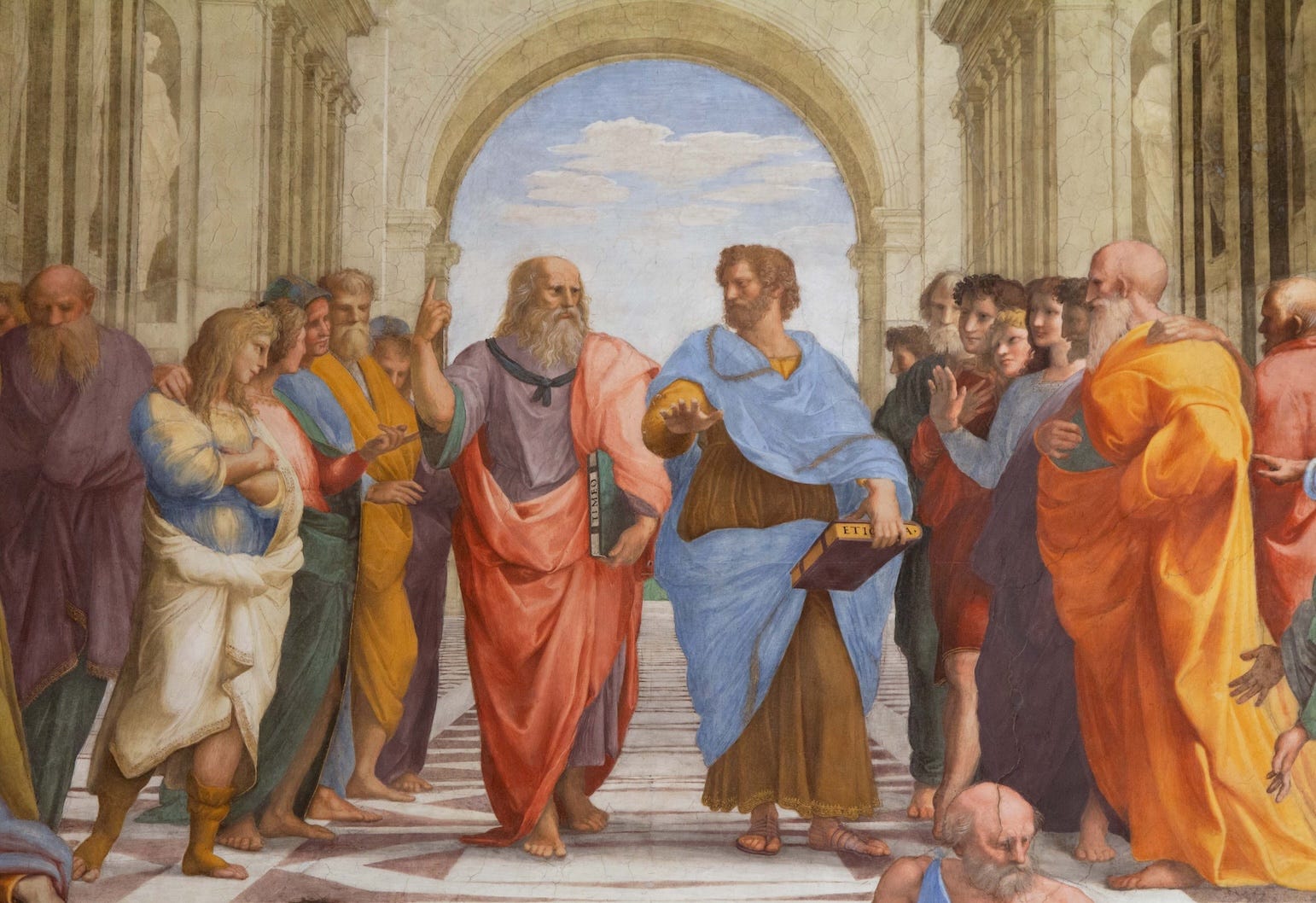
The wisdom of the great philosophers of Antiquity is often admired but seldom digested.
In part, this is a consequence of the texts themselves often being frighteningly dense when translated into English. Convoluted phrasing, where single sentences can form entire paragraphs, is after all a characteristic of Mediterranean languages. English, however, dislikes digression and favours brevity.
The Nicomachean Ethics of Aristotle are a prime example of this. The uncommitted native English speaker may quickly find himself lost in the prose before having a chance to digest its teachings. This of course is a terrible pity, as it is not for nothing that Aristotle is revered as one of the greatest minds in Western history, and the Nicomachean Ethics as one of the foundational texts of ethics itself.
Despite its seemingly abstract title, however — which Aristotle incidentally did not choose himself — the Nicomachean Ethics has at its core a straightforward aim. In it, Aristotle seeks to answer that simplest and most timeless of questions: what is the best way to live? Contrary to what you might think however, Aristotle did not preach unrealistic idealism, but considered the question from a grounded perspective.
Today therefore, we explore what Aristotle can teach you about the difference between merely existing and flourishing, and how to make sure you do the latter…
Be Selfless to be Selfish
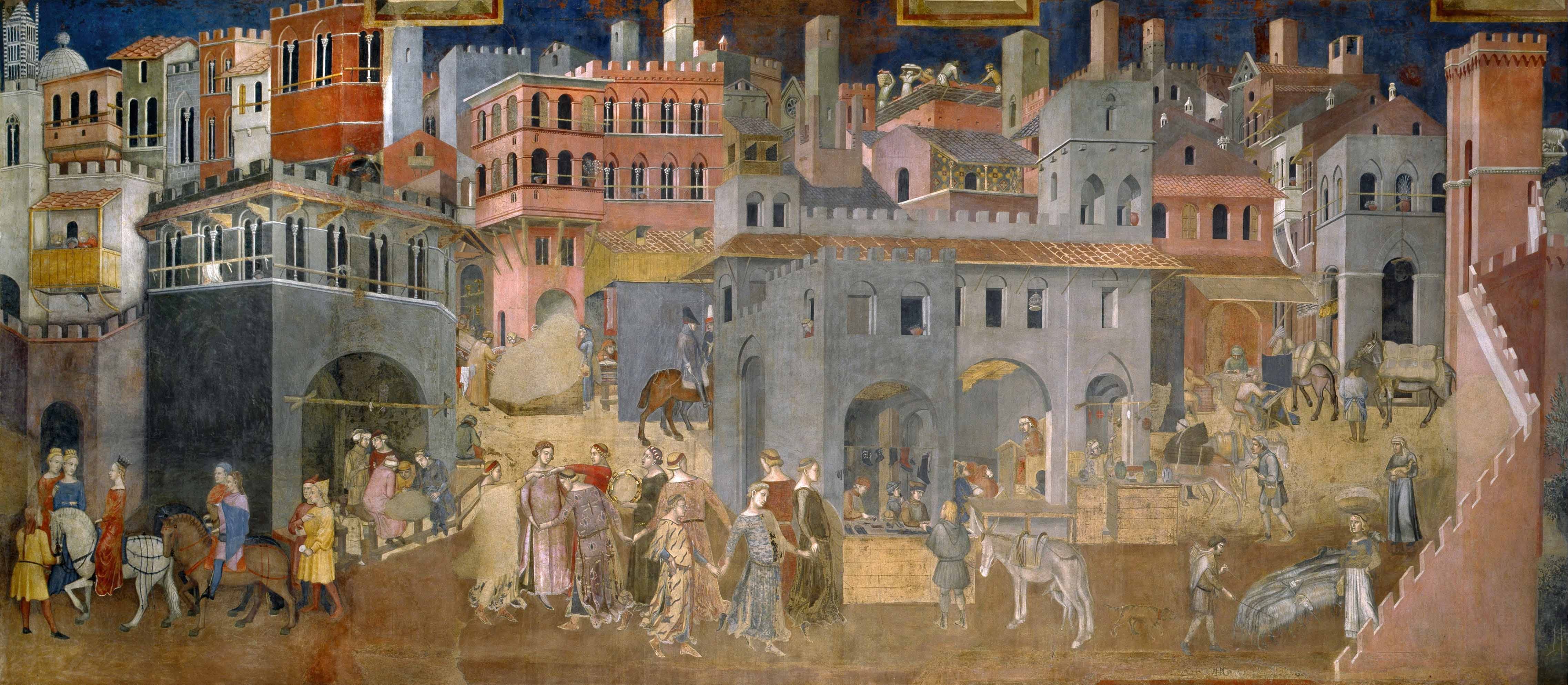
A man can live a life of emptiness, or one of fullness. How to avoid the former and obtain the latter is of course the question which thinkers, and governments, across history have sought to provide answers to. Sometimes they were well-intentioned. Sometimes they were not.
Ever since the great wars of the 20th century collapsed the old order, Western society has been steered, from the top down, towards the thought of Friedrich Nietzsche. That is, doing the ‘right thing’ is a waste of time, and that your personal beliefs are what matter. Your desires take precedence, and you should do what you must to satisfy them. After all, “God is dead”, and why bother doing anything for others when the world is simply a barren hellhole, where everybody is manipulating, exploiting and extorting everybody else? You are on your own, and it is every man for himself.
Aristotle, however, was of a society not yet besieged by such cynicism. Among his most famous and most widely misunderstood lines, is that “Man is a Political Animal” (Aristotle, Politics, I). Misunderstood because ‘political’ was a far broader and less cynical term in his day. Deriving as it does from the Greek word polis (literally ‘city’, but more accurately ‘your country’), a political man to Aristotle was a man who concerned himself with the ‘city’, and as a being both sociable and rational, a man can indeed flourish only if he is part of such a community. That by ‘city’, Aristotle did not mean a sprawling international metropolis, but took for granted a modestly sized, religiously cohesive and culturally homogenous state is a matter for another time.
The essential point, which Aristotle explores in depth in Book One of the Nicomachean Ethics — a work he explicitly declares to be a “political inquiry” (I.2) — is that such ‘politics’ leads us to the highest reward:
“As to its name, I suppose nearly all men are agreed; for the masses and men of culture alike declare that it is Eudaimonia, and hold that to”live well” or to “do well” is the same as to be “happy”
Aristotle, Nicomachean Ethics I.4
Eudaimonia itself is one of those splendid terms which has no good one-word translation in English. Sometimes translated as ‘happiness’, it more specifically conveys the sense of that particular happiness which accompanies success, and for this reason, a man with Eudaimonia is a man who is ‘flourishing’.
To Aristotle then, the Nietschean approach is a road to nowhere for two reasons. Firstly because of its flawed morality, but moreover, as he later reveals, because it merely satiates temporary impulses, and is therefore ineffective in actually leading to happiness. A ‘good life’ necessarily requires ‘good actions’. Being virtuous, therefore, is a win-win situation. You are benefitting the polis, or at least not undermining it and corrupting its youth, but you are also benefitting yourself with actual rather than illusionary happiness.
Now this is all well and good, but still rather abstract. Aristotle however, unlike his own teacher Plato, was a man who believed in practical wisdom. So how can we achieve Eudaimonia, live the good life, and flourish?
What Do You Really Want?
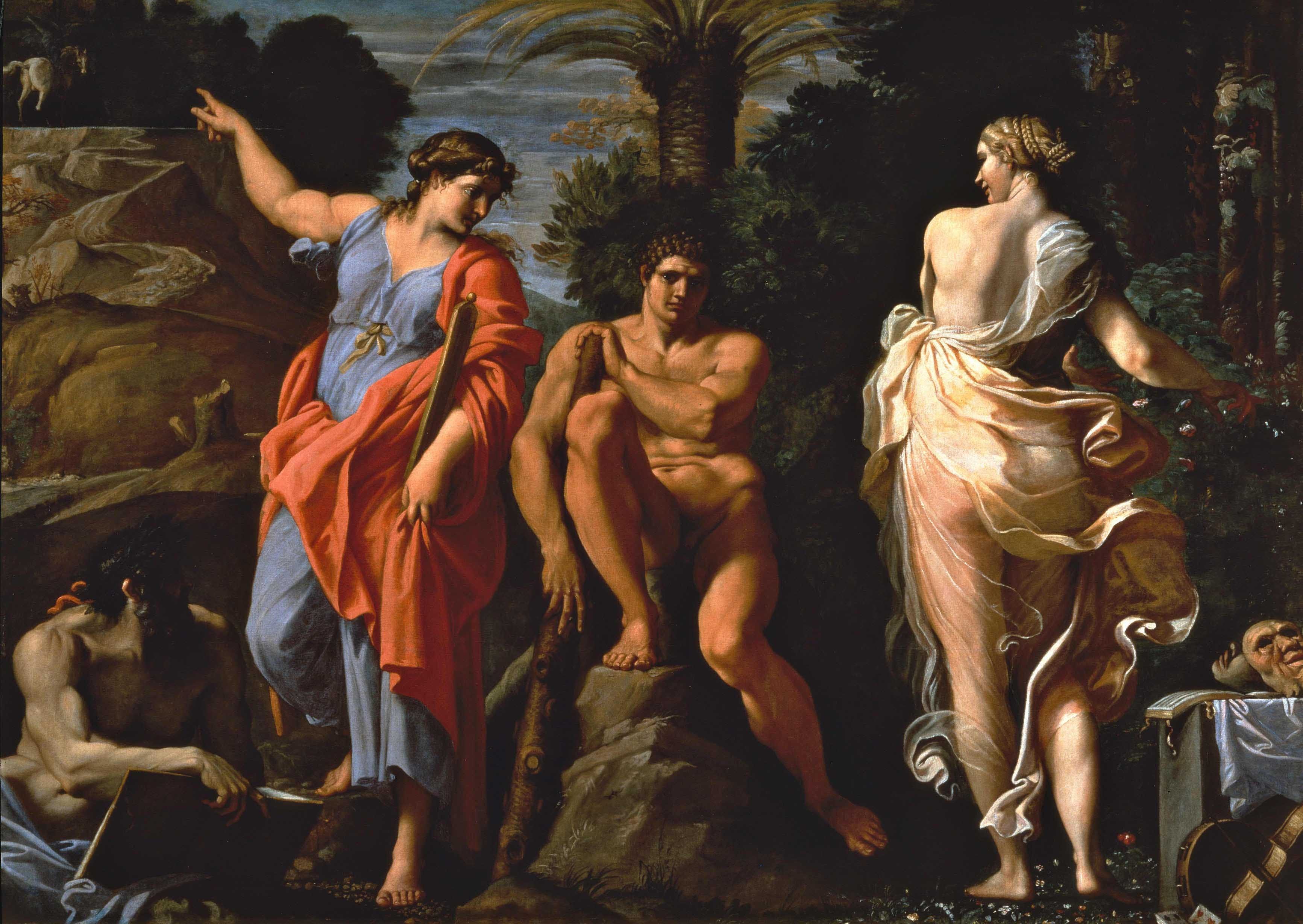
Naturally, Aristotle’s most profound observation in the Nicomachean Ethics is found in the one paragraph which translates the worst into readable English:
“If then in what we do there be some end which we wish for on its own account, choosing all the others as means to this, but not every end without exception as a means to something else (for so we should go on ad infinitum, such that all desire would be vain and fruitless), this evidently will be the good or the best of all things”
Aristotle, Nicomachean Ethics, Book I.2
Bear with us, however.
Decrypted, Aristotle is touching upon one of the ironically simplest yet most overlooked reasons why so many people chase happiness and never find it. The Achilles’ Heel is in the failure to distinguish between something that you want for its own sake, and something that you want for the sake of something else. Now what does that mean?
‘Do you want money?’, Aristotle might take pleasure in asking you. ‘Yes please’, you might understandably reply. But herein lies the clearest demonstration of the problem. The majority of men would be happy to make more money, but only the most ignoble among them desires money for its own sake. Money just sitting in your account aimlessly might reassure you that you can weather hardship, but is unlikely to be actively generating pleasure. What you actually want is what the money can buy you. Money, therefore, is something you want for the sake of something else.
So on we go. ‘Why do you want money?’, Aristotle would continue. ‘I want a big house’, is a typical answer that might follow. But is it the physical house you want, or what it will allow you to do? Is it that the house being large alone satisfies you, or that you actually want the social validation and respect you associate with a large house?
Did you get that vast and splendid property, only to then naturally gravitate to the same one or two rooms on a typical day, with the others merely adding to the burden of keeping said property clean?
Perhaps you like to buy a coffee in the morning. But do you ‘like’ this because you enjoy the taste of the coffee, or because the chemicals in it will help to steel you for an otherwise stressful day ahead, and the moment spent drinking it is a moment of illusionary peace? Is the coffee the end, or the means?
As Aristotle points out however, while responding ‘Why?’ to the question of what we want can help us to be more honest with ourselves, it can also go on ad infinitum, leaving everyone drained, until we answer simply ‘because it makes me happy’. Hence Aristotle’s point above about ‘happiness’ being the highest reward. It is the ultimate endgame of ‘why’ we want things.
In order to cut through this, therefore, we need a more precise definition of what happiness is, beyond simply ‘feeling good’. Ever the wise teacher, before revealing the correct answer, Aristotle first warns us of three roads which seem to lead to happiness, but will always lead to ruin…
