
8 Mistakes You Make in Conversation
And how to avoid them...

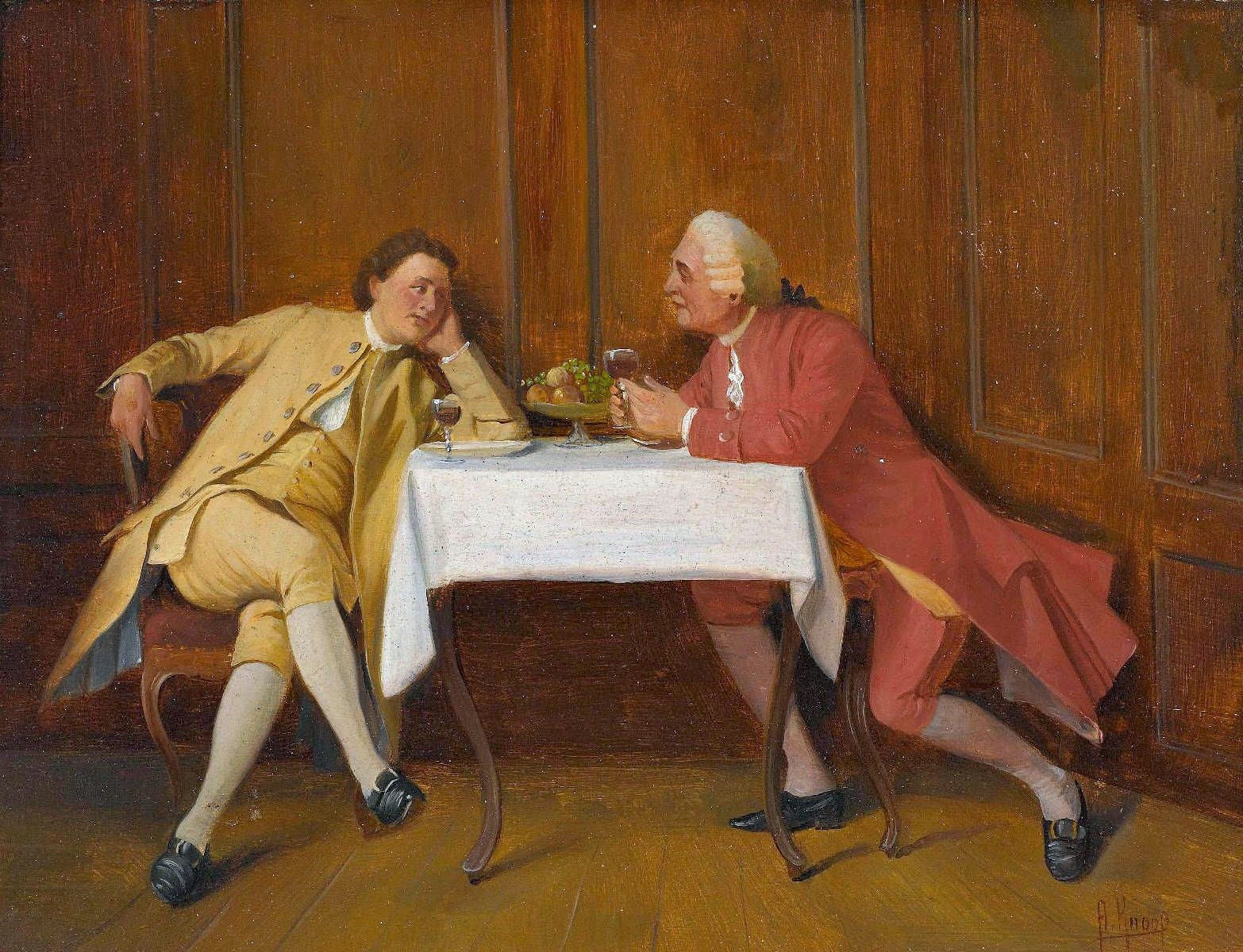
We all wish to be remembered for our grandest achievements. The vast majority of us, however, will be remembered for how we handled the everyday. You may dream of saving civilisation, but can you hold a good conversation?
It is certainly frustrating to think how much of our reputation rides on the mundane. But it is also encouraging to know therefore how much of your reputation can, with little effort, be easily secured.
One man who identified this was Jonathan Swift, the colourful author of one of the English language’s most colourful classics — Gulliver’s Travels. As both a clergyman and a satirist, Swift was blessed with a sharp understanding of human nature. One thing that bothered him in particular was how easily ambitious men were undone through poor social skills.
So in 1713, Swift penned these thoughts in an entertaining treatise called Hints Toward an Essay on Conversation. In it, he details eight common mistakes which ruin a conversation, and damage other’s perception of you.
We have all witnessed these mistakes. You may even be making them yourself without realising it. So here are eight ways to stop alienating listeners, and start engaging them…
1 - Never Assume the Listener’s Interest

“Nothing is more generally exploded than the folly of talking too much; yet I rarely remember to have seen five people together, where some one among them hath not been predominant in that kind, to the great constraint and disgust of all the rest.”
Jonathan Swift, Toward an Essay on Conversation
One of the key motivators behind Swift’s drive to write this treatise was his realisation of how common these mistakes are, yet how rarely we acknowledge them consciously.
Who, after all, has not found themselves in the above situation, trapped in a conversation where they have no point of entry or escape? Instinctively, we feel a rush of dislike or even anger to our conversational prison warden, as we are torn between the desire to escape and the social need to appear polite.
The problem of course is that this situation is rarely intentional on the part of the speaker. It results from a presumption of interest. Indeed a typical example of this phenomenon, which Swift relates in amusing style, is when a speaker starts talking about something as if it were an exciting piece of news, when the listeners already knew about it:
“But among such as deal in multitudes of words, none are comparable to the sober deliberate talker, who proceedeth with much thought arid caution, maketh his preface, brancheth out into several digressions, findeth a hint that putteth him in mind of another story, which he promiseth to tell you when this is done; cometh back regularly to his subject, cannot readily call to mind some person’s name, holding his head, complaineth of his memory; the whole company all this while in suspense; at length says, it is no matter, and so goes on. And, to crown the business, it perhaps proveth at last a story the company hath heard fifty times before; or, at best, some insipid adventure of the relater”
Jonathan Swift, Toward an Essay on Conversation
Needless to say, this situation is compounded by poor oratory, from stumbling over words to taking an excessive amount of time to reach the punchline.
The first rule, therefore, is to never assume the audience is as interested in your topic as you are. Better to inspire curiosity than smother with context…
2 - Avoid Talking About Yourself Too Much
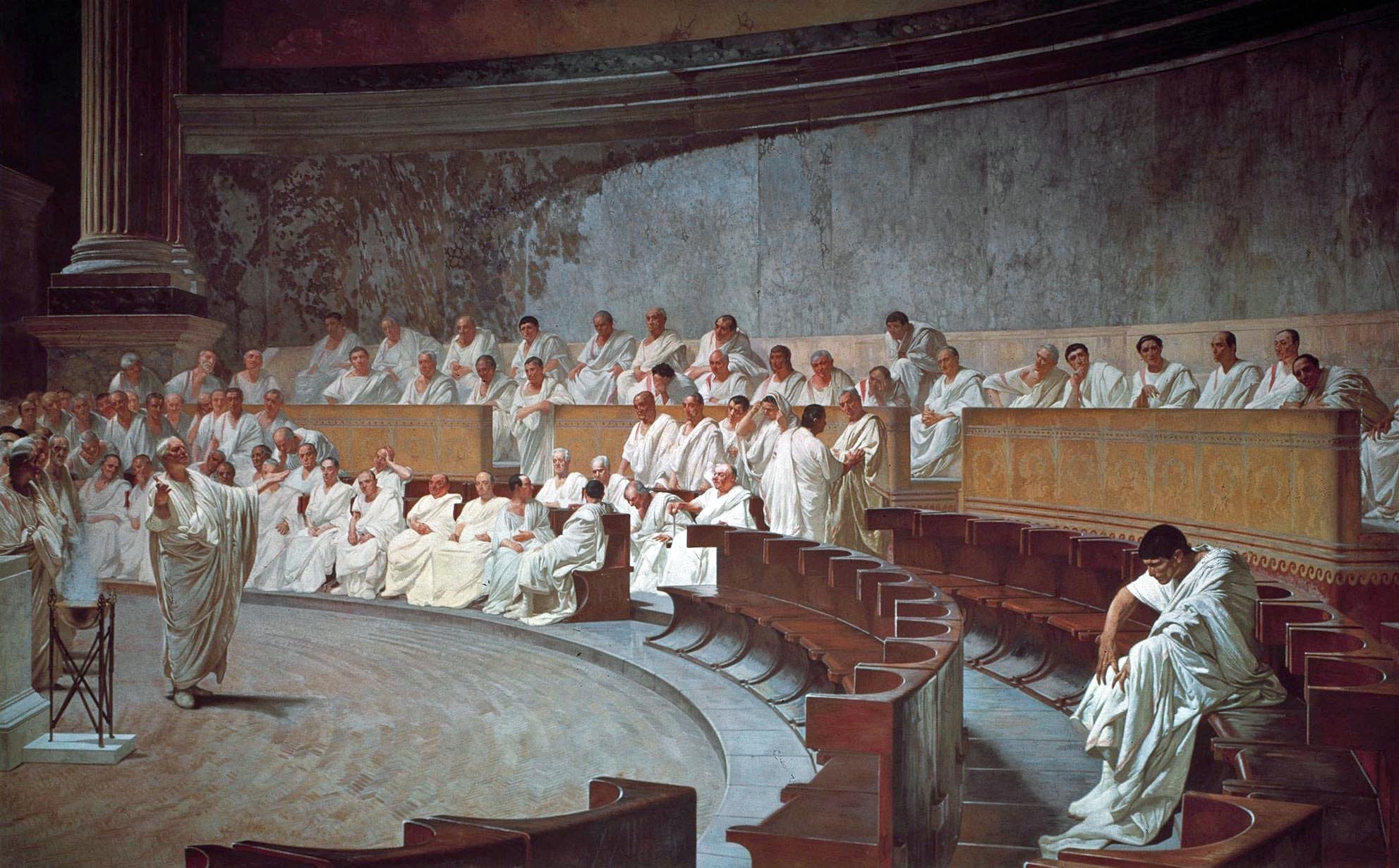
There are of course many ways in which one can ‘digress’ in conversation, many of which risk boredom for the listener. One surefire route to distaste, however, is to digress by talking about yourself:
“Some, without any ceremony, will run over the history of their lives; will relate the annals of their diseases, with the several symptoms and circumstances of them; will enumerate the hardships and injustice they have suffered in court, in parliament, in love, or in law”
Jonathan Swift, Toward an Essay on Conversation
This phenomenon, too, can take many directions. It may of course not be out of pure self-love. It could well be that you saw the question ‘How are you?’ as the sincere opportunity to tell someone how you actually are, rather than resigning yourself to the customary ‘Fine thanks, and you?’.
In any case however, what makes this habit unforgivable is an unwillingness on your part to reciprocate and show the patience to others you rhetorically demand of them:
“Of such mighty importance every man is to himself, and ready to think he is so to others; without once making this easy and obvious reflection, that his affairs can have no more weight with other men, than theirs have with him; and how little that is, he is sensible enough”
Jonathan Swift, Toward an Essay on Conversation
Therefore, avoid talking about yourself unless the situation directly calls, in a non-superficial way, for you to do so. Let interest in you generate organically, instead of forcing it…
3 - Beware Excessive Focus on Perceived Peers
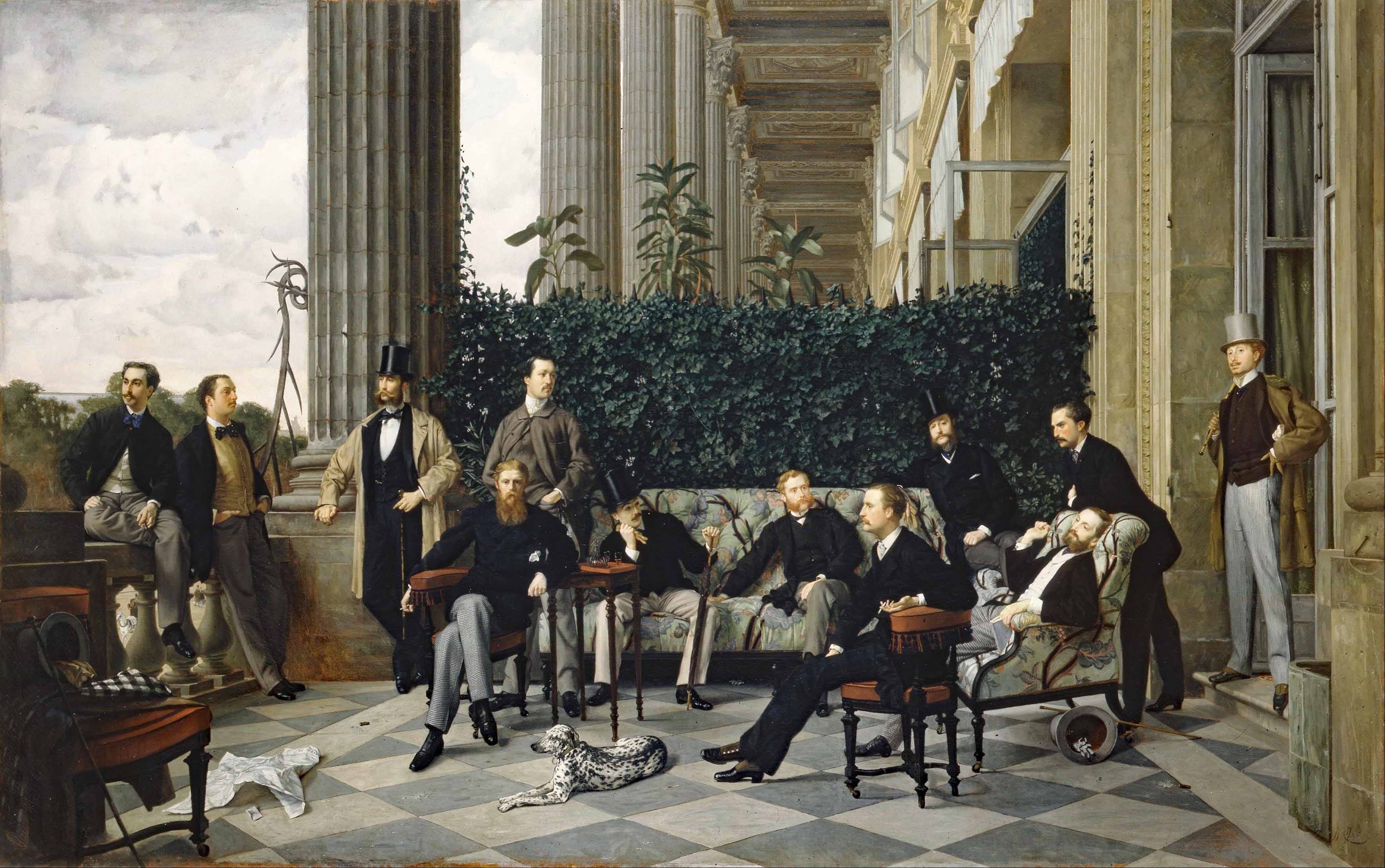
An extremely common cause of conversational awkwardness is when two or more participants are already familiar with each other, or discover they share a common uniting experience or profession which the rest do not.
“Where company hath met, I often have observed two persons discover, by some accident, that they were bred together at the same school or university, after which the rest are condemned to silence, and to listen while these two are refreshing each other’s memory with the arch tricks and passages of themselves and their comrades”
Jonathan Swift, Toward an Essay on Conversation
Perhaps somebody starts talking about a film they have just seen. Another pipes up with sudden enthusiasm, and off into the rhetorical sunset they go. But you have not seen that film, and are therefore instantly thrown into an excruciating social prison.
We of course are all eager to talk about what enthuses us. But this does not invalidate the wisdom of knowing thy audience. As per the first rule, do not assume that all present share your interest. But more to the point, it is uncharitable to prolong a discussion which others who are lending you their company have no possible means of contributing to…
4 - Stop Feeling You Have To Say Something Important

When entering a conversation with those we wish to impress, it is easy to create an unhealthy pressure upon ourselves. Convinced that our own contribution to the conversation must be memorable or profound in some way, we end up being the author of our own awkwardness:
“If they have opened their mouths, without endeavouring to say a witty thing, they think it is so many words lost: It is a torment to the hearers, as much as to themselves, to see them upon the rack for invention, and in perpetual constraint, with so little success. They must do something extraordinary, in order to acquit themselves, and answer their character, else the standers-by maybe disappointed and be apt to think them only like the rest of mortals”
Jonathan Swift, Toward an Essay on Conversation
We forget that while spectacular flourishes of language can impress, it is generally over the relatable things that men bond. The ‘higher the stakes’ of the meeting, generally the more this is true. The higher the status of a man in society, the more cut off from the relatable he becomes, as those who surround him constantly try to impress him.
Swift here recounts the “the worst conversation I ever remember to have heard in my life”, which he endured at Will's Coffee House — a popular venue for the most renowned intellectuals in London. There he sat through a group of such ‘wits’ pontificating as if “the fate of kingdoms depended on them”. In attendance were a humble group of university students, who left that meeting “with great contempt for their law and philosophy, their heads filled with trash, under the name of politeness, criticism and belles lettres”.
Conversation is never made important by trying to be, and nor is it guaranteed to be so by the mere virtue of who is present. It is made important by spontaneous revelation, and is indeed often made so retroactively, by the thoughts stimulated after the conversation has ended.
But moderating your own contribution to the conversation is only half the battle. As Swift reveals, your attempts to involve others in the conversation will backfire spectacularly unless you avoid the remaining four errors…
